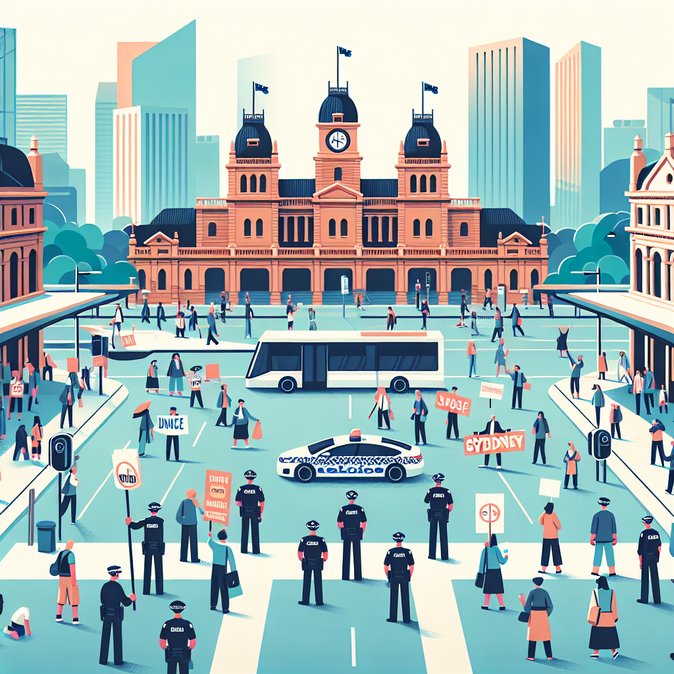
Late on 8 February 2026 the New South Wales Supreme Court handed down a ruling with wide-ranging implications for freedom of assembly and, by extension, the ease with which large groups can move through Australia’s biggest city. In a fast-tracked challenge, the Palestine Action Group (PAG) argued that the state’s designation of parts of Sydney’s CBD as a “major event area” unjustifiably curtailed the right to protest during Israeli President Isaac Herzog’s tour.
Justice Robertson Wright sided with the government, citing the need to protect public safety after December’s Bondi terror attack. The decision empowers police to search individuals without cause, prevent marches along key arteries such as George Street, and dismantle unauthorised assemblies—powers normally reserved for events like New Year’s Eve fireworks.
Mobility experts warn the judgment could normalise the use of extraordinary policing tools whenever officials deem gatherings a security risk. For business travellers and expatriate staff, that could translate into sudden road blocks, diverted public transport, and fortified perimeters around conference venues. “The chilling effect on large-scale corporate events is real,” notes Dr Joanna Howe of the University of Adelaide. “Organisers now face an additional layer of legal uncertainty about whether delegates can physically reach a venue.”
![NSW Supreme Court upholds sweeping police powers ahead of Herzog protests, setting mobility precedent]()
Amid this heightened unpredictability, securing the correct travel documentation becomes even more critical for overseas visitors. VisaHQ can streamline the Australian visa process, supplying real-time updates on entry requirements and processing times—vital intelligence when last-minute security measures might force itinerary changes. Travellers and mobility managers can learn more at https://www.visahq.com/australia/
Civil-liberties advocates have flagged a potential High Court appeal, arguing the ruling undermines the implied constitutional freedom of political communication. Until then, employers are advised to monitor state-government alerts, build contingency ground-transport plans and remind internationally mobile staff of Australia’s broadening public-order laws.
The episode underscores a larger trend: security considerations are increasingly intersecting with mobility policy. Australia’s ability to host high-profile meetings—from biotech summits to major sporting fixtures—may hinge on how deftly authorities balance safety with the practical needs of travellers moving through dense urban corridors.
Justice Robertson Wright sided with the government, citing the need to protect public safety after December’s Bondi terror attack. The decision empowers police to search individuals without cause, prevent marches along key arteries such as George Street, and dismantle unauthorised assemblies—powers normally reserved for events like New Year’s Eve fireworks.
Mobility experts warn the judgment could normalise the use of extraordinary policing tools whenever officials deem gatherings a security risk. For business travellers and expatriate staff, that could translate into sudden road blocks, diverted public transport, and fortified perimeters around conference venues. “The chilling effect on large-scale corporate events is real,” notes Dr Joanna Howe of the University of Adelaide. “Organisers now face an additional layer of legal uncertainty about whether delegates can physically reach a venue.”

Amid this heightened unpredictability, securing the correct travel documentation becomes even more critical for overseas visitors. VisaHQ can streamline the Australian visa process, supplying real-time updates on entry requirements and processing times—vital intelligence when last-minute security measures might force itinerary changes. Travellers and mobility managers can learn more at https://www.visahq.com/australia/
Civil-liberties advocates have flagged a potential High Court appeal, arguing the ruling undermines the implied constitutional freedom of political communication. Until then, employers are advised to monitor state-government alerts, build contingency ground-transport plans and remind internationally mobile staff of Australia’s broadening public-order laws.
The episode underscores a larger trend: security considerations are increasingly intersecting with mobility policy. Australia’s ability to host high-profile meetings—from biotech summits to major sporting fixtures—may hinge on how deftly authorities balance safety with the practical needs of travellers moving through dense urban corridors.