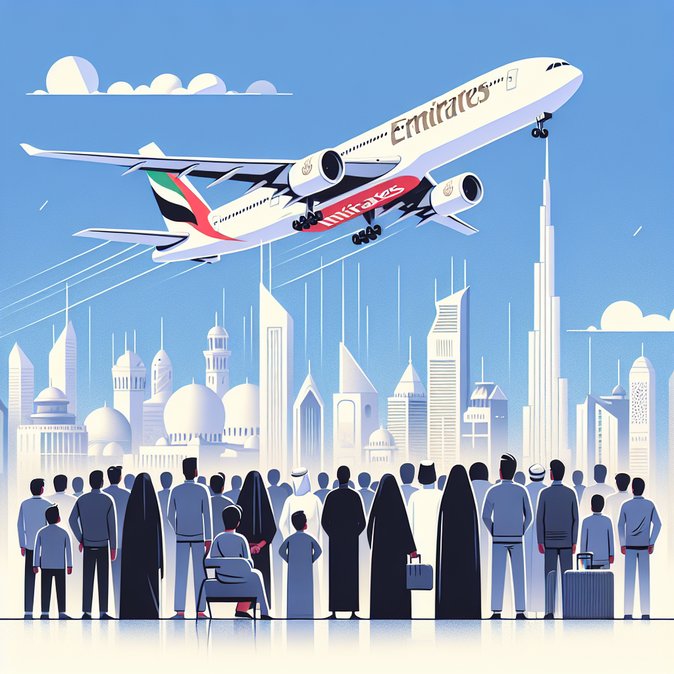
Speaking on the sidelines of the World Governments Summit in Dubai, Emirates’ Chief Commercial Officer Adnan Kazim confirmed that the carrier is in active talks with regulators to ease bilateral seat caps on India–UAE routes. Under the existing air-services agreement, Emirates’ weekly allotment has remained largely static for a decade despite a 40 per cent rise in India-bound traffic.
Kazim noted that India now accounts for roughly 11 per cent of Emirates’ network revenue, with load factors routinely topping 95 per cent on metro pairs such as Dubai–Delhi. The airline argues that more capacity would lower fares, support the UAE’s growing Indian expatriate community (over 3.5 million residents) and facilitate two-way investment at a time when Indian corporates are expanding Middle-East footprints in energy, retail and tech.
![Emirates Seeks India Seat-Cap Relief to Meet Surging Demand]()
While corporate travel managers focus on securing seats, it’s worth remembering that entry formalities can derail even the best-laid itineraries. VisaHQ streamlines UAE visa applications for both Indian passport holders and third-country business travelers, offering digital submission, real-time tracking, and expert checks to cut approval times. More details can be found at https://www.visahq.com/united-arab-emirates/
For mobility managers the development is significant. Additional seats—or the prospect of a new open-skies framework—could unlock prime departure times that have been sold-out months in advance, easing pressure on project deployment cycles and last-minute crew rotations. Travel buyers are advised to monitor bilateral negotiations and pre-secure block bookings for Q3-Q4 when new slots could materialise.
If talks stall, companies may need to diversify via Abu Dhabi-based Etihad or low-cost options through Sharjah, but should factor in longer ground transfers to Dubai’s business districts. Either way, sustained demand signals that India-UAE mobility will remain capacity-constrained until regulators grant additional rights.
Kazim noted that India now accounts for roughly 11 per cent of Emirates’ network revenue, with load factors routinely topping 95 per cent on metro pairs such as Dubai–Delhi. The airline argues that more capacity would lower fares, support the UAE’s growing Indian expatriate community (over 3.5 million residents) and facilitate two-way investment at a time when Indian corporates are expanding Middle-East footprints in energy, retail and tech.

While corporate travel managers focus on securing seats, it’s worth remembering that entry formalities can derail even the best-laid itineraries. VisaHQ streamlines UAE visa applications for both Indian passport holders and third-country business travelers, offering digital submission, real-time tracking, and expert checks to cut approval times. More details can be found at https://www.visahq.com/united-arab-emirates/
For mobility managers the development is significant. Additional seats—or the prospect of a new open-skies framework—could unlock prime departure times that have been sold-out months in advance, easing pressure on project deployment cycles and last-minute crew rotations. Travel buyers are advised to monitor bilateral negotiations and pre-secure block bookings for Q3-Q4 when new slots could materialise.
If talks stall, companies may need to diversify via Abu Dhabi-based Etihad or low-cost options through Sharjah, but should factor in longer ground transfers to Dubai’s business districts. Either way, sustained demand signals that India-UAE mobility will remain capacity-constrained until regulators grant additional rights.