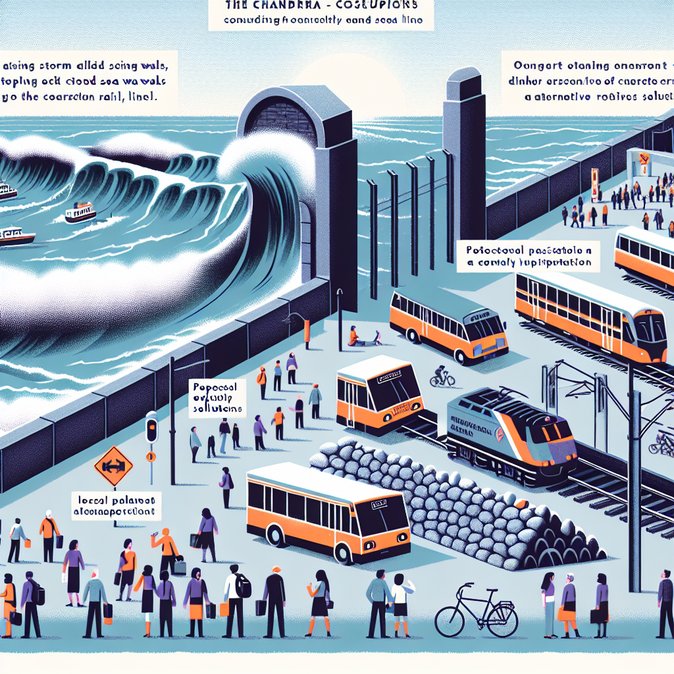
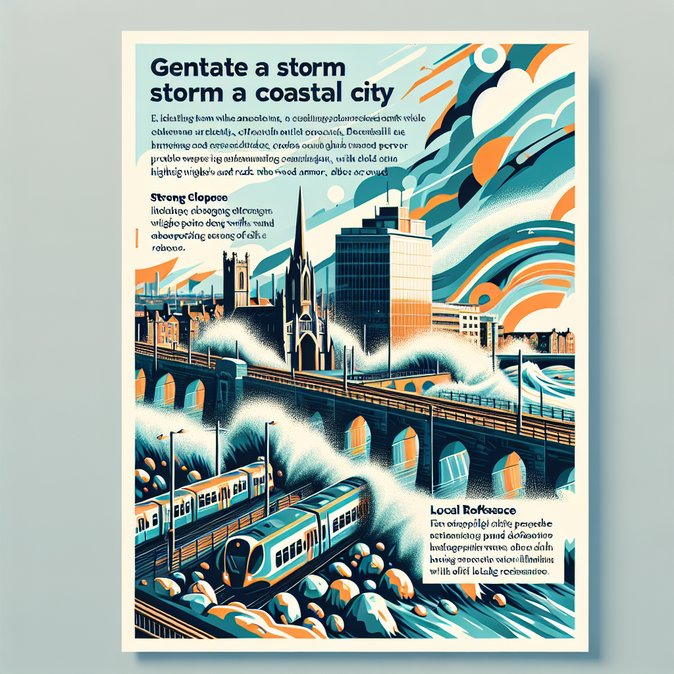
Severe overtopping during Storm Chandra has once again flooded sections of the Dublin Area Rapid Transit (DART) line between Seapoint and Blackrock, highlighting the vulnerability of Ireland’s busiest commuter rail corridor to rising sea levels and extreme weather. Waves breached Victorian-era sea walls on 7–8 February, submerging tracks, inundating the Blackrock Scouts’ den and closing the line for several hours at peak time.
Irish Rail engineers estimate that a single high-tide closure can disrupt more than 40,000 passenger journeys, many of them business travellers heading to Dublin’s tech and financial districts. The incident has accelerated the East Coast Railway Infrastructure Protection Project (ECRIPP), a €200 million scheme that proposes concrete wave walls, extended rock armour and raised promenades along 10 km of shoreline. Similar works south of Bray have already reduced weather-related closures by 90 %.
Local councillors and residents acknowledge the need for protection but fear that two-metre-high grey walls will erase historic sea views and damage tourism. Alternatives such as reinforced transparent panels or retractable flood gates are being discussed, though Irish Rail warns that acrylic solutions may degrade under UV light and require costly maintenance. Design revisions will be presented to Dún Laoghaire–Rathdown County Council next month, with a view to commencing construction in early 2027 subject to planning approval.
![Storm Chandra damage forces fresh debate on coastal defences for Dublin DART line]()
For international assignees whose immigration appointments or document legalisations risk being derailed by sudden rail closures, VisaHQ’s Dublin team (https://www.visahq.com/ireland/) can step in with expedited visa services, real-time status alerts and flexible courier pickups. Their platform helps HR and mobility managers reschedule GNIB visits or embassy interviews at short notice, keeping relocation timelines on track even when the DART isn’t.
From a mobility perspective, repeated weather closures undermine the reliability metrics on which corporate shuttle tickets and tax-efficient commuter schemes are based. The National Transport Authority is therefore considering temporary bus-bridge contracts and reimbursement mechanisms for Leap card holders when the rail line is unavailable. Employers with large South Dublin workforces are advised to maintain flexible start-times and remote-working options during the current storm season.
Longer-term, the DART flooding saga underscores the importance of climate-resilient infrastructure in location-selection decisions for global mobility teams. Companies evaluating Greater Dublin expansion should monitor the ECRIPP timetable and factor potential works-related service suspensions into relocation packages and housing advice.
Irish Rail engineers estimate that a single high-tide closure can disrupt more than 40,000 passenger journeys, many of them business travellers heading to Dublin’s tech and financial districts. The incident has accelerated the East Coast Railway Infrastructure Protection Project (ECRIPP), a €200 million scheme that proposes concrete wave walls, extended rock armour and raised promenades along 10 km of shoreline. Similar works south of Bray have already reduced weather-related closures by 90 %.
Local councillors and residents acknowledge the need for protection but fear that two-metre-high grey walls will erase historic sea views and damage tourism. Alternatives such as reinforced transparent panels or retractable flood gates are being discussed, though Irish Rail warns that acrylic solutions may degrade under UV light and require costly maintenance. Design revisions will be presented to Dún Laoghaire–Rathdown County Council next month, with a view to commencing construction in early 2027 subject to planning approval.
For international assignees whose immigration appointments or document legalisations risk being derailed by sudden rail closures, VisaHQ’s Dublin team (https://www.visahq.com/ireland/) can step in with expedited visa services, real-time status alerts and flexible courier pickups. Their platform helps HR and mobility managers reschedule GNIB visits or embassy interviews at short notice, keeping relocation timelines on track even when the DART isn’t.
From a mobility perspective, repeated weather closures undermine the reliability metrics on which corporate shuttle tickets and tax-efficient commuter schemes are based. The National Transport Authority is therefore considering temporary bus-bridge contracts and reimbursement mechanisms for Leap card holders when the rail line is unavailable. Employers with large South Dublin workforces are advised to maintain flexible start-times and remote-working options during the current storm season.
Longer-term, the DART flooding saga underscores the importance of climate-resilient infrastructure in location-selection decisions for global mobility teams. Companies evaluating Greater Dublin expansion should monitor the ECRIPP timetable and factor potential works-related service suspensions into relocation packages and housing advice.