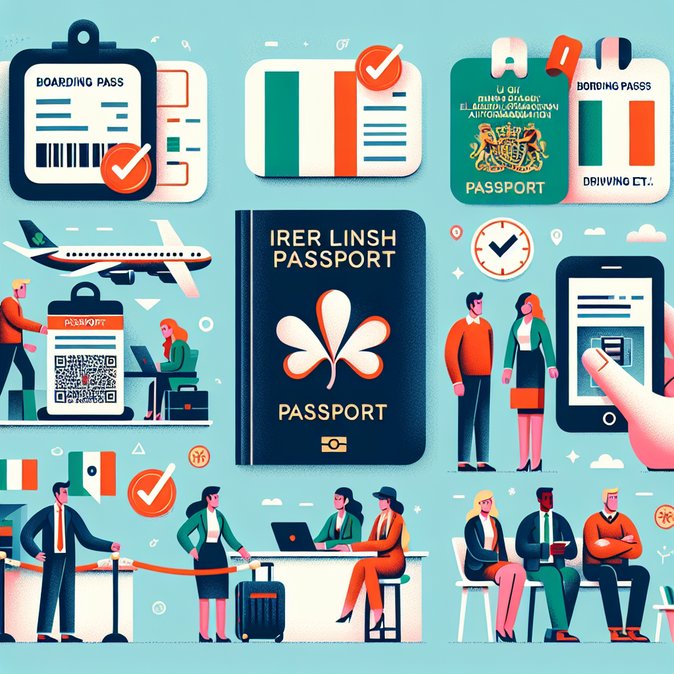
Aer Lingus has issued an urgent travel advisory confirming that, from 25 February 2026, every passenger boarding its services between the Republic of Ireland and the United Kingdom must present a valid passport or Irish passport card. Until now the carrier accepted alternative identity documents such as Irish driving licences or Garda age cards under the long-standing Common Travel Area (CTA), which normally permits British and Irish citizens to travel with minimal documentation.
The airline says the move is designed to ‘standardise boarding procedures and improve operational performance’ after repeated cases in which UK Border Force rejected passengers who had boarded in Dublin or Cork using non-passport ID. Ryanair has enforced a passport-only rule for years, but Aer Lingus had continued to rely on the broader list of CTA documents; its decision therefore removes one of the last easy-ID options for frequent corporate shuttles between the two islands.
The new requirement applies to all Aer Lingus and Aer Lingus Regional flights linking Irish airports with London Heathrow, Manchester, Birmingham and 17 other UK cities. Two exemptions remain: domestic services between Dublin and Donegal, and flights operated by Emerald Airlines between Belfast and other UK destinations, which will continue to follow UK domestic ID rules. Passengers without a passport have been offered free re-booking, refund vouchers or full refunds via a dedicated helpline.
![Aer Lingus will require passports on all Ireland–UK flights from 25 February]()
If you need assistance expediting a passport renewal, securing an Irish passport card, or navigating the new UK ETA system, VisaHQ can streamline the entire process from application to approval. Their Ireland portal (https://www.visahq.com/ireland/) offers step-by-step guidance, live support and corporate account management, making it easier for both individual travellers and mobility teams to stay compliant.
In parallel, non-Irish and non-British nationals travelling from Ireland to the UK must obtain an Electronic Travel Authorisation (ETA) in advance. The digital permit costs £16 (€18), lasts two years and forms part of the UK’s ‘No Permission, No Travel’ programme that becomes fully enforceable on the same date. Carriers will be obliged to check ETA status at the gate, meaning travellers who wait until the airport to apply risk being denied boarding.
For multinational employers with offices on both sides of the Irish Sea, the main practical implication is that staff who have relied on driving licences for last-minute day trips now need to factor passport validity and ETA lead-times into travel planning. Mobility managers are advised to audit traveller documentation immediately, update corporate booking tools to flag the new rules, and remind employees that children and infants also require their own passports or passport cards when flying on or after 25 February.
The airline says the move is designed to ‘standardise boarding procedures and improve operational performance’ after repeated cases in which UK Border Force rejected passengers who had boarded in Dublin or Cork using non-passport ID. Ryanair has enforced a passport-only rule for years, but Aer Lingus had continued to rely on the broader list of CTA documents; its decision therefore removes one of the last easy-ID options for frequent corporate shuttles between the two islands.
The new requirement applies to all Aer Lingus and Aer Lingus Regional flights linking Irish airports with London Heathrow, Manchester, Birmingham and 17 other UK cities. Two exemptions remain: domestic services between Dublin and Donegal, and flights operated by Emerald Airlines between Belfast and other UK destinations, which will continue to follow UK domestic ID rules. Passengers without a passport have been offered free re-booking, refund vouchers or full refunds via a dedicated helpline.

If you need assistance expediting a passport renewal, securing an Irish passport card, or navigating the new UK ETA system, VisaHQ can streamline the entire process from application to approval. Their Ireland portal (https://www.visahq.com/ireland/) offers step-by-step guidance, live support and corporate account management, making it easier for both individual travellers and mobility teams to stay compliant.
In parallel, non-Irish and non-British nationals travelling from Ireland to the UK must obtain an Electronic Travel Authorisation (ETA) in advance. The digital permit costs £16 (€18), lasts two years and forms part of the UK’s ‘No Permission, No Travel’ programme that becomes fully enforceable on the same date. Carriers will be obliged to check ETA status at the gate, meaning travellers who wait until the airport to apply risk being denied boarding.
For multinational employers with offices on both sides of the Irish Sea, the main practical implication is that staff who have relied on driving licences for last-minute day trips now need to factor passport validity and ETA lead-times into travel planning. Mobility managers are advised to audit traveller documentation immediately, update corporate booking tools to flag the new rules, and remind employees that children and infants also require their own passports or passport cards when flying on or after 25 February.