Swiss International Air Lines (SWISS) took delivery of its second Airbus A350-900 on 6 February, a milestone in the flag-carrier’s plan to renew its long-haul fleet and enhance Switzerland’s connectivity. The aircraft, registered HB-IFB and named “Delémont”, arrived in Zurich sporting the classic SWISS livery. It joins sister aircraft HB-IFA, which entered service in late 2025 with a special ‘Wanderlust’ paint scheme.(eglobaltravelmedia.com.au)
The A350 is 25 % more fuel-efficient than the ageing A340s it will eventually replace, cutting both operating costs and CO₂ emissions—an increasingly important consideration as European regulators debate stricter environmental levies on long-haul flights. SWISS Chief Operating Officer Oliver Buchhofer said the first A350 has logged 900 flight hours and 300 sectors in its first hundred days, proving “highly reliable”. Eight additional units are on order, with deliveries stretching into 2027.(eglobaltravelmedia.com.au)
Whether you’re a leisure traveller keen to try the new “SWISS Senses” cabin or a mobility manager coordinating assignee moves, VisaHQ can simplify the paperwork side of the journey. Through its dedicated Switzerland page (https://www.visahq.com/switzerland/) the platform lets individuals and corporations arrange visas, passport renewals, and other consular services online, complete with live tracking and expert support—so passengers can focus on enjoying SWISS’s cutting-edge A350 service instead of worrying about entry requirements.
![SWISS adds second Airbus A350 as fleet modernisation gathers pace]()
From the start of the summer 2026 schedule the twin-engine jet will fly Zurich-Boston and the newly announced Zurich-Seoul route, bringing the carrier’s new “SWISS Senses” cabin to North America and Asia. The product features private suites in first class, human-centric lighting to reduce jet lag, and Wi-Fi speeds fast enough for in-flight video calls—amenities prized by corporate travellers. A retrofit of the Airbus A330 fleet to the same standard is slated to begin later this year.
For global-mobility teams the implications are twofold. First, the larger cargo hold on the A350 increases capacity for high-value freight and company-move shipments, easing pressure on a Swiss export sector still struggling with post-pandemic belly-hold shortages. Second, the more spacious business-class cabin—complete with sliding doors—offers an upgraded rest environment on key expat corridors, potentially reducing post-flight downtime. Travel buyers should, however, note transitional scheduling quirks: early rotations will substitute the A350 on select European routes for crew training, which may affect aircraft-type consistency in corporate contracts.
SWISS’s fleet renewal coincides with structural changes in the Lufthansa Group’s inter-continental network. As Munich and Frankfurt absorb retrofitted A380s, Zurich will focus on leaner twin-jets, positioning Switzerland as the group’s efficiency champion. Analysts say the strategy is designed to keep hub costs—and therefore transfer fares—competitive against Gulf carriers and Turkish Airlines, critical for maintaining Switzerland’s role as a corporate headquarters and high-end tourism base.(eglobaltravelmedia.com.au)
The A350 is 25 % more fuel-efficient than the ageing A340s it will eventually replace, cutting both operating costs and CO₂ emissions—an increasingly important consideration as European regulators debate stricter environmental levies on long-haul flights. SWISS Chief Operating Officer Oliver Buchhofer said the first A350 has logged 900 flight hours and 300 sectors in its first hundred days, proving “highly reliable”. Eight additional units are on order, with deliveries stretching into 2027.(eglobaltravelmedia.com.au)
Whether you’re a leisure traveller keen to try the new “SWISS Senses” cabin or a mobility manager coordinating assignee moves, VisaHQ can simplify the paperwork side of the journey. Through its dedicated Switzerland page (https://www.visahq.com/switzerland/) the platform lets individuals and corporations arrange visas, passport renewals, and other consular services online, complete with live tracking and expert support—so passengers can focus on enjoying SWISS’s cutting-edge A350 service instead of worrying about entry requirements.
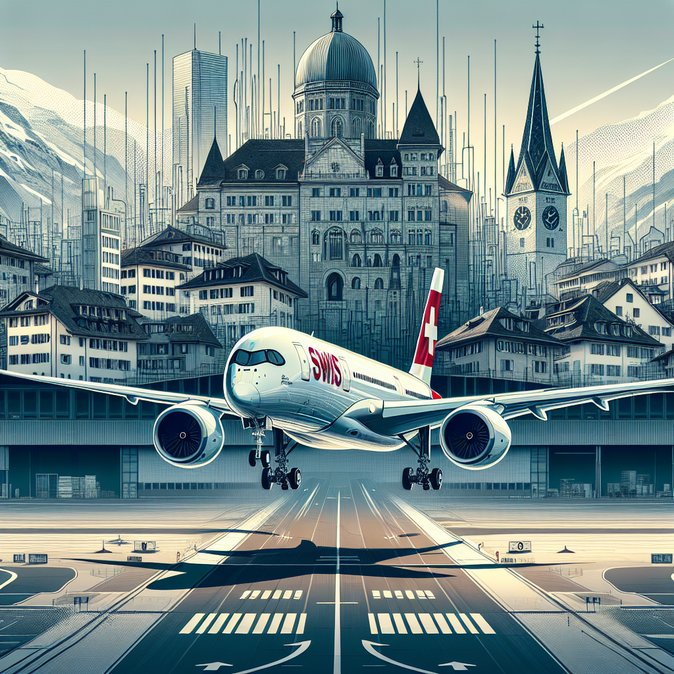
From the start of the summer 2026 schedule the twin-engine jet will fly Zurich-Boston and the newly announced Zurich-Seoul route, bringing the carrier’s new “SWISS Senses” cabin to North America and Asia. The product features private suites in first class, human-centric lighting to reduce jet lag, and Wi-Fi speeds fast enough for in-flight video calls—amenities prized by corporate travellers. A retrofit of the Airbus A330 fleet to the same standard is slated to begin later this year.
For global-mobility teams the implications are twofold. First, the larger cargo hold on the A350 increases capacity for high-value freight and company-move shipments, easing pressure on a Swiss export sector still struggling with post-pandemic belly-hold shortages. Second, the more spacious business-class cabin—complete with sliding doors—offers an upgraded rest environment on key expat corridors, potentially reducing post-flight downtime. Travel buyers should, however, note transitional scheduling quirks: early rotations will substitute the A350 on select European routes for crew training, which may affect aircraft-type consistency in corporate contracts.
SWISS’s fleet renewal coincides with structural changes in the Lufthansa Group’s inter-continental network. As Munich and Frankfurt absorb retrofitted A380s, Zurich will focus on leaner twin-jets, positioning Switzerland as the group’s efficiency champion. Analysts say the strategy is designed to keep hub costs—and therefore transfer fares—competitive against Gulf carriers and Turkish Airlines, critical for maintaining Switzerland’s role as a corporate headquarters and high-end tourism base.(eglobaltravelmedia.com.au)