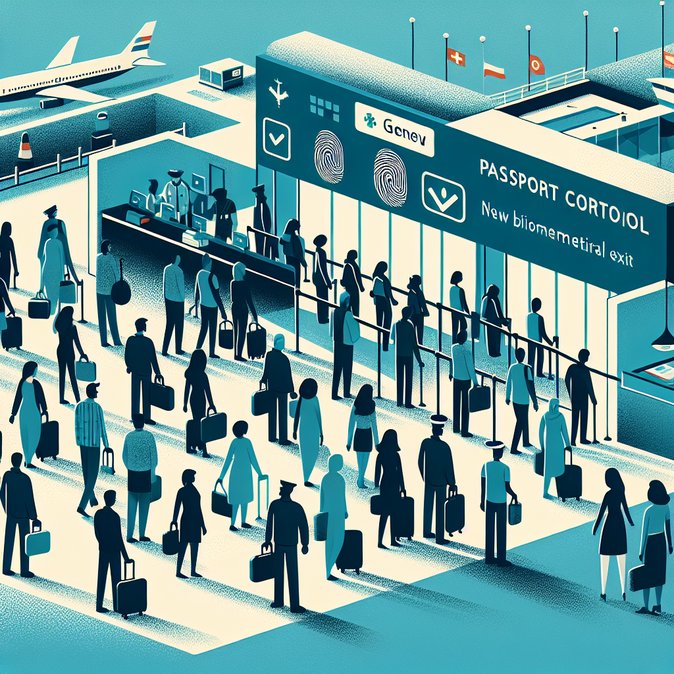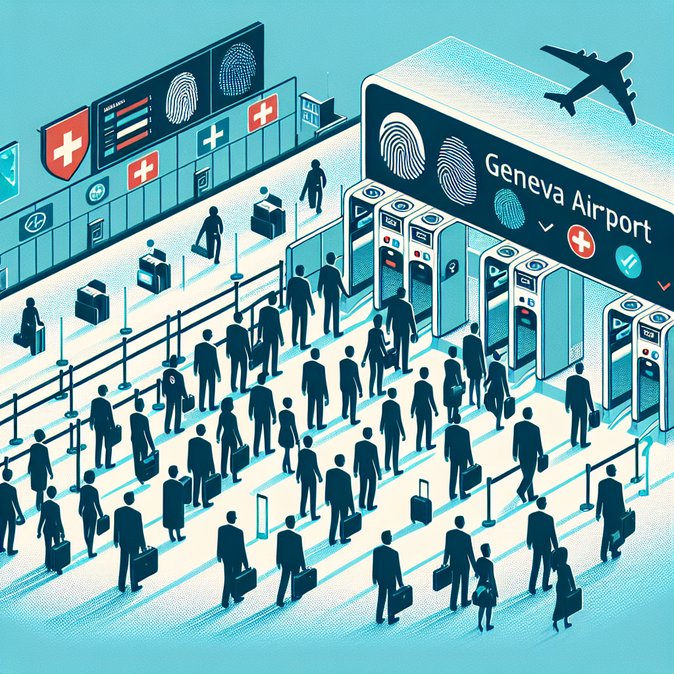
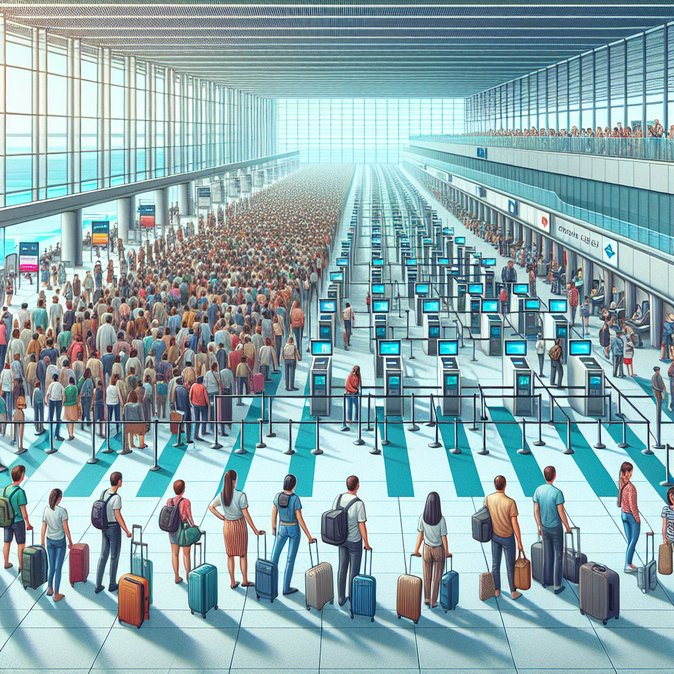
Geneva’s Cointrin airport provided the first hard evidence that Europe’s new Entry/Exit System (EES) is not yet ready for prime time. On Saturday morning, travellers arriving on long-haul flights found themselves funneled into lines that snaked for hundreds of metres through the arrivals concourse. Under EES, every third-country national must provide four fingerprints, a live facial image and a full passport scan on first entry. The procedure is meant to replace manual passport stamping and eventually speed up controls, but early adopters report the opposite.
According to biometrics trade journal Identity Week, only about 35 % of the EU’s external-border posts have activated the system since its October 2025 launch. Geneva’s experience has become the poster child for the teething problems: at peak times queues reached three hours even though the airport is still operating under a “soft-launch” cap that requires officials to process only a third of eligible passengers through the new kiosks. The Federal Office for Customs and Border Security (FOCBS) has had to redeploy officers from routine customs duties, while the airport has hired 40 temporary staff just to manage passenger flows.(identityweek.net)
For travellers trying to navigate these new hurdles, VisaHQ’s Switzerland portal (https://www.visahq.com/switzerland/) can be a game-changer: the platform lets users verify visa and passport requirements, complete electronic travel authorisations, and arrange courier submission of documents well before departure. Having paperwork sorted in advance reduces the chance of delays at EES kiosks and gives passengers more control over tight connections.
![Geneva Airport queues force EU to soften biometric Entry/Exit rollout]()
Fearing continent-wide gridlock when the cap is lifted on 10 April, airport umbrella group ACI Europe and the UK’s ABTA have asked the European Commission to grant member states more flexibility. Commission spokespeople told reporters that the rules already allow a suspension of EES during “exceptional peaks”, but industry leaders say that waiver needs to be formalised and harmonised ahead of the busy summer season. Geneva Airport management supports the call, noting that Switzerland’s three external-Schengen airports—Zurich, Geneva and Basel—would need to enrol every non-EU traveller during July and August, the height of both the alpine and inter-continental tourist seasons.(identityweek.net)
For corporate mobility managers the immediate concern is predictability. Swiss-based multinationals told Identity Week they are advising employees to add 60–90 minutes to their journey time whenever a first post-EES entry is involved. Travel policies are being updated to cover missed connections and to allow premium-channel fees where available. Some firms are exploring alternative routings through Munich or Vienna—airports that have yet to turn on the kiosks—if critical staff need to shave time off corridor transfers.(identityweek.net)
The Swiss experience also highlights a larger strategic issue: staffing. Unlike automated passport gates, EES kiosks cannot be left unattended; officers must be on hand to verify biometrics for minors and troubleshoot errors. FOCBS estimates it would need at least 120 additional border guards in Zurich alone once the hard deadline kicks in. Procurement lead-times mean most recruits will not be operational before the end of the 2026 summer timetable, raising the prospect of rolling congestion unless Brussels relents. For now, travellers are urged to arrive early, complete digital pre-registration where offered, and keep itineraries flexible.(identityweek.net)
According to biometrics trade journal Identity Week, only about 35 % of the EU’s external-border posts have activated the system since its October 2025 launch. Geneva’s experience has become the poster child for the teething problems: at peak times queues reached three hours even though the airport is still operating under a “soft-launch” cap that requires officials to process only a third of eligible passengers through the new kiosks. The Federal Office for Customs and Border Security (FOCBS) has had to redeploy officers from routine customs duties, while the airport has hired 40 temporary staff just to manage passenger flows.(identityweek.net)
For travellers trying to navigate these new hurdles, VisaHQ’s Switzerland portal (https://www.visahq.com/switzerland/) can be a game-changer: the platform lets users verify visa and passport requirements, complete electronic travel authorisations, and arrange courier submission of documents well before departure. Having paperwork sorted in advance reduces the chance of delays at EES kiosks and gives passengers more control over tight connections.
Fearing continent-wide gridlock when the cap is lifted on 10 April, airport umbrella group ACI Europe and the UK’s ABTA have asked the European Commission to grant member states more flexibility. Commission spokespeople told reporters that the rules already allow a suspension of EES during “exceptional peaks”, but industry leaders say that waiver needs to be formalised and harmonised ahead of the busy summer season. Geneva Airport management supports the call, noting that Switzerland’s three external-Schengen airports—Zurich, Geneva and Basel—would need to enrol every non-EU traveller during July and August, the height of both the alpine and inter-continental tourist seasons.(identityweek.net)
For corporate mobility managers the immediate concern is predictability. Swiss-based multinationals told Identity Week they are advising employees to add 60–90 minutes to their journey time whenever a first post-EES entry is involved. Travel policies are being updated to cover missed connections and to allow premium-channel fees where available. Some firms are exploring alternative routings through Munich or Vienna—airports that have yet to turn on the kiosks—if critical staff need to shave time off corridor transfers.(identityweek.net)
The Swiss experience also highlights a larger strategic issue: staffing. Unlike automated passport gates, EES kiosks cannot be left unattended; officers must be on hand to verify biometrics for minors and troubleshoot errors. FOCBS estimates it would need at least 120 additional border guards in Zurich alone once the hard deadline kicks in. Procurement lead-times mean most recruits will not be operational before the end of the 2026 summer timetable, raising the prospect of rolling congestion unless Brussels relents. For now, travellers are urged to arrive early, complete digital pre-registration where offered, and keep itineraries flexible.(identityweek.net)