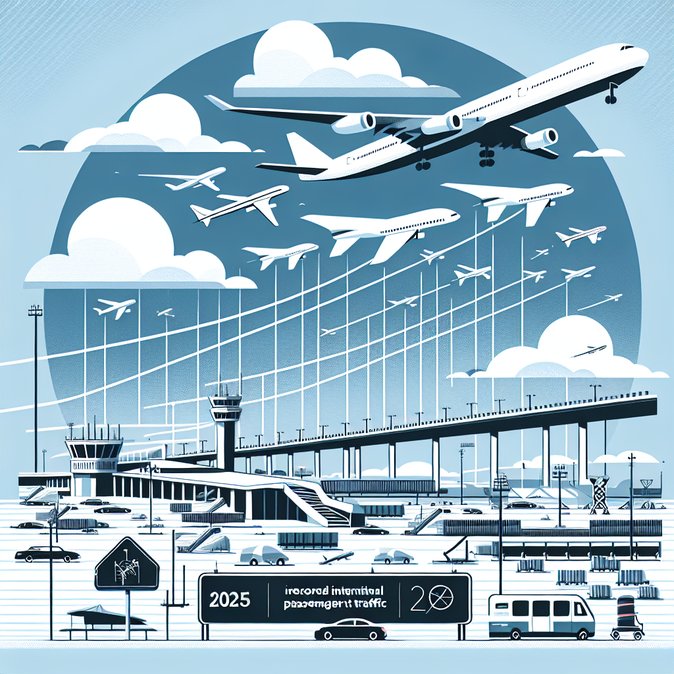
Sydney Airport has confirmed that 2025 was the busiest international year in the gateway’s 104-year history, processing 17.17 million overseas passengers and more than 42 million travellers in total. The rebound was broad-based rather than seasonal: capacity returned across every major region, with Europe and North America leading the charge after carriers fully reinstated post-pandemic schedules. The final quarter alone saw 4.62 million international passengers, a figure the airport had not achieved even during the pre-COVID boom of 2019.
For travellers keen to make the most of the expanded flight schedules, VisaHQ can simplify visa procurement for Australia and onward destinations. Through its dedicated portal (https://www.visahq.com/australia/), the service provides clear guidance on entry requirements, expedited processing options and live status updates—helping both business and leisure passengers navigate documentation with minimal hassle at a time when volumes are surging.
Management attributes the surge to three factors. First, bilateral seat-cap increases negotiated by the Australian Government unlocked additional frequencies for Middle-East and Asian network carriers. Second, tourism trade campaigns such as ‘Come and Say G’day’ successfully converted pent-up demand from the United States, India and China into bookings. Finally, corporate travel rebounded faster than expected, particularly in mining services and higher education, two sectors that rely heavily on face-to-face engagement.
![Sydney Airport posts record-breaking international traffic and names consortium for T2-T3 redevelopment]()
To handle long-term growth the airport today announced that a Lendlease-CPB-Woods Bagot consortium will design and build the long-awaited T2-T3 integration project. Due for completion in 2030, the redevelopment will create a single domestic hub with swing gates capable of handling wide-body aircraft, add a 180-metre air-rail link and introduce biometrics-enabled ‘walk-through’ border processing for international-to-domestic transfers.
For travel managers the numbers matter: Sydney remains the primary trunk into Australia for 60 per cent of business visitors. Higher throughput means more slots for new routes – Qantas has already applied for A350 capacity to Chicago – but it also signals congestion risks. The airport says it will stage works to preserve runway capacity, yet advises companies to build extra buffer time into itineraries from 2027 when major construction peaks.
Practically, the record year and the capital works pipeline strengthen Sydney’s argument in bilateral negotiations that additional foreign carrier access can be accommodated. Mobility professionals should therefore watch for new fifth-freedom options that could lower fares on heavily travelled corporate corridors such as Singapore–Sydney–Auckland.
For travellers keen to make the most of the expanded flight schedules, VisaHQ can simplify visa procurement for Australia and onward destinations. Through its dedicated portal (https://www.visahq.com/australia/), the service provides clear guidance on entry requirements, expedited processing options and live status updates—helping both business and leisure passengers navigate documentation with minimal hassle at a time when volumes are surging.
Management attributes the surge to three factors. First, bilateral seat-cap increases negotiated by the Australian Government unlocked additional frequencies for Middle-East and Asian network carriers. Second, tourism trade campaigns such as ‘Come and Say G’day’ successfully converted pent-up demand from the United States, India and China into bookings. Finally, corporate travel rebounded faster than expected, particularly in mining services and higher education, two sectors that rely heavily on face-to-face engagement.
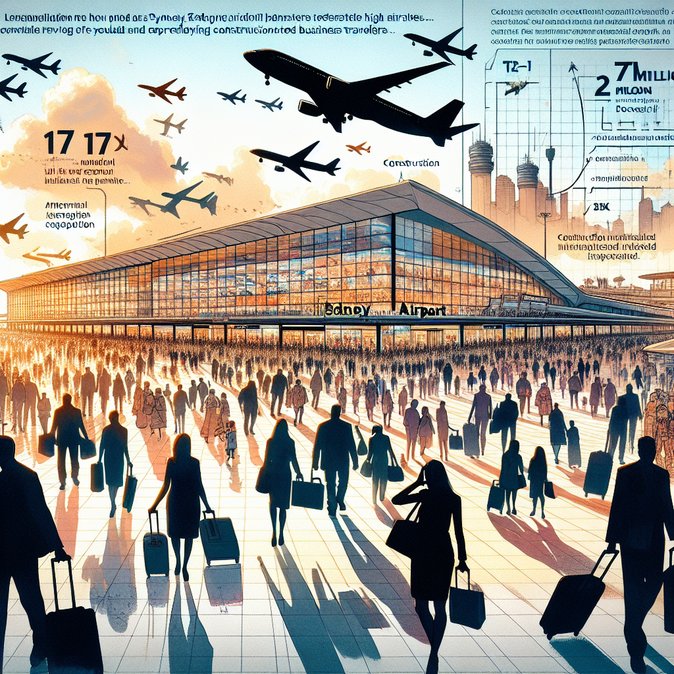
To handle long-term growth the airport today announced that a Lendlease-CPB-Woods Bagot consortium will design and build the long-awaited T2-T3 integration project. Due for completion in 2030, the redevelopment will create a single domestic hub with swing gates capable of handling wide-body aircraft, add a 180-metre air-rail link and introduce biometrics-enabled ‘walk-through’ border processing for international-to-domestic transfers.
For travel managers the numbers matter: Sydney remains the primary trunk into Australia for 60 per cent of business visitors. Higher throughput means more slots for new routes – Qantas has already applied for A350 capacity to Chicago – but it also signals congestion risks. The airport says it will stage works to preserve runway capacity, yet advises companies to build extra buffer time into itineraries from 2027 when major construction peaks.
Practically, the record year and the capital works pipeline strengthen Sydney’s argument in bilateral negotiations that additional foreign carrier access can be accommodated. Mobility professionals should therefore watch for new fifth-freedom options that could lower fares on heavily travelled corporate corridors such as Singapore–Sydney–Auckland.