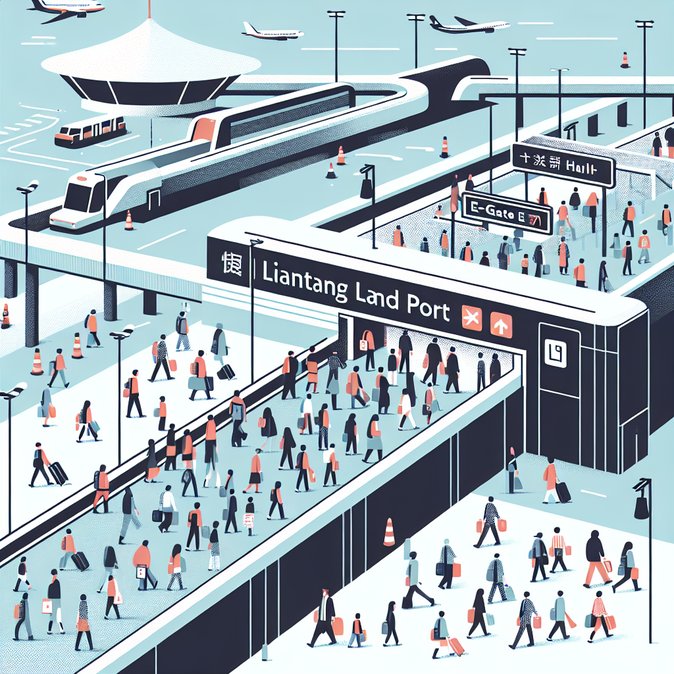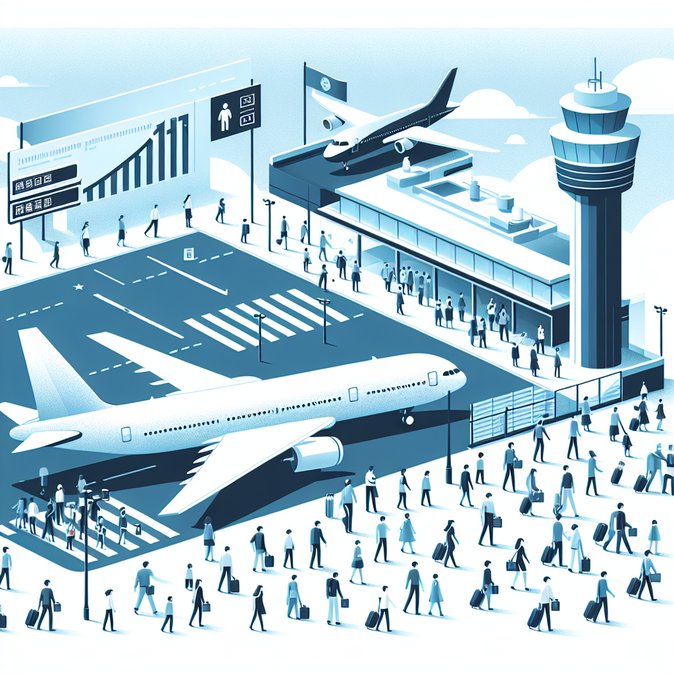
Shanghai’s Pudong and Hongqiao airports handled 3.68 million inbound and outbound passengers between 1 January and midday 5 February, of whom 572,000 were foreign nationals—up 40 percent versus the same period last year. Two-thirds entered under China’s growing portfolio of visa-free schemes, including the 144-hour TWOV and the 15/30-day unilateral waivers for 40+ countries. (finance.sina.com.cn)
The border-inspection authority credited the jump to overlapping factors: the ‘world’s longest Spring Festival holiday’ this year, aggressive marketing by regional tourism bureaus and the convenience of pre-arrival e-declaration and facial-recognition gates recently deployed in both terminals. To cope with the twin peaks of outbound Chinese holidaymakers and inbound foreign tourists, Shanghai immigration is dynamically rostering officers, opening all 304 inspection booths during peak waves and piloting online completion of foreigner arrival cards. (finance.sina.com.cn)
Airport operators have also worked with airlines to shift additional wide-body capacity onto Northeast-Asia and Southeast-Asia routes that are popular with family travellers. Budget carriers report load factors above 95 percent on routes to Seoul, Osaka and Phuket. Business-class demand, however, is strongest on long-haul services to Europe, mirroring the renewed interest of European executives in China’s post-pandemic market.
![Visa-free policies drive 40 % surge in foreign arrivals at Shanghai airports as Spring Festival rush begins]()
For travelers whose passports are not yet covered by the new visa-waiver schemes—or who simply want expert help navigating any paperwork—VisaHQ offers a quick, online route to the right documents. Its dedicated China page (https://www.visahq.com/china/) tracks the latest exemptions, requirements and processing times, making it easy to determine whether you qualify for a 144-hour TWOV, need a traditional visa, or should consider other entry options.
For multinationals, the data confirm that China’s 2025/2026 visa-waiver experiments are translating into measurable travel-volume growth. Companies with regional headquarters in Shanghai should expect tighter hotel inventory and longer taxi queues during the holiday window but can also leverage the new online arrival-card system to shave minutes off immigration clearance.
The authorities reminded passengers that during the 40-day Spring Festival travel period (2 February–13 March) they should allow extra time for check-in and luggage inspection, or consider arrival and departure from neighboring cities such as Hangzhou and Nanjing where queues are shorter.
The border-inspection authority credited the jump to overlapping factors: the ‘world’s longest Spring Festival holiday’ this year, aggressive marketing by regional tourism bureaus and the convenience of pre-arrival e-declaration and facial-recognition gates recently deployed in both terminals. To cope with the twin peaks of outbound Chinese holidaymakers and inbound foreign tourists, Shanghai immigration is dynamically rostering officers, opening all 304 inspection booths during peak waves and piloting online completion of foreigner arrival cards. (finance.sina.com.cn)
Airport operators have also worked with airlines to shift additional wide-body capacity onto Northeast-Asia and Southeast-Asia routes that are popular with family travellers. Budget carriers report load factors above 95 percent on routes to Seoul, Osaka and Phuket. Business-class demand, however, is strongest on long-haul services to Europe, mirroring the renewed interest of European executives in China’s post-pandemic market.

For travelers whose passports are not yet covered by the new visa-waiver schemes—or who simply want expert help navigating any paperwork—VisaHQ offers a quick, online route to the right documents. Its dedicated China page (https://www.visahq.com/china/) tracks the latest exemptions, requirements and processing times, making it easy to determine whether you qualify for a 144-hour TWOV, need a traditional visa, or should consider other entry options.
For multinationals, the data confirm that China’s 2025/2026 visa-waiver experiments are translating into measurable travel-volume growth. Companies with regional headquarters in Shanghai should expect tighter hotel inventory and longer taxi queues during the holiday window but can also leverage the new online arrival-card system to shave minutes off immigration clearance.
The authorities reminded passengers that during the 40-day Spring Festival travel period (2 February–13 March) they should allow extra time for check-in and luggage inspection, or consider arrival and departure from neighboring cities such as Hangzhou and Nanjing where queues are shorter.