At a State Council policy briefing in Beijing on 6 February, Vice-Minister of Commerce Yan Dong announced that the ministry will take the lead in drafting a package of measures aimed at ‘promoting travel-service exports and expanding inbound consumption’. (chinanews.com.cn)
According to Yan, foreign visitors made 82 million trips to China in 2025, up 26.4 percent year-on-year, while duty-free sales to departing visitors almost doubled. The forthcoming measures will therefore combine demand-side incentives—such as widening duty-free shopping quotas and piloting VAT refunds in additional cities—with supply-side reforms designed to help Chinese service providers export outbound tourism, MICE and study-tour products. A dedicated inter-agency task-force will be created to streamline visa, payment and connectivity pain-points that still deter high-spending travellers. (chinanews.com.cn)
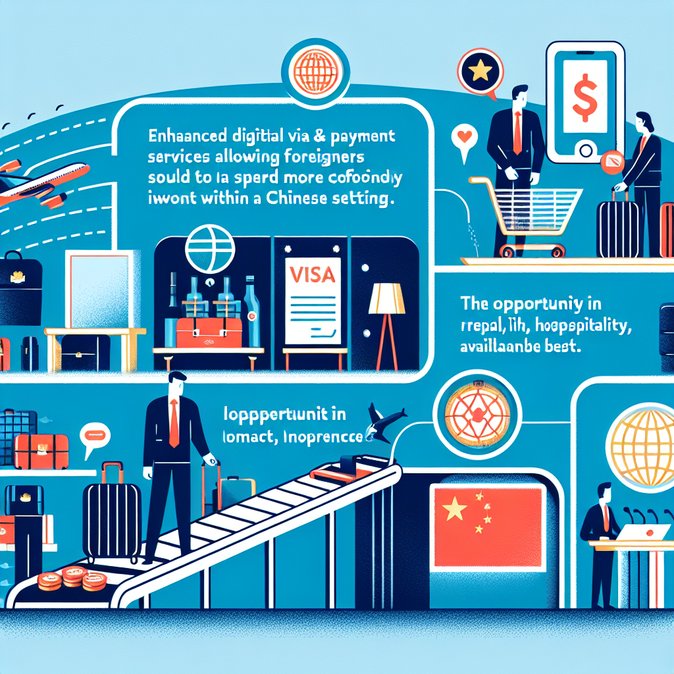
On the visa front, officials signalled that the popular 15- and 30-day unilateral visa-waiver schemes will be reviewed for possible extension beyond December 2026, while the National Immigration Administration is expected to roll out more digital pre-clearance functions to shorten airport dwell-time. Industry sources told China News Service that talks are under way with payment platforms to lift single-transaction caps for foreign cards and to integrate multi-currency wallets into China’s QR infrastructure.
![China’s Ministry of Commerce unveils new push to boost inbound spending and travel-service exports]()
For travellers and corporate mobility teams trying to keep pace with these evolving requirements, VisaHQ’s China desk (https://www.visahq.com/china/) can fast-track visa applications, flag forthcoming waiver extensions and arrange courier submission nationwide, letting visitors seize the new incentives with minimal paperwork.
The business implications are far-reaching. Retailers catering to international visitors—luxury malls, outlets at cruise ports and Hainan’s offshore duty-free operators—could see a material jump in sales once higher personal allowances and simpler e-refunds take effect. For multinationals managing assignee and business-traveller flows, friendlier visa rules and smoother payment rails translate into lower compliance costs and a more predictable travel budget. The policy package is also expected to support Chinese TMCs and DMCs looking to sell packaged tours abroad, helping them hedge sluggish outbound demand.
With travel and tourism contributing 9.3 percent to China’s GDP in 2025, Beijing views inbound consumption as a quick win for stabilising domestic demand in a year of softer manufacturing growth. The draft measures will be opened for public comment before the end of March, with pilot programmes slated for rollout in Shanghai, Beijing, Hainan and Chengdu as early as the summer peak season.
According to Yan, foreign visitors made 82 million trips to China in 2025, up 26.4 percent year-on-year, while duty-free sales to departing visitors almost doubled. The forthcoming measures will therefore combine demand-side incentives—such as widening duty-free shopping quotas and piloting VAT refunds in additional cities—with supply-side reforms designed to help Chinese service providers export outbound tourism, MICE and study-tour products. A dedicated inter-agency task-force will be created to streamline visa, payment and connectivity pain-points that still deter high-spending travellers. (chinanews.com.cn)
On the visa front, officials signalled that the popular 15- and 30-day unilateral visa-waiver schemes will be reviewed for possible extension beyond December 2026, while the National Immigration Administration is expected to roll out more digital pre-clearance functions to shorten airport dwell-time. Industry sources told China News Service that talks are under way with payment platforms to lift single-transaction caps for foreign cards and to integrate multi-currency wallets into China’s QR infrastructure.

For travellers and corporate mobility teams trying to keep pace with these evolving requirements, VisaHQ’s China desk (https://www.visahq.com/china/) can fast-track visa applications, flag forthcoming waiver extensions and arrange courier submission nationwide, letting visitors seize the new incentives with minimal paperwork.
The business implications are far-reaching. Retailers catering to international visitors—luxury malls, outlets at cruise ports and Hainan’s offshore duty-free operators—could see a material jump in sales once higher personal allowances and simpler e-refunds take effect. For multinationals managing assignee and business-traveller flows, friendlier visa rules and smoother payment rails translate into lower compliance costs and a more predictable travel budget. The policy package is also expected to support Chinese TMCs and DMCs looking to sell packaged tours abroad, helping them hedge sluggish outbound demand.
With travel and tourism contributing 9.3 percent to China’s GDP in 2025, Beijing views inbound consumption as a quick win for stabilising domestic demand in a year of softer manufacturing growth. The draft measures will be opened for public comment before the end of March, with pilot programmes slated for rollout in Shanghai, Beijing, Hainan and Chengdu as early as the summer peak season.