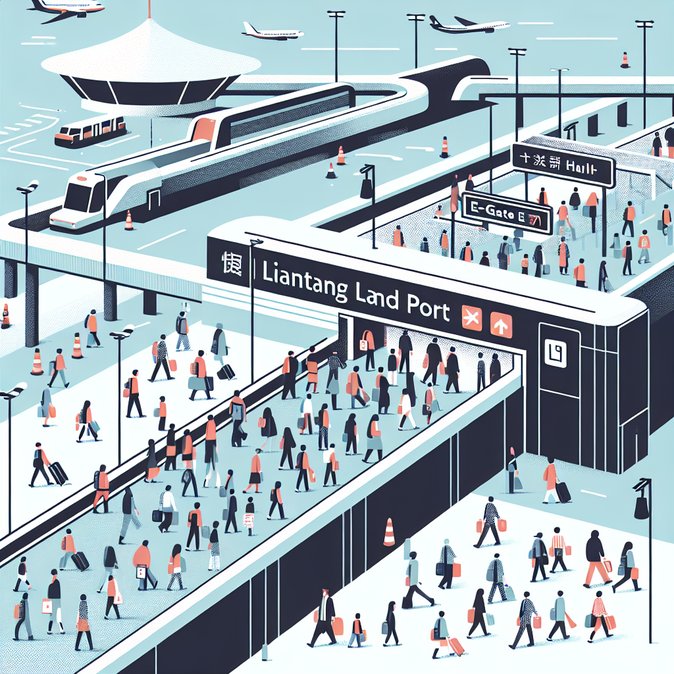
Speaking at the regular press conference on 5 February, Taiwan Affairs Office spokesman Chen Binhua said mainland regulators will ‘do everything possible’ to schedule additional cross-Strait charter flights so that Taiwanese residents on the mainland can return home for the 9-day Lunar-New-Year holiday that starts on 14 February. (chinanews.com.cn)
At present only 14 mainland cities enjoy direct scheduled services to Taiwan, operating just over 300 flights per week—far below the 61 cities and 890 weekly flights available before 2020. Chen blamed Taipei for maintaining ‘unreasonable restrictions’ on new routes and frequencies, calling on the incoming Taiwan administration to heed public opinion and fully restore direct links.
Meanwhile, travellers scrambling for space on these limited flights often discover at the last minute that their permits or entry visas are about to expire. VisaHQ can step in here: through its Shanghai-based support team and global online portal (https://www.visahq.com/china/), the service can fast-track mainland China visa renewals or new applications for Taiwan passport holders and their dependents, allowing them to capitalise on any newly released charter seats without bureaucratic delays.
![Beijing urges Taiwan to lift flight caps, pledges extra Lunar-New-Year charters]()
Airlines on both sides are drawing up contingency plans: China Eastern and Xiamen Airlines are expected to operate point-to-point charters from second-tier cities such as Wuxi and Zhengzhou, while Taiwan’s China Airlines and EVA Air have applied for additional night-time slots at Xiamen and Fuzhou. Travel agents say economy-class fares on existing routes have already doubled for peak-holiday dates.
For businesses that manage large populations of Taiwan passport holders working on the mainland, charter availability could significantly ease travel bottlenecks and reduce reliance on third-country stopovers (usually Hong Kong or Macau). Mobility teams should monitor approvals closely; once the Civil Aviation Administration publishes slot allocations, seats tend to sell out within hours.
Looking ahead, analysts say a full reinstatement of the 61-city network would restore more than 50,000 weekly seats, shaving at least three hours off journeys that currently require a Hong Kong connection and saving companies an estimated RMB 2,000 per round-trip in travel costs.
At present only 14 mainland cities enjoy direct scheduled services to Taiwan, operating just over 300 flights per week—far below the 61 cities and 890 weekly flights available before 2020. Chen blamed Taipei for maintaining ‘unreasonable restrictions’ on new routes and frequencies, calling on the incoming Taiwan administration to heed public opinion and fully restore direct links.
Meanwhile, travellers scrambling for space on these limited flights often discover at the last minute that their permits or entry visas are about to expire. VisaHQ can step in here: through its Shanghai-based support team and global online portal (https://www.visahq.com/china/), the service can fast-track mainland China visa renewals or new applications for Taiwan passport holders and their dependents, allowing them to capitalise on any newly released charter seats without bureaucratic delays.

Airlines on both sides are drawing up contingency plans: China Eastern and Xiamen Airlines are expected to operate point-to-point charters from second-tier cities such as Wuxi and Zhengzhou, while Taiwan’s China Airlines and EVA Air have applied for additional night-time slots at Xiamen and Fuzhou. Travel agents say economy-class fares on existing routes have already doubled for peak-holiday dates.
For businesses that manage large populations of Taiwan passport holders working on the mainland, charter availability could significantly ease travel bottlenecks and reduce reliance on third-country stopovers (usually Hong Kong or Macau). Mobility teams should monitor approvals closely; once the Civil Aviation Administration publishes slot allocations, seats tend to sell out within hours.
Looking ahead, analysts say a full reinstatement of the 61-city network would restore more than 50,000 weekly seats, shaving at least three hours off journeys that currently require a Hong Kong connection and saving companies an estimated RMB 2,000 per round-trip in travel costs.
More From China
View all
China’s Ministry of Commerce unveils new push to boost inbound spending and travel-service exports

Visa-free policies drive 40 % surge in foreign arrivals at Shanghai airports as Spring Festival rush begins