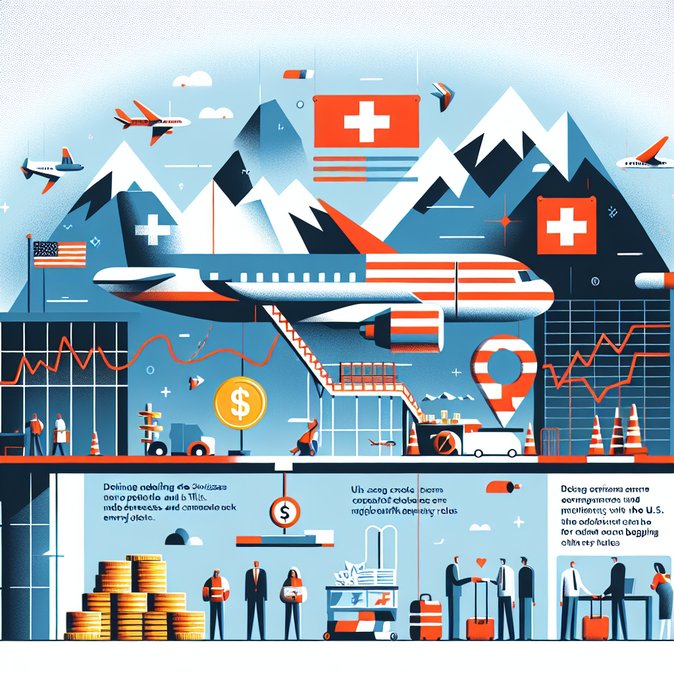
Speaking at a road-show for Swiss travel agents in Zürich on 6 February, the Visit USA committee predicted that arrivals from Switzerland to the United States will drop below 300,000 this year—down 25 % on 2025 and almost 40 % below pre-pandemic levels. Keystone-SDA figures cited by Swissinfo show a 10.6 % decline already last year, to 361,000 visitors.(swissinfo.ch)
Committee chairman Heinz Zimmermann blamed a mix of practical and psychological factors: the strong U.S. dollar and higher airfares, but also confusion over changing entry rules such as the new ESTA live-photo requirement and state-level gun-violence headlines. First-time leisure travellers are postponing trips, while repeat visitors remain more resilient.
Travellers facing that paperwork maze can turn to VisaHQ for help; its Switzerland portal (https://www.visahq.com/switzerland/) provides up-to-date guidance on ESTA applications, photo specifications and other U.S. visa options, letting users complete forms online and consult specialists so that administrative hassles don’t stand in the way of a long-awaited holiday.
![Swiss outbound travel to United States forecast to fall another 25 % in 2026]()
For Swiss airlines and tour operators the trend is worrying. The U.S. historically ranks as Switzerland’s third-largest long-haul market after Thailand and South Africa. A prolonged slump could prompt capacity reductions on Zürich–New York or Geneva–Washington routes, raising prices for corporate travellers.
Mobility teams relocating staff to U.S. projects should anticipate tighter seat availability and higher fares in peak months. Companies may need to book earlier or consider connecting flights via EU hubs. Tourism marketing bodies, meanwhile, are doubling down on niche segments such as national-park itineraries and culinary tours to rekindle Swiss interest.
Industry analysts caution that sentiment can shift quickly. A favourable exchange-rate swing or streamlined border processes could restore demand—but for 2026 at least, the United States looks set to lose further ground to destinations with simpler entry regimes.
Committee chairman Heinz Zimmermann blamed a mix of practical and psychological factors: the strong U.S. dollar and higher airfares, but also confusion over changing entry rules such as the new ESTA live-photo requirement and state-level gun-violence headlines. First-time leisure travellers are postponing trips, while repeat visitors remain more resilient.
Travellers facing that paperwork maze can turn to VisaHQ for help; its Switzerland portal (https://www.visahq.com/switzerland/) provides up-to-date guidance on ESTA applications, photo specifications and other U.S. visa options, letting users complete forms online and consult specialists so that administrative hassles don’t stand in the way of a long-awaited holiday.

For Swiss airlines and tour operators the trend is worrying. The U.S. historically ranks as Switzerland’s third-largest long-haul market after Thailand and South Africa. A prolonged slump could prompt capacity reductions on Zürich–New York or Geneva–Washington routes, raising prices for corporate travellers.
Mobility teams relocating staff to U.S. projects should anticipate tighter seat availability and higher fares in peak months. Companies may need to book earlier or consider connecting flights via EU hubs. Tourism marketing bodies, meanwhile, are doubling down on niche segments such as national-park itineraries and culinary tours to rekindle Swiss interest.
Industry analysts caution that sentiment can shift quickly. A favourable exchange-rate swing or streamlined border processes could restore demand—but for 2026 at least, the United States looks set to lose further ground to destinations with simpler entry regimes.