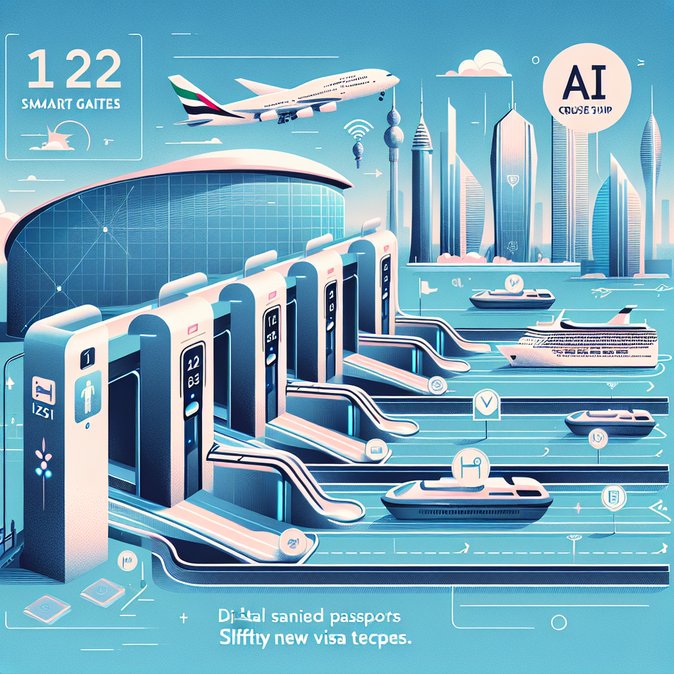
Travel through Dubai just became even faster. Travel and Tour World reports that Dubai International has activated 122 new contactless Smart Gates capable of processing passengers in under five seconds using iris and facial recognition. The launch dovetails with a February roll-out of two niche entry permits—the 10-day AI Specialist Visa and the Maritime Tourism Visa—designed to lure tech talent and cruise-sector professionals.
For mobility managers, the Smart Gate expansion means shorter queue times and more reliable minimum-connect windows. Frequent flyers with Emirates Skywards or UAE residency are automatically enrolled, while first-time visitors can register at arrival kiosks. The system matches GDRFA biometrics with airline manifests to pre-authorise travellers before they reach immigration, a model that industry observers say could become standard across the GCC by 2028.
To navigate these evolving visa categories, managers can turn to VisaHQ, whose UAE platform (https://www.visahq.com/united-arab-emirates/) consolidates requirements, real-time fee updates, and fast application handling—making it simple to secure everything from a 10-day AI Specialist entry to maritime crew permits.
![122 next-gen Smart Gates go live at DXB as UAE unveils AI-Specialist and Maritime Tourism visas]()
The AI Specialist Visa allows single or multiple entries backed by a licensed UAE sponsor and is already being used by Dubai Internet City tenants to fly in data-scientists for sprint projects without lengthy work-permit processing. Meanwhile, the Maritime Tourism Visa supports the emirate’s ambition to triple cruise passenger numbers to two million by 2030, enabling shipboard crew changes and short-stay maintenance calls without full employment visas.
Combined, the technology upgrade and visa micro-targeting underline the UAE’s strategy of friction-free borders paired with highly segmented talent channels. Corporate HR teams are urged to audit traveller profiles: employees holding frontier-tech roles may now qualify for easier multiple-entry access, while operations teams moving super-yacht staff can leverage the dedicated maritime route.
The authorities also hinted that a Blockchain-based visitor wallet, integrating visa status, health insurance and VAT refunds, will enter beta by year-end—another reason programme managers should stay alert to the UAE’s rapid regulatory cadence.
For mobility managers, the Smart Gate expansion means shorter queue times and more reliable minimum-connect windows. Frequent flyers with Emirates Skywards or UAE residency are automatically enrolled, while first-time visitors can register at arrival kiosks. The system matches GDRFA biometrics with airline manifests to pre-authorise travellers before they reach immigration, a model that industry observers say could become standard across the GCC by 2028.
To navigate these evolving visa categories, managers can turn to VisaHQ, whose UAE platform (https://www.visahq.com/united-arab-emirates/) consolidates requirements, real-time fee updates, and fast application handling—making it simple to secure everything from a 10-day AI Specialist entry to maritime crew permits.

The AI Specialist Visa allows single or multiple entries backed by a licensed UAE sponsor and is already being used by Dubai Internet City tenants to fly in data-scientists for sprint projects without lengthy work-permit processing. Meanwhile, the Maritime Tourism Visa supports the emirate’s ambition to triple cruise passenger numbers to two million by 2030, enabling shipboard crew changes and short-stay maintenance calls without full employment visas.
Combined, the technology upgrade and visa micro-targeting underline the UAE’s strategy of friction-free borders paired with highly segmented talent channels. Corporate HR teams are urged to audit traveller profiles: employees holding frontier-tech roles may now qualify for easier multiple-entry access, while operations teams moving super-yacht staff can leverage the dedicated maritime route.
The authorities also hinted that a Blockchain-based visitor wallet, integrating visa status, health insurance and VAT refunds, will enter beta by year-end—another reason programme managers should stay alert to the UAE’s rapid regulatory cadence.