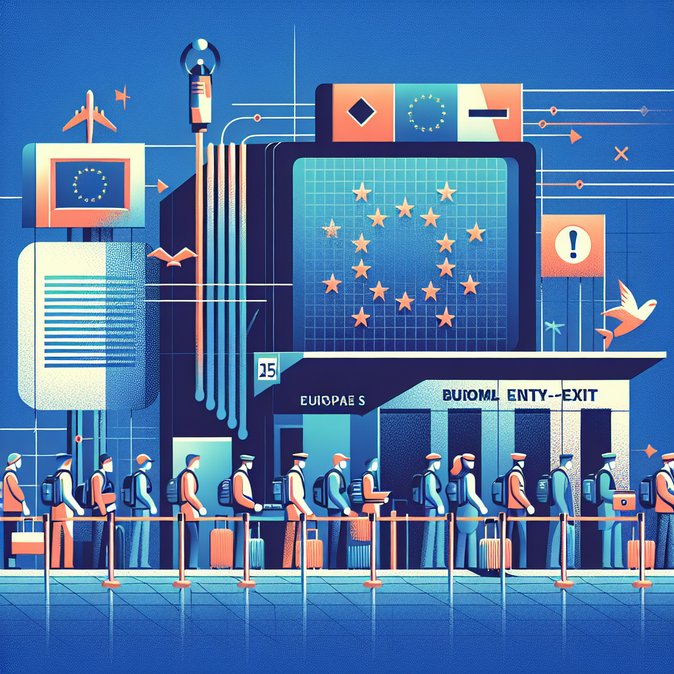
European airports and travel associations on 5 February called on the European Commission to let border agencies ‘stand down’ the new biometric Entry-Exit System (EES) whenever queues spiral, warning of waits of up to five hours if the scheme goes fully live on 10 April. The plea is highly relevant for Poland, one of 29 Schengen states that must upgrade every air, sea and land post—including Warsaw Chopin Airport and the busy A2 motorway crossings with Germany—by that deadline.
Since the system’s soft launch in October, Polish officers have only been required to register 35 % of third-country travellers, and most airports have coped. But industry body ACI Europe warns that chronic understaffing could turn manageable two-hour lines into five-hour gridlock once 100 % capture kicks in. UK tour operators, who generate more than 700,000 inbound seats to Polish destinations each summer, are already advising groups to allow extra transfer time in Warsaw and Kraków.
Travellers and duty-of-care teams looking for clear guidance on Poland’s evolving border rules can turn to VisaHQ, which tracks Schengen policy changes in real time and helps clients complete any necessary visa or passport paperwork online. The dedicated Poland portal (https://www.visahq.com/poland/) provides document checklists, deadline reminders and live support—tools that can prevent costly missteps and smooth the arrival process when the biometric switch is flipped.
![EU urged to relax biometric Entry-Exit checks before summer peak as Poland readies April switchover]()
Poland invested early, installing kiosks at Chopin and Kraków-Balice airports and training Border Guard staff at EuroCity rail terminals. Yet officials privately admit the database crash on the Ukrainian frontier this week shows the risk of rolling out biometric gates without robust back-ups. Contingency measures under Schengen rules allow authorities to scale back or suspend EES if ‘significant disruption’ occurs, but require Commission notification—a time-consuming step during a live meltdown.
For corporate‐mobility managers the message is clear: brief travelling employees to expect manual processing, especially on first post-April entry, and build generous connection windows into itineraries. Airlines serving Poland are reviewing minimum-connect times, while airport operators lobby Warsaw for temporary staffing boosts.
The Commission has hinted at keeping contingency powers in place through the summer, but no formal notice has been issued. Unless that changes, businesses face an uncertain spring when Poland flicks the biometric switch.
Since the system’s soft launch in October, Polish officers have only been required to register 35 % of third-country travellers, and most airports have coped. But industry body ACI Europe warns that chronic understaffing could turn manageable two-hour lines into five-hour gridlock once 100 % capture kicks in. UK tour operators, who generate more than 700,000 inbound seats to Polish destinations each summer, are already advising groups to allow extra transfer time in Warsaw and Kraków.
Travellers and duty-of-care teams looking for clear guidance on Poland’s evolving border rules can turn to VisaHQ, which tracks Schengen policy changes in real time and helps clients complete any necessary visa or passport paperwork online. The dedicated Poland portal (https://www.visahq.com/poland/) provides document checklists, deadline reminders and live support—tools that can prevent costly missteps and smooth the arrival process when the biometric switch is flipped.

Poland invested early, installing kiosks at Chopin and Kraków-Balice airports and training Border Guard staff at EuroCity rail terminals. Yet officials privately admit the database crash on the Ukrainian frontier this week shows the risk of rolling out biometric gates without robust back-ups. Contingency measures under Schengen rules allow authorities to scale back or suspend EES if ‘significant disruption’ occurs, but require Commission notification—a time-consuming step during a live meltdown.
For corporate‐mobility managers the message is clear: brief travelling employees to expect manual processing, especially on first post-April entry, and build generous connection windows into itineraries. Airlines serving Poland are reviewing minimum-connect times, while airport operators lobby Warsaw for temporary staffing boosts.
The Commission has hinted at keeping contingency powers in place through the summer, but no formal notice has been issued. Unless that changes, businesses face an uncertain spring when Poland flicks the biometric switch.