
Dublin Airport handled 2.48 million passengers in January 2026, a 14 % jump on the same month last year and the highest January throughput in its history, operator daa revealed on 5 February. Three separate days topped the 100,000-passenger mark—unprecedented for what is traditionally the quietest month of the year.(dublinairport.com)
The surge underscores the lingering mismatch between demand and the statutory 32-million annual passenger cap that still hangs over the airport pending EU court clarification. daa confirmed that the Department of Transport will shortly bring forward legislation to remove the ceiling permanently, arguing that capacity constraints risk curtailing Ireland’s economic growth and its attractiveness as a European hub for US-bound connectivity and multinational investment.
For corporate travel managers, the numbers signal tighter seat availability and higher fares on peak routes such as Dublin–London Heathrow and Dublin–Amsterdam, which were the airport’s top two destinations in January. The airport has already begun refurbishing Terminal 1 lounges and expanding fast-track security lanes to maintain a sub-15-minute average queuing time, a metric it managed to hit 98 % of the time last month despite the volume spike.
![Record January traffic at Dublin Airport revives calls to scrap 32-million passenger cap]()
When demand swells this quickly, ensuring every traveller has the right paperwork in place becomes even more critical. VisaHQ’s Ireland platform (https://www.visahq.com/ireland/) lets companies and individual flyers secure visas, passport renewals and electronic travel authorisations in one streamlined dashboard, helping them avoid last-minute hiccups as flights fill and schedules tighten.
Separately, daa confirmed that work is progressing on a dedicated US Pre-clearance lounge upgrade in Terminal 2—positive news for multinationals that rely on same-day meetings in Boston, New York and Chicago. However, analysts warn that unless the cap is lifted, airlines could divert growth aircraft to less-restricted UK or continental hubs, limiting options for Irish-based business travellers.
With the European Commission forecasting a 9 % compound annual growth rate in transatlantic traffic through 2030, Irish business groups are lobbying TDs to accelerate statutory changes. A decision is expected before the summer recess; in the meantime, travel buyers should budget for fare volatility and consider advance-purchase blocks on key corporate routes.
The surge underscores the lingering mismatch between demand and the statutory 32-million annual passenger cap that still hangs over the airport pending EU court clarification. daa confirmed that the Department of Transport will shortly bring forward legislation to remove the ceiling permanently, arguing that capacity constraints risk curtailing Ireland’s economic growth and its attractiveness as a European hub for US-bound connectivity and multinational investment.
For corporate travel managers, the numbers signal tighter seat availability and higher fares on peak routes such as Dublin–London Heathrow and Dublin–Amsterdam, which were the airport’s top two destinations in January. The airport has already begun refurbishing Terminal 1 lounges and expanding fast-track security lanes to maintain a sub-15-minute average queuing time, a metric it managed to hit 98 % of the time last month despite the volume spike.

When demand swells this quickly, ensuring every traveller has the right paperwork in place becomes even more critical. VisaHQ’s Ireland platform (https://www.visahq.com/ireland/) lets companies and individual flyers secure visas, passport renewals and electronic travel authorisations in one streamlined dashboard, helping them avoid last-minute hiccups as flights fill and schedules tighten.
Separately, daa confirmed that work is progressing on a dedicated US Pre-clearance lounge upgrade in Terminal 2—positive news for multinationals that rely on same-day meetings in Boston, New York and Chicago. However, analysts warn that unless the cap is lifted, airlines could divert growth aircraft to less-restricted UK or continental hubs, limiting options for Irish-based business travellers.
With the European Commission forecasting a 9 % compound annual growth rate in transatlantic traffic through 2030, Irish business groups are lobbying TDs to accelerate statutory changes. A decision is expected before the summer recess; in the meantime, travel buyers should budget for fare volatility and consider advance-purchase blocks on key corporate routes.
More From Ireland
View all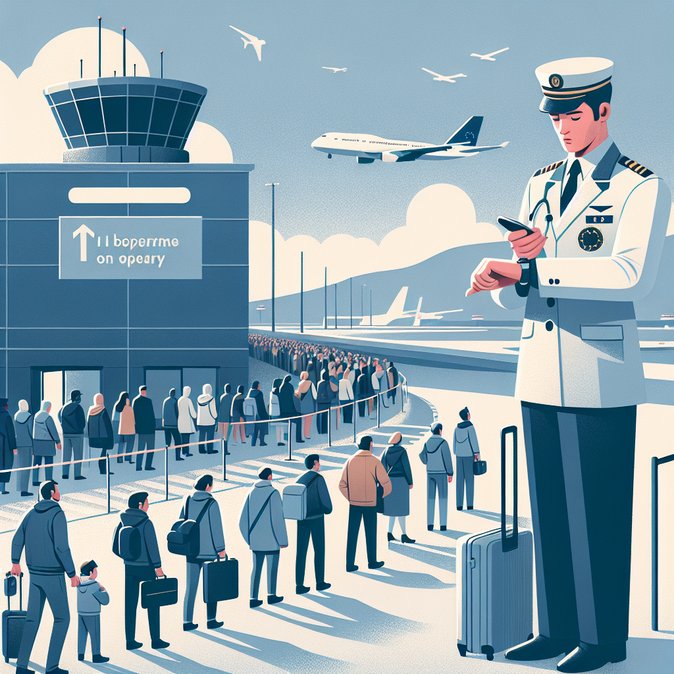
Irish travel sector warns of summer grid-lock as EU biometric border checks expand

Government extends Travel Confirmation Notice, letting non-EEA residents with expired IRP cards fly until 28 February