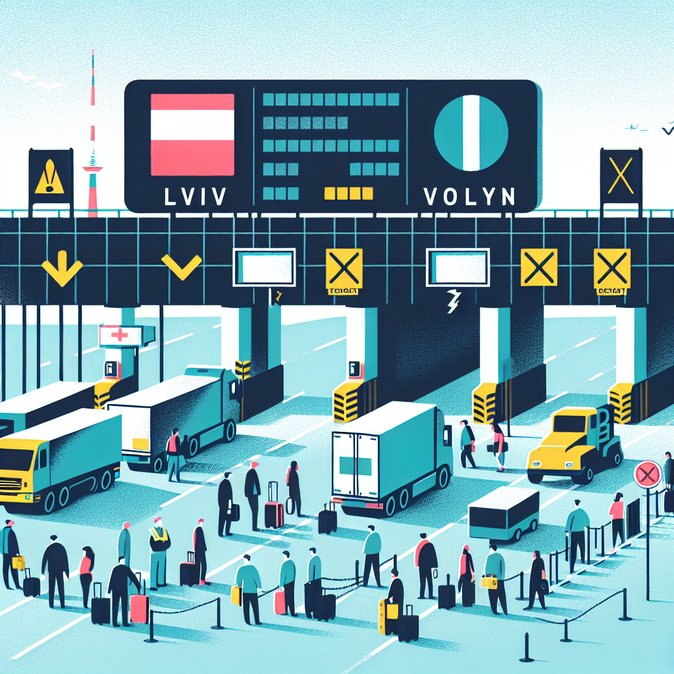
A routine overnight upgrade to the Polish Border Guard’s central database back-fired in the early hours of 4 February, knocking the system that validates passports and vehicle data offline at several road and rail checkpoints in the Lviv and Volyn regions of Ukraine. Border officers were forced to revert to manual inspections, lengthening each screening by several minutes and creating a ripple effect that was still being felt at dawn. Ukrainian officials said that while queues of cars remained short—five vehicles at Ustilug and none at Yahodyn—the processing of international trains was noticeably slower, with conductors told to collect passports in advance so that officers could pre-stamp them during stops. (travelandtourworld.com)
The failure could not have come at a worse time for logistics operators. Since the start of the year Polish farmers have staged intermittent protests over EU climate rules, sporadically blocking freight corridors near the same frontier. Although the latest disruption was technical rather than political, exporters of perishable goods and just-in-time automotive components reported having to re-route lorries through Slovakia at short notice, adding 200–300 kilometres to each journey.
Poland’s Interior Ministry blamed “an unexpected software conflict” connected to preparations for the EU’s new Entry/Exit System (EES), due to go fully live in April. Analysts note that EES will quadruple the amount of biometric data captured at the border, making resilient IT architecture critical. Business-travel managers are urging companies to build in extra lay-over time for staff transiting the Polish-Ukrainian gateway during the EES bedding-in period.
![Database Glitch in Poland’s Border Guard Slows Crossings on Ukrainian Frontier]()
For travellers who suddenly need to adjust routes or confirm documentation requirements, VisaHQ can be a lifesaver. Its dedicated Poland page (https://www.visahq.com/poland/) offers real-time visa guidance, application processing and courier support for multiple nationalities, helping passengers and logistics teams keep cargo and itineraries on track even when border systems hit unexpected snags.
For now, the glitch appears contained. By mid-morning, electronic gates at Dorohusk were back online and the Polish Border Guard said it had restored 80 percent of normal processing capacity. Nevertheless, the incident is a reminder of the fragility of Europe’s busiest non-Schengen land border. Companies with mobile workforces in eastern Poland have been advised to activate contingency plans that include alternative rail routings via Hungary and advance electronic manifest filing to speed manual checks if systems fail again.
Looking ahead, Warsaw is expected to run further stress tests before switching its entire frontier to the new biometric platform. Until those tests are complete, risk managers say corporates should treat the Polish-Ukrainian border as a potential choke-point and brief travelling employees accordingly.
The failure could not have come at a worse time for logistics operators. Since the start of the year Polish farmers have staged intermittent protests over EU climate rules, sporadically blocking freight corridors near the same frontier. Although the latest disruption was technical rather than political, exporters of perishable goods and just-in-time automotive components reported having to re-route lorries through Slovakia at short notice, adding 200–300 kilometres to each journey.
Poland’s Interior Ministry blamed “an unexpected software conflict” connected to preparations for the EU’s new Entry/Exit System (EES), due to go fully live in April. Analysts note that EES will quadruple the amount of biometric data captured at the border, making resilient IT architecture critical. Business-travel managers are urging companies to build in extra lay-over time for staff transiting the Polish-Ukrainian gateway during the EES bedding-in period.

For travellers who suddenly need to adjust routes or confirm documentation requirements, VisaHQ can be a lifesaver. Its dedicated Poland page (https://www.visahq.com/poland/) offers real-time visa guidance, application processing and courier support for multiple nationalities, helping passengers and logistics teams keep cargo and itineraries on track even when border systems hit unexpected snags.
For now, the glitch appears contained. By mid-morning, electronic gates at Dorohusk were back online and the Polish Border Guard said it had restored 80 percent of normal processing capacity. Nevertheless, the incident is a reminder of the fragility of Europe’s busiest non-Schengen land border. Companies with mobile workforces in eastern Poland have been advised to activate contingency plans that include alternative rail routings via Hungary and advance electronic manifest filing to speed manual checks if systems fail again.
Looking ahead, Warsaw is expected to run further stress tests before switching its entire frontier to the new biometric platform. Until those tests are complete, risk managers say corporates should treat the Polish-Ukrainian border as a potential choke-point and brief travelling employees accordingly.