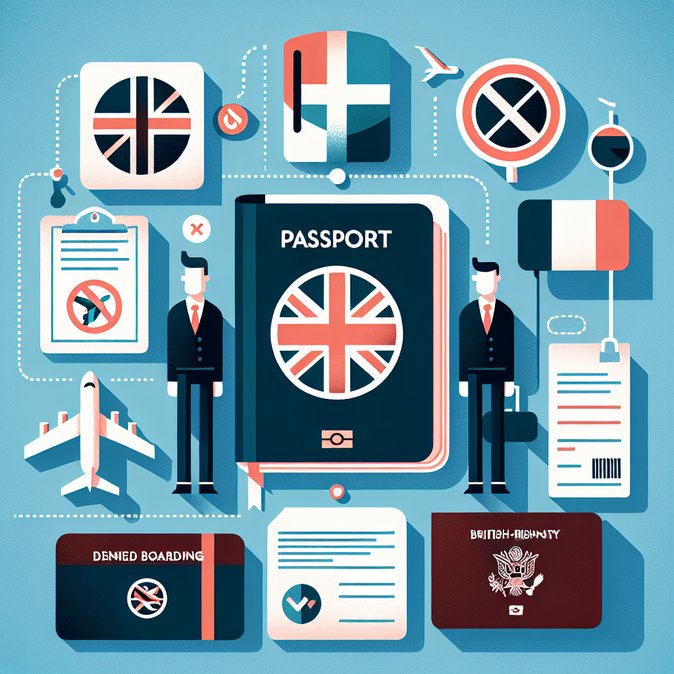
With the United Kingdom’s Electronic Travel Authorisation (ETA) system set for full enforcement on 25 February 2026, the Home Office—and immigration advisers—are warning British-Irish dual citizens to travel with documentary proof that they are exempt. Under the statutory rules, anyone who holds both nationalities is not required to obtain an ETA, but airlines must be satisfied at check-in; failure to present evidence can result in denied boarding.
A 3 February alert from global immigration firm Fragomen underscores the operational risk. Acceptable proof can include a Certificate of Entitlement to the Right of Abode, an Irish passport alongside a UK one, or other documentation confirming status. While the Department has briefed carriers, airline staff have discretion and frequently err on the side of caution when electronic systems flag “ETA required.” Business travellers commuting between Dublin and British cities—particularly those using mobile-only boarding passes—face the greatest exposure to delays.
![UK Reminds British-Irish Dual Nationals to Carry Proof of Citizenship as ETA Scheme Goes Fully Live on 25 February]()
To streamline these checks, VisaHQ offers an Ireland-based portal (https://www.visahq.com/ireland/) where individual travellers and corporate coordinators can pre-verify ETA exemptions, upload the required documentation and receive one-to-one assistance if an urgent authorisation is still needed. The service can also feed confirmation data back to airlines, cutting the likelihood of a last-minute boarding refusal.
For Irish-registered companies the change adds a new compliance layer to day-trip meetings and short-term projects in Great Britain. Travel managers should audit employee nationality combinations, issue clear packing checklists and store digital copies of proof documents in traveller profiles. Multinationals may also need to update duty-of-care protocols to cover last-minute ETA applications (which cost £16 and can take up to 72 hours for manual review) when proof is missing.
The episode illustrates a broader trend towards carrier-led immigration pre-checks. Similar systems already apply to the US ESTA and forthcoming EU ETIAS regimes. Ireland itself remains outside the UK ETA and Schengen ETIAS frameworks thanks to the Common Travel Area, but Irish residents of other nationalities will still need the UK authorisation from 2026. As digital permits proliferate, storing verifiable identity data—and ensuring staff can retrieve it offline—will become a core mobility function.
A 3 February alert from global immigration firm Fragomen underscores the operational risk. Acceptable proof can include a Certificate of Entitlement to the Right of Abode, an Irish passport alongside a UK one, or other documentation confirming status. While the Department has briefed carriers, airline staff have discretion and frequently err on the side of caution when electronic systems flag “ETA required.” Business travellers commuting between Dublin and British cities—particularly those using mobile-only boarding passes—face the greatest exposure to delays.

To streamline these checks, VisaHQ offers an Ireland-based portal (https://www.visahq.com/ireland/) where individual travellers and corporate coordinators can pre-verify ETA exemptions, upload the required documentation and receive one-to-one assistance if an urgent authorisation is still needed. The service can also feed confirmation data back to airlines, cutting the likelihood of a last-minute boarding refusal.
For Irish-registered companies the change adds a new compliance layer to day-trip meetings and short-term projects in Great Britain. Travel managers should audit employee nationality combinations, issue clear packing checklists and store digital copies of proof documents in traveller profiles. Multinationals may also need to update duty-of-care protocols to cover last-minute ETA applications (which cost £16 and can take up to 72 hours for manual review) when proof is missing.
The episode illustrates a broader trend towards carrier-led immigration pre-checks. Similar systems already apply to the US ESTA and forthcoming EU ETIAS regimes. Ireland itself remains outside the UK ETA and Schengen ETIAS frameworks thanks to the Common Travel Area, but Irish residents of other nationalities will still need the UK authorisation from 2026. As digital permits proliferate, storing verifiable identity data—and ensuring staff can retrieve it offline—will become a core mobility function.