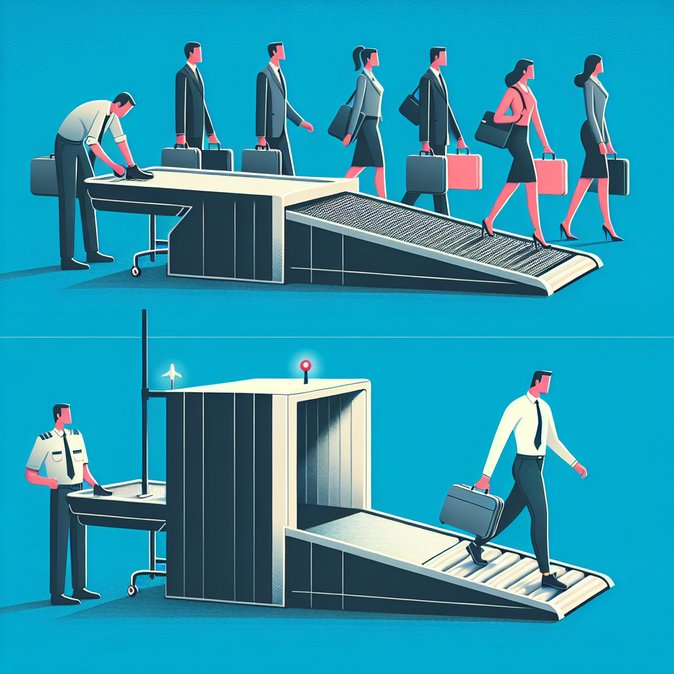
Frequent flyers received a rare gift from the Transportation Security Administration (TSA) on 2 February: the right to keep their shoes on at standard U.S. airport checkpoints. Homeland Security Secretary Kristi Noem said the policy change—effective immediately—was made possible by millimetre-wave scanners, advanced explosives-trace detection and AI-driven risk algorithms that render the 2006 “shoe-removal” rule obsolete.
The revision standardises the experience across all passengers; PreCheck members had long enjoyed shoe-on screening, while children and seniors were partially exempt. TSA estimates the move will shave 12–15 seconds per traveller, equivalent to roughly 22 million staff hours a year and shorter queues at peak times.
![Shoes Stay On: DHS Scraps Two-Decade-Old Airport Footwear Rule]()
From a mobility perspective, the update reduces friction for international assignees unfamiliar with U.S. security rituals and simplifies corporate travel-policy briefings. Airports need not re-engineer lanes, and TSA says signage will be updated within weeks. Travellers should note that laptops, liquids and belts rules remain unchanged and that officers can still request shoe removal during secondary screening.
For international visitors who now face one less hurdle at the checkpoint, VisaHQ can make the paperwork side of the trip just as seamless. The service walks travellers through everything from ESTA applications to full B-1/B-2 visa filings and even complex work-permit requests, with real-time expert support and transparent fees. Explore the options at https://www.visahq.com/united-states/
The policy is part of DHS’s broader “Travel with Ease” modernisation plan, which this month also brought a new $45 Real ID alternative fee and expanded facial-verification pilots. Companies may wish to revise traveler handbooks and pre-trip orientation materials to reflect the streamlined process.
The revision standardises the experience across all passengers; PreCheck members had long enjoyed shoe-on screening, while children and seniors were partially exempt. TSA estimates the move will shave 12–15 seconds per traveller, equivalent to roughly 22 million staff hours a year and shorter queues at peak times.
From a mobility perspective, the update reduces friction for international assignees unfamiliar with U.S. security rituals and simplifies corporate travel-policy briefings. Airports need not re-engineer lanes, and TSA says signage will be updated within weeks. Travellers should note that laptops, liquids and belts rules remain unchanged and that officers can still request shoe removal during secondary screening.
For international visitors who now face one less hurdle at the checkpoint, VisaHQ can make the paperwork side of the trip just as seamless. The service walks travellers through everything from ESTA applications to full B-1/B-2 visa filings and even complex work-permit requests, with real-time expert support and transparent fees. Explore the options at https://www.visahq.com/united-states/
The policy is part of DHS’s broader “Travel with Ease” modernisation plan, which this month also brought a new $45 Real ID alternative fee and expanded facial-verification pilots. Companies may wish to revise traveler handbooks and pre-trip orientation materials to reflect the streamlined process.