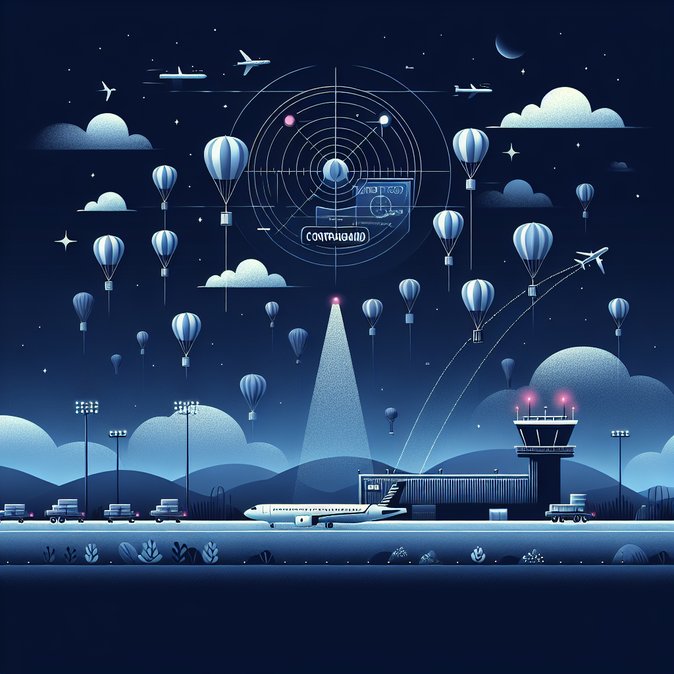
For the third night in a row, Polish military radars detected dozens of small aerostats drifting in from neighbouring Belarus. According to the General Command of the Armed Forces, the balloons are fitted with contraband pods thought to be carrying cigarettes and reconnaissance cameras. While Poland has intercepted smuggling balloons before, officials say the current wave is unprecedented in scale and coordination, suggesting either a new hybrid tactic by Minsk or smugglers adapting to the reinforced land border fence erected in 2023.
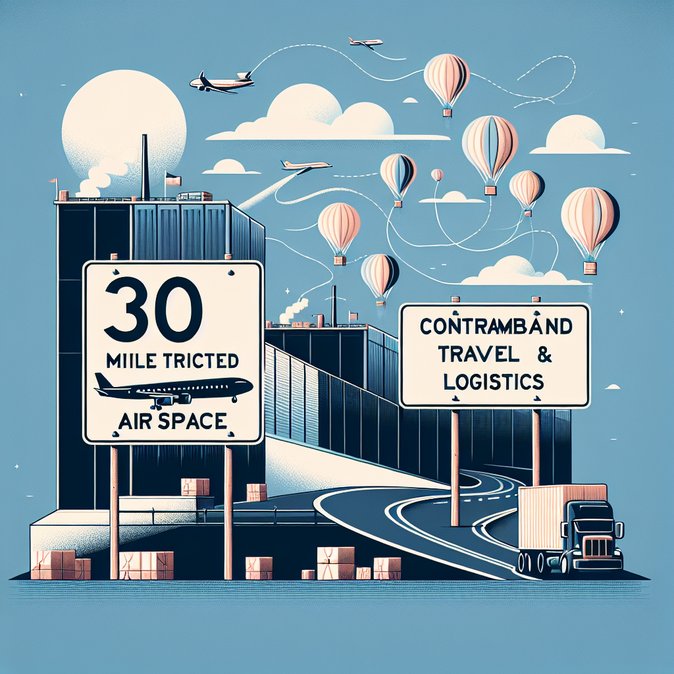
At 02:15 local time on 2 February, Air Force controllers imposed a 30-nautical-mile temporary restricted zone above Podlaskie province, closing a swathe of airspace that funnels business-aviation traffic into Warsaw and Gdańsk. Commercial jets at cruising altitudes were unaffected, but corporate operators using turboprops and light jets had to reroute via Mazury or Masuria corridors, adding up to 25 minutes of flying time. Poland’s civil-aviation authority advised charter companies to “verify routings 24 hours in advance until further notice.”
Travel coordinators juggling last-minute diversions may also need to confirm entry paperwork for crew and passengers switching airports or routing through third countries. VisaHQ can streamline that process by aggregating Poland’s latest visa and transit requirements and arranging rush courier or e-visa services when hybrid incidents disrupt normal schedules—see https://www.visahq.com/poland/ for details.
![Poland clamps temporary air-exclusion zone after third night of Belarusian smuggling balloons]()
The incident highlights how geopolitical tensions on NATO’s eastern flank now spill into day-to-day mobility planning. Transport insurers are already classifying Belarus adjacent airspace as “heightened risk,” which raises premiums for shippers moving high-value cargoes by air or road through the region. Logistics managers moving time-critical components between Scandinavian plants and Polish factories reported cascading delays on 2 February as trucks queued for new security checks on the S19 expressway.
Polish and Baltic officials frame the balloons as part of a broader pattern of “instrumentalised migration and sabotage” tactics attributed to Belarus and Russia. The government says no passenger services have been endangered so far, but warns that similar objects could carry electronic-warfare payloads. If the pattern persists, Warsaw may ask EASA to declare a Danger Area, which would reroute trans-European general-aviation flows for the rest of the winter.
For mobility and travel managers the practical advice is two-fold: first, monitor NOTAMs for EPxx/Belarus border sectors before filing flight plans; second, prepare contingency routings for employee shuttles and urgent-freight charters that normally hop across the eastern border. Companies with expatriates in Białystok or Suwałki should also brief staff on possible GPS jamming and sporadic mobile-data outages that accompany such hybrid incidents.
At 02:15 local time on 2 February, Air Force controllers imposed a 30-nautical-mile temporary restricted zone above Podlaskie province, closing a swathe of airspace that funnels business-aviation traffic into Warsaw and Gdańsk. Commercial jets at cruising altitudes were unaffected, but corporate operators using turboprops and light jets had to reroute via Mazury or Masuria corridors, adding up to 25 minutes of flying time. Poland’s civil-aviation authority advised charter companies to “verify routings 24 hours in advance until further notice.”
Travel coordinators juggling last-minute diversions may also need to confirm entry paperwork for crew and passengers switching airports or routing through third countries. VisaHQ can streamline that process by aggregating Poland’s latest visa and transit requirements and arranging rush courier or e-visa services when hybrid incidents disrupt normal schedules—see https://www.visahq.com/poland/ for details.

The incident highlights how geopolitical tensions on NATO’s eastern flank now spill into day-to-day mobility planning. Transport insurers are already classifying Belarus adjacent airspace as “heightened risk,” which raises premiums for shippers moving high-value cargoes by air or road through the region. Logistics managers moving time-critical components between Scandinavian plants and Polish factories reported cascading delays on 2 February as trucks queued for new security checks on the S19 expressway.
Polish and Baltic officials frame the balloons as part of a broader pattern of “instrumentalised migration and sabotage” tactics attributed to Belarus and Russia. The government says no passenger services have been endangered so far, but warns that similar objects could carry electronic-warfare payloads. If the pattern persists, Warsaw may ask EASA to declare a Danger Area, which would reroute trans-European general-aviation flows for the rest of the winter.
For mobility and travel managers the practical advice is two-fold: first, monitor NOTAMs for EPxx/Belarus border sectors before filing flight plans; second, prepare contingency routings for employee shuttles and urgent-freight charters that normally hop across the eastern border. Companies with expatriates in Białystok or Suwałki should also brief staff on possible GPS jamming and sporadic mobile-data outages that accompany such hybrid incidents.