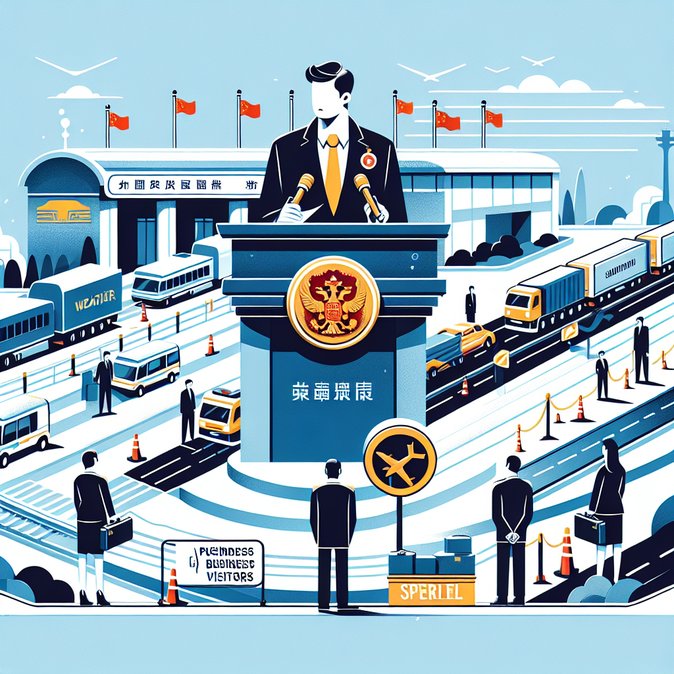
Inspecting Beijing West railway station and Tianjin Binhai international airport on the first day of chunyun, Vice-Premier He Lifeng told officials that passenger safety and on-time performance were “political tasks” and must not be compromised (english.www.gov.cn). He called for 24-hour monitoring of extreme-weather alerts, rapid de-icing drills for airports and extra psychological support for frontline staff working overtime.
The directive follows criticism from 2025, when snowstorms stranded 100,000 travellers in Henan and Jiangsu. This year the Ministry of Transport has pre-positioned 1,200 tow-trucks and stockpiled 180,000 tonnes of road salt along key expressways.
For corporates the guidance signals that discretionary travel may be deprioritised if capacity becomes constrained—priority will go to family-reunion traffic. Mobility managers should have contingency plans to postpone internal meetings or switch to virtual formats between 15 and 23 February.
![Vice-Premier He Lifeng orders ‘zero-incident’ transport during Lunar-New-Year peak]()
He also instructed the National Immigration Administration to ensure “green channels” for foreign business visitors attending trade fairs in Guangzhou and Shanghai, underlining Beijing’s push to keep the door open to investment even during the holiday.
While authorities focus on keeping the transport network running smoothly, travellers can ease their own logistics by leveraging VisaHQ’s online platform, which streamlines Chinese visa applications, provides real-time status updates and offers expedited processing options—particularly useful when itineraries shift during the peak season rush (https://www.visahq.com/china/).
Transport analysts note that on-time departure rates at China’s top ten airports averaged 91 percent on day one of the rush, up eight points year-on-year—early evidence that the tighter oversight is working.
The directive follows criticism from 2025, when snowstorms stranded 100,000 travellers in Henan and Jiangsu. This year the Ministry of Transport has pre-positioned 1,200 tow-trucks and stockpiled 180,000 tonnes of road salt along key expressways.
For corporates the guidance signals that discretionary travel may be deprioritised if capacity becomes constrained—priority will go to family-reunion traffic. Mobility managers should have contingency plans to postpone internal meetings or switch to virtual formats between 15 and 23 February.

He also instructed the National Immigration Administration to ensure “green channels” for foreign business visitors attending trade fairs in Guangzhou and Shanghai, underlining Beijing’s push to keep the door open to investment even during the holiday.
While authorities focus on keeping the transport network running smoothly, travellers can ease their own logistics by leveraging VisaHQ’s online platform, which streamlines Chinese visa applications, provides real-time status updates and offers expedited processing options—particularly useful when itineraries shift during the peak season rush (https://www.visahq.com/china/).
Transport analysts note that on-time departure rates at China’s top ten airports averaged 91 percent on day one of the rush, up eight points year-on-year—early evidence that the tighter oversight is working.