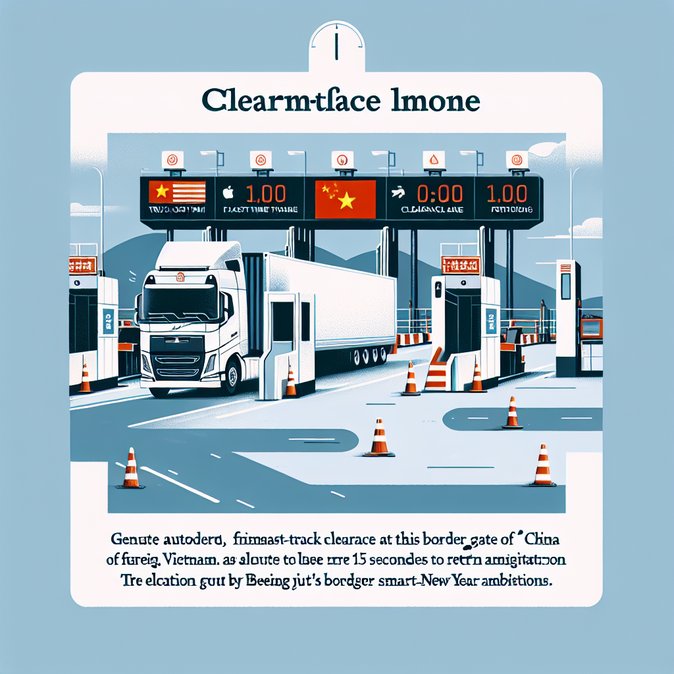
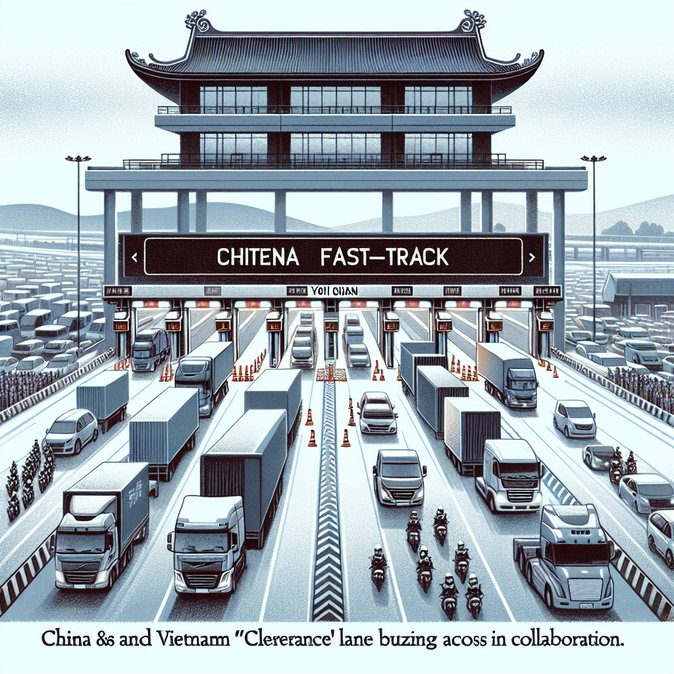
Customs officers at Youyi Guan—the busiest road crossing between China’s Guangxi Zhuang Autonomous Region and Vietnam’s Lạng Sơn Province—have switched on a new “fast-track” channel that uses automated document scanners and facial-biometric gates to clear a laden truck in as little as 15 seconds, down from about one minute.
The pilot, which went live on 28 January and was formally rolled out to all drivers on 2 February, is the first time China has extended its technology-driven ‘Smart Port’ programme to foreign nationals. Previously only Chinese drivers could use the e-gates, leaving Vietnamese and third-country hauliers to queue for manual inspection. According to the International Trade Council, more than 2,200 trucks passed through the lane on the first full operating day without incident (https://tradecouncil.org/global-border-update-china-accelerates-clearances-while-delays-in-mexico-and-tech-sector-disruptions-highlight-supply-chain-fragility/).
Automated kiosks read the QR code on the driver’s passport, perform a rapid biometric match and transmit cargo data directly to both Chinese and Vietnamese customs systems. The upgrade coincides with a push to keep perishable exports moving ahead of the Lunar New Year shutdown when factories race to ship last-minute orders.
![China introduces 15-second ‘fast-track’ lane for foreign truck drivers at Youyi Guan border]()
Shippers preparing documentation for these cross-border runs may also find value in VisaHQ’s digital visa processing platform, which streamlines Chinese business and transit visa applications for drivers and accompanying staff; full details are available at https://www.visahq.com/china/
For corporate supply-chain managers the gain is immediate: a one-minute reduction per vehicle equates to roughly nine extra export-bound trucks per hour. Apparel and electronics giants with just-in-time production in southern China say the change could save up to 24 hours off door-to-door lead times during peak season.
Looking ahead, the General Administration of Customs has hinted the model could be copied at other Sino-ASEAN crossings such as Mohan–Boten (Laos) and Ruili–Muse (Myanmar), creating a faster multimodal corridor into the Greater Mekong region.
The pilot, which went live on 28 January and was formally rolled out to all drivers on 2 February, is the first time China has extended its technology-driven ‘Smart Port’ programme to foreign nationals. Previously only Chinese drivers could use the e-gates, leaving Vietnamese and third-country hauliers to queue for manual inspection. According to the International Trade Council, more than 2,200 trucks passed through the lane on the first full operating day without incident (https://tradecouncil.org/global-border-update-china-accelerates-clearances-while-delays-in-mexico-and-tech-sector-disruptions-highlight-supply-chain-fragility/).
Automated kiosks read the QR code on the driver’s passport, perform a rapid biometric match and transmit cargo data directly to both Chinese and Vietnamese customs systems. The upgrade coincides with a push to keep perishable exports moving ahead of the Lunar New Year shutdown when factories race to ship last-minute orders.
Shippers preparing documentation for these cross-border runs may also find value in VisaHQ’s digital visa processing platform, which streamlines Chinese business and transit visa applications for drivers and accompanying staff; full details are available at https://www.visahq.com/china/
For corporate supply-chain managers the gain is immediate: a one-minute reduction per vehicle equates to roughly nine extra export-bound trucks per hour. Apparel and electronics giants with just-in-time production in southern China say the change could save up to 24 hours off door-to-door lead times during peak season.
Looking ahead, the General Administration of Customs has hinted the model could be copied at other Sino-ASEAN crossings such as Mohan–Boten (Laos) and Ruili–Muse (Myanmar), creating a faster multimodal corridor into the Greater Mekong region.