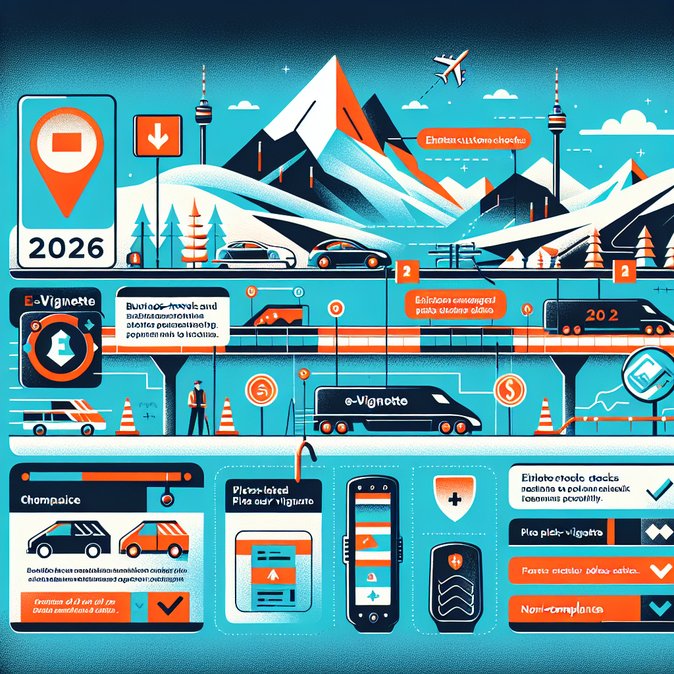
From 1 February 2026 every vehicle using Switzerland’s motorways and expressways must display – or register for – the turquoise 2026 vignette. The CHF 40 toll sticker remains a flat-fee alternative to distance-based charging and is valid until 31 January 2027. A digital e-vignette, linked to the vehicle’s licence plate, can be purchased through the Federal Office for Customs and Border Security (BAZG); paper stickers remain available at service stations and post offices.
Border officials are warning of increased spot-checks this week as ski-season traffic peaks. Foreign motorists who forget the vignette risk an on-the-spot fine of CHF 200 plus the cost of the sticker. With unscrupulous websites already offering fake or overpriced e-vignettes, BAZG advises travellers to use only the official portal or authorised retail partners.
While organising toll compliance, travellers should also make sure their entry documents are in order. VisaHQ’s Switzerland portal (https://www.visahq.com/switzerland/) lets tourists and business visitors check visa requirements, submit online applications and track approval status in real time—helping them arrive with the correct paperwork as well as the mandatory vignette.
![New 2026 Swiss motorway vignette becomes compulsory today – digital option urged for foreign drivers]()
For cross-border commuters and business travelers the electronic vignette offers practical benefits: it eliminates the need to swap stickers when vehicles are leased or number plates change, and fleet managers can bulk-register company cars online. The digital system also streamlines enforcement by allowing cameras to verify compliance automatically, reducing roadside stops that can delay commercial traffic.
Logistics firms operating between Switzerland and EU markets should ensure lorries entering from France, Germany, Italy and Austria are properly registered. Although heavy goods vehicles pay the separate LSVA distance levy, tractors pulling light trailers must still carry the standard vignette. Mobility managers are recommended to audit fleet compliance this week and brief drivers via driver apps or telematics messages.
The vignette renewal coincides with Switzerland’s transposition of new EU ground-handling and aviation-safety rules, also effective today, underscoring a broader February regulatory refresh that touches several mobility sectors. Companies that maintain travel-policy intranets should update motorway-toll guidance immediately to avoid fines and border delays.
Border officials are warning of increased spot-checks this week as ski-season traffic peaks. Foreign motorists who forget the vignette risk an on-the-spot fine of CHF 200 plus the cost of the sticker. With unscrupulous websites already offering fake or overpriced e-vignettes, BAZG advises travellers to use only the official portal or authorised retail partners.
While organising toll compliance, travellers should also make sure their entry documents are in order. VisaHQ’s Switzerland portal (https://www.visahq.com/switzerland/) lets tourists and business visitors check visa requirements, submit online applications and track approval status in real time—helping them arrive with the correct paperwork as well as the mandatory vignette.

For cross-border commuters and business travelers the electronic vignette offers practical benefits: it eliminates the need to swap stickers when vehicles are leased or number plates change, and fleet managers can bulk-register company cars online. The digital system also streamlines enforcement by allowing cameras to verify compliance automatically, reducing roadside stops that can delay commercial traffic.
Logistics firms operating between Switzerland and EU markets should ensure lorries entering from France, Germany, Italy and Austria are properly registered. Although heavy goods vehicles pay the separate LSVA distance levy, tractors pulling light trailers must still carry the standard vignette. Mobility managers are recommended to audit fleet compliance this week and brief drivers via driver apps or telematics messages.
The vignette renewal coincides with Switzerland’s transposition of new EU ground-handling and aviation-safety rules, also effective today, underscoring a broader February regulatory refresh that touches several mobility sectors. Companies that maintain travel-policy intranets should update motorway-toll guidance immediately to avoid fines and border delays.