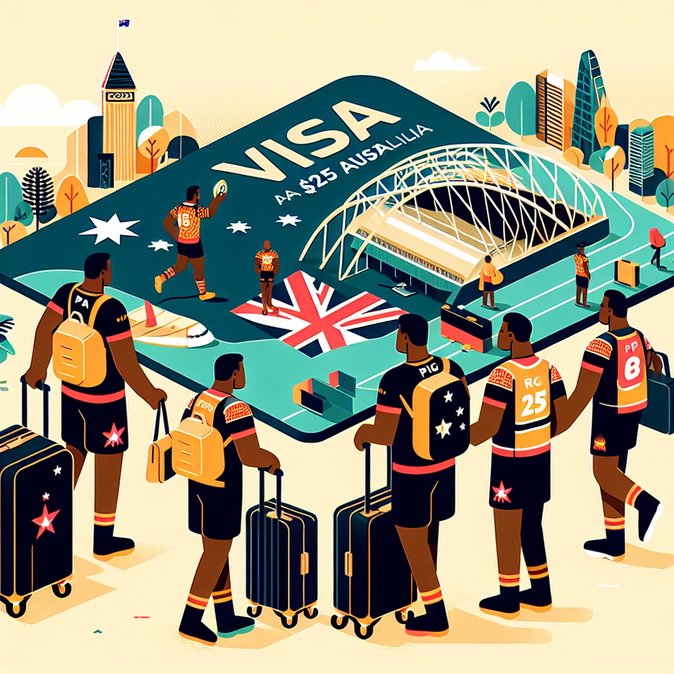
In a bid to turn rugby-league diplomacy into practical mobility, the Albanese Government has announced a one-year, multiple-entry visitor visa that will cost just A$25 (about PGK 75) for Papua New Guinean players, coaches, officials, media crews and fans travelling to Australia to follow the PNG Chiefs when the new franchise joins the National Rugby League in 2028.
Home Affairs Minister Tony Burke said the dramatically reduced fee—down from the current A$430—will apply from 1 July 2027 and cover stays of up to three months at a time. Dedicated processing officers inside the Department of Home Affairs will fast-track Chiefs-related applications, and a microsite will walk travellers through health, character and travel history requirements. Standard bio-security, vaccination and character checks will still apply, but Burke stressed that “cost, not compliance” has been the main barrier for PNG visitors.
![Australia slashes visitor visa fee to A$25 for PNG Chiefs supporters ahead of 2028 NRL debut]()
Travellers keen to secure the new visa quickly might also consider using a specialised facilitator such as VisaHQ. The company already helps thousands of applicants navigate Australia’s electronic visitor visa system and will add the Chiefs-specific option as soon as it becomes available. Its document-checking tools, real-time status updates and live support—accessible at https://www.visahq.com/australia/—can save time for fans, players and media crews who are unfamiliar with Australia’s requirements.
The initiative complements the Pacific Engagement Visa (PEV) lottery, the PALM labour scheme and a forthcoming ‘Team-Up’ sports-mobility program managed by DFAT. Business groups in Cairns, Townsville and Brisbane—cities that expect to host most away fixtures—welcomed the decision, predicting an annual influx of 20,000 PNG visitors and A$50 million in visitor spending once the Chiefs enter the competition. Airlines are already modelling extra charter capacity between Port Moresby and north-Queensland hubs, while hotel groups are designing “league and leisure” packages that bundle match tickets with short training courses and shopping excursions.
For mobility managers, the new class is significant because it re-uses Australia’s electronic visitor visa infrastructure but inserts a sport-specific fee code, hinting at future sector-based pricing (for example, conferences or cultural festivals). Organisations planning inbound programs for Pacific partners should watch how the Chiefs visa is implemented; if processing proves smooth, similar micro-visas could emerge for regional events under the Government’s forthcoming Migration Strategy refresh.
Home Affairs Minister Tony Burke said the dramatically reduced fee—down from the current A$430—will apply from 1 July 2027 and cover stays of up to three months at a time. Dedicated processing officers inside the Department of Home Affairs will fast-track Chiefs-related applications, and a microsite will walk travellers through health, character and travel history requirements. Standard bio-security, vaccination and character checks will still apply, but Burke stressed that “cost, not compliance” has been the main barrier for PNG visitors.
Travellers keen to secure the new visa quickly might also consider using a specialised facilitator such as VisaHQ. The company already helps thousands of applicants navigate Australia’s electronic visitor visa system and will add the Chiefs-specific option as soon as it becomes available. Its document-checking tools, real-time status updates and live support—accessible at https://www.visahq.com/australia/—can save time for fans, players and media crews who are unfamiliar with Australia’s requirements.
The initiative complements the Pacific Engagement Visa (PEV) lottery, the PALM labour scheme and a forthcoming ‘Team-Up’ sports-mobility program managed by DFAT. Business groups in Cairns, Townsville and Brisbane—cities that expect to host most away fixtures—welcomed the decision, predicting an annual influx of 20,000 PNG visitors and A$50 million in visitor spending once the Chiefs enter the competition. Airlines are already modelling extra charter capacity between Port Moresby and north-Queensland hubs, while hotel groups are designing “league and leisure” packages that bundle match tickets with short training courses and shopping excursions.
For mobility managers, the new class is significant because it re-uses Australia’s electronic visitor visa infrastructure but inserts a sport-specific fee code, hinting at future sector-based pricing (for example, conferences or cultural festivals). Organisations planning inbound programs for Pacific partners should watch how the Chiefs visa is implemented; if processing proves smooth, similar micro-visas could emerge for regional events under the Government’s forthcoming Migration Strategy refresh.