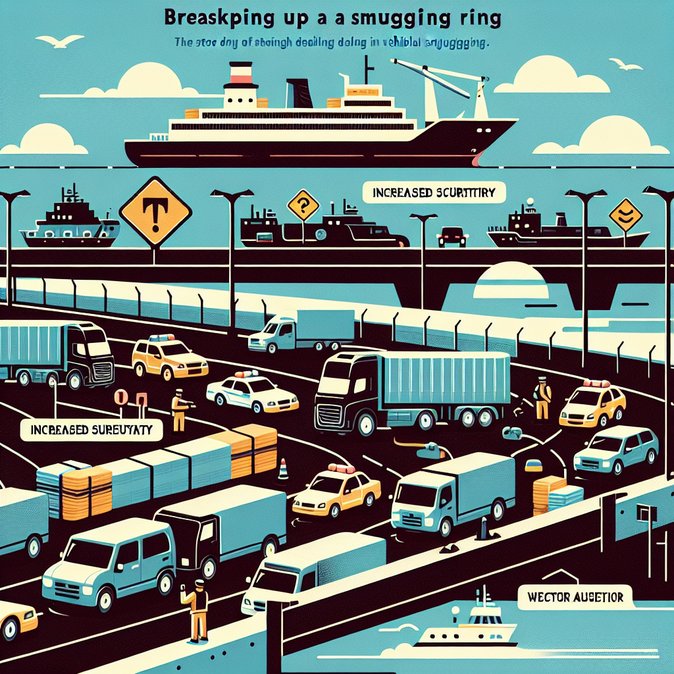
The European Anti-Fraud Office (OLAF) revealed on 28 January that, together with Polish customs agents, it has dismantled a network that diverted more than 760 used cars from EU ports to Russia, circumventing sanctions. Investigators found that consignments declared for Kazakhstan, Georgia and the UAE were rerouted via Belarusian logistics hubs and ultimately ended up in the Russian Federation.
Polish officials triggered the probe last summer when anomaly-detection software flagged repeated exports of high-value SUVs through the inland port of Małaszewicze. Customs officers alerted OLAF, which coordinated raids in three member states and seized shipment records, satellite-tracking data and encrypted messaging logs. The trail points to a Warsaw-registered freight forwarder that created shell firms to disguise end-users and insurance documents.
For supply-chain managers the case is a stark warning: dual-use and luxury-goods sanctions are enforced well beyond traditional ‘military-linked’ items. Vehicles worth over €50,000 require explicit export licences under EU Regulation 833/2014; breaching the rule risks criminal charges and loss of AEO certification. Mobility teams moving company cars or project vehicles across eastern borders should audit freight brokers, verify consignee statements and maintain end-use declarations.
![Poland and OLAF Bust Scheme Shipping 760 EU Vehicles Illegally to Russia]()
In this complex regulatory landscape, ensuring that personnel have the correct travel papers is just as important as getting the export licences right. Firms and individuals can streamline Polish and wider Schengen visa formalities through VisaHQ, whose online platform (https://www.visahq.com/poland/) provides up-to-date requirements, application support, and courier services — a useful safeguard when last-minute compliance checks force teams to reroute or reschedule travel.
The crackdown will likely tighten border inspections at Poland’s remaining open crossings with Belarus and Lithuania, adding to queue times already stretched by the January closure of eight smaller posts. Freight planners should budget for extra lead time and carry hard-copy CMRs in case customs IT systems are overloaded by intensified checks.
OLAF says financial penalties could top €100 million once asset-forfeiture proceedings conclude. The agency praised Poland’s “proactive data-analytics approach” and urged other member states to adopt similar early-warning systems before the EU widens its sanctions list again in March.
Polish officials triggered the probe last summer when anomaly-detection software flagged repeated exports of high-value SUVs through the inland port of Małaszewicze. Customs officers alerted OLAF, which coordinated raids in three member states and seized shipment records, satellite-tracking data and encrypted messaging logs. The trail points to a Warsaw-registered freight forwarder that created shell firms to disguise end-users and insurance documents.
For supply-chain managers the case is a stark warning: dual-use and luxury-goods sanctions are enforced well beyond traditional ‘military-linked’ items. Vehicles worth over €50,000 require explicit export licences under EU Regulation 833/2014; breaching the rule risks criminal charges and loss of AEO certification. Mobility teams moving company cars or project vehicles across eastern borders should audit freight brokers, verify consignee statements and maintain end-use declarations.

In this complex regulatory landscape, ensuring that personnel have the correct travel papers is just as important as getting the export licences right. Firms and individuals can streamline Polish and wider Schengen visa formalities through VisaHQ, whose online platform (https://www.visahq.com/poland/) provides up-to-date requirements, application support, and courier services — a useful safeguard when last-minute compliance checks force teams to reroute or reschedule travel.
The crackdown will likely tighten border inspections at Poland’s remaining open crossings with Belarus and Lithuania, adding to queue times already stretched by the January closure of eight smaller posts. Freight planners should budget for extra lead time and carry hard-copy CMRs in case customs IT systems are overloaded by intensified checks.
OLAF says financial penalties could top €100 million once asset-forfeiture proceedings conclude. The agency praised Poland’s “proactive data-analytics approach” and urged other member states to adopt similar early-warning systems before the EU widens its sanctions list again in March.