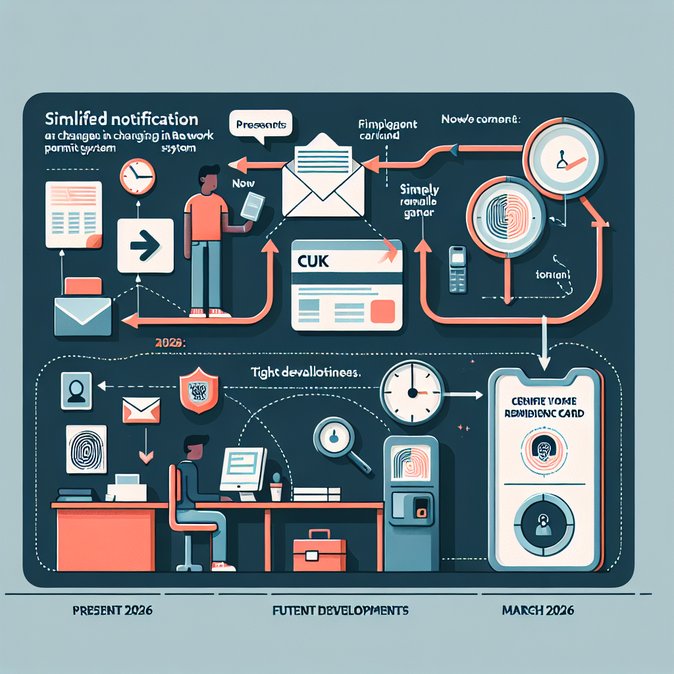
Immigration firm Fragomen has alerted employers that the Polish Interior Ministry is finalising a bill to replace the wartime ‘Special Act’ for Ukrainians when it expires on 4 March 2026. A briefing held on 28 January outlined the main pillars: Ukrainian nationals who arrived after Russia’s invasion will need a standard work-and-residence permit—branded the ‘CUKR’ card—valid for three years and renewable.
Under the draft, the current simple online notification procedure will disappear. Employers must instead lodge MOS-portal applications, secure labour-market tests where applicable and schedule biometric appointments. Government fees are expected to mirror regular temporary-residence rates (PLN 400-800), quadrupling today’s costs. Dependants will require separate permits, though school-age children will enjoy fee waivers.
Employers looking for hands-on assistance with these new Polish work-and-residence formalities may wish to explore VisaHQ’s services. Through its dedicated Poland portal (https://www.visahq.com/poland/), VisaHQ offers step-by-step application guidance, document review, and appointment scheduling support, helping organisations and their Ukrainian employees smoothly transition from the Special Act to the forthcoming CUKR regime.
![Draft Post-March 2026 Rules Will Require Full Work Permits for Ukrainians in Poland]()
Corporate mobility teams face a compressed timeline. While the bill has yet to enter parliament, officials indicated that filing windows could open as early as September 2026, with grace periods for existing notifications expiring six months later. HR departments should start mapping affected staff, gathering contract translations and budgeting for legal representation.
The transition also interacts with social-benefit reforms passed the same day: only permit holders paying ZUS contributions will qualify for the 800+ allowance. Failure to regularise status could therefore strip families of income and disrupt assignments.
Fragomen recommends earmarking biometric slots at understaffed voivodeship offices outside Warsaw to avoid the capital’s backlog, which already exceeds six months for standard cases. It also urges companies to negotiate mobility clauses in employment contracts to cover potential posting to other EU states once temporary protection ends.
Under the draft, the current simple online notification procedure will disappear. Employers must instead lodge MOS-portal applications, secure labour-market tests where applicable and schedule biometric appointments. Government fees are expected to mirror regular temporary-residence rates (PLN 400-800), quadrupling today’s costs. Dependants will require separate permits, though school-age children will enjoy fee waivers.
Employers looking for hands-on assistance with these new Polish work-and-residence formalities may wish to explore VisaHQ’s services. Through its dedicated Poland portal (https://www.visahq.com/poland/), VisaHQ offers step-by-step application guidance, document review, and appointment scheduling support, helping organisations and their Ukrainian employees smoothly transition from the Special Act to the forthcoming CUKR regime.

Corporate mobility teams face a compressed timeline. While the bill has yet to enter parliament, officials indicated that filing windows could open as early as September 2026, with grace periods for existing notifications expiring six months later. HR departments should start mapping affected staff, gathering contract translations and budgeting for legal representation.
The transition also interacts with social-benefit reforms passed the same day: only permit holders paying ZUS contributions will qualify for the 800+ allowance. Failure to regularise status could therefore strip families of income and disrupt assignments.
Fragomen recommends earmarking biometric slots at understaffed voivodeship offices outside Warsaw to avoid the capital’s backlog, which already exceeds six months for standard cases. It also urges companies to negotiate mobility clauses in employment contracts to cover potential posting to other EU states once temporary protection ends.