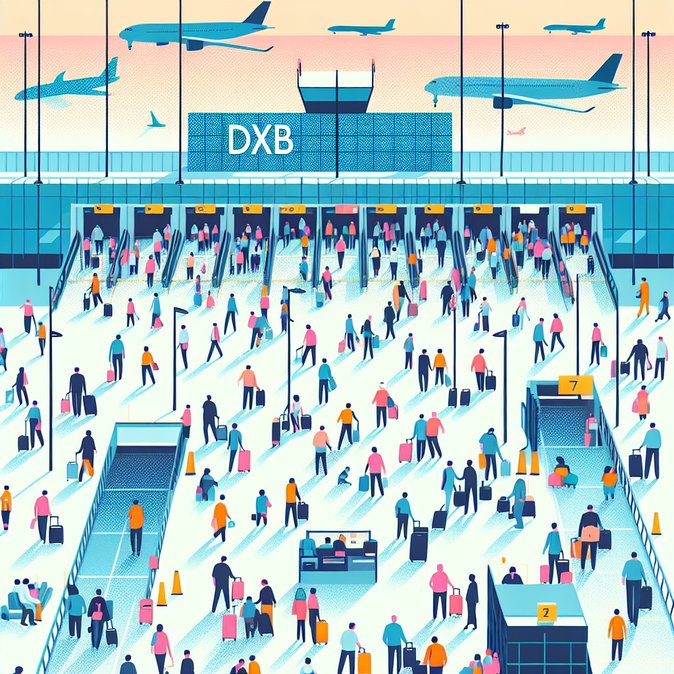
A thick blanket of radiation fog rolled into the northern Emirates just after midnight on 3 January 2026, reducing runway visibility at Dubai International (DXB) to well below the 125-metre minimum required for safe landings. Airport operator Dubai Airports confirmed that 21 incoming flights were diverted, while Dubai World Central (DWC) and Sharjah International (SHJ) each sent two arrivals to alternate fields. Emirates wide-bodies from Colombo, Auckland and Brisbane were rerouted to Muscat and Al Ain, while flydubai’s early-morning services from Krabi and Mombasa spent up to an hour in holding patterns before being dispatched to Doha.
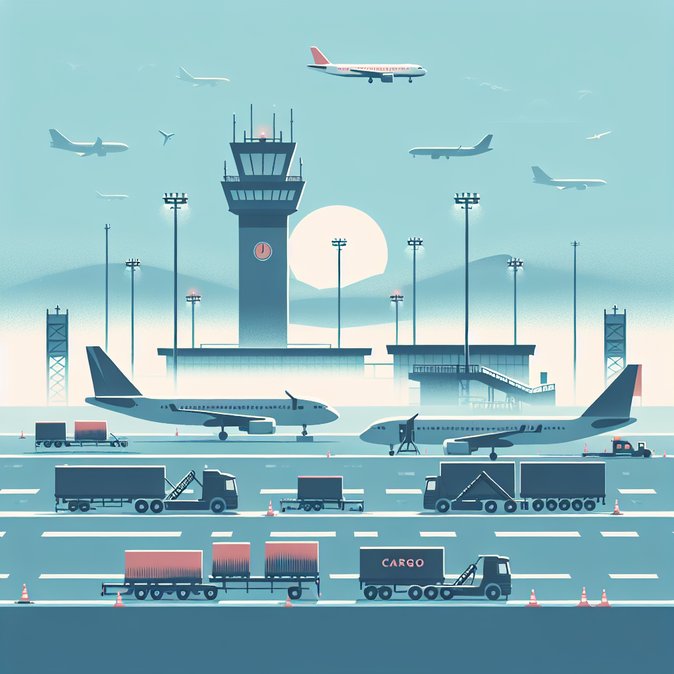
Although the weather cleared by 08:00, the impact rippled through DXB’s tightly-banked hub-and-spoke schedule. Connection windows evaporated for hundreds of transit passengers heading to Europe and North America, forcing the airline to rebook travellers on later flights and offer hotel vouchers. Freight forwarders also felt the squeeze: belly-hold cargo headed for pharmaceuticals and automotive components missed road feeders, prompting urgent trucking from DWC to Dubai’s Jebel Ali Free Zone.
Should itinerary shifts leave you needing extra time on your visa or a fresh multi-entry permit, the process is thankfully straightforward: VisaHQ’s dedicated UAE portal (https://www.visahq.com/united-arab-emirates/) lets travellers and corporate travel teams arrange, expedite or amend entry documents online, often in under 48 hours, so that fog-induced diversions don’t snowball into immigration headaches.
![Dense fog diverts 23 flights at Dubai and Sharjah airports, causing knock-on delays across three continents]()
The disruption is a reminder that meteorological events—rather than mechanical faults—now account for a growing share of delay minutes at the world’s busiest international airport. Since the 2024 pile-up on E-611, the UAE’s National Centre of Meteorology has installed 68 roadside lidar stations to push real-time visibility data to pilots and ground handlers. Yet fog forecasting remains an inexact science.
For multinationals moving talent through Dubai, the incident underscores the value of flexible travel policies that allow ticket changes without penalty and provide emergency accommodation budgets. Employers are also urged to advise staff to build longer layovers into January itineraries, when diurnal temperature swings make fog a frequent visitor to the desert coast.
Looking ahead, Dubai Airports says it is accelerating trials of ‘Follow the Greens’ augmented-reality taxi-way lighting to speed up recovery after weather events. But for now, travellers in early 2026 should assume that the UAE’s winter fog season can still upend even the best-planned business trip.
Although the weather cleared by 08:00, the impact rippled through DXB’s tightly-banked hub-and-spoke schedule. Connection windows evaporated for hundreds of transit passengers heading to Europe and North America, forcing the airline to rebook travellers on later flights and offer hotel vouchers. Freight forwarders also felt the squeeze: belly-hold cargo headed for pharmaceuticals and automotive components missed road feeders, prompting urgent trucking from DWC to Dubai’s Jebel Ali Free Zone.
Should itinerary shifts leave you needing extra time on your visa or a fresh multi-entry permit, the process is thankfully straightforward: VisaHQ’s dedicated UAE portal (https://www.visahq.com/united-arab-emirates/) lets travellers and corporate travel teams arrange, expedite or amend entry documents online, often in under 48 hours, so that fog-induced diversions don’t snowball into immigration headaches.

The disruption is a reminder that meteorological events—rather than mechanical faults—now account for a growing share of delay minutes at the world’s busiest international airport. Since the 2024 pile-up on E-611, the UAE’s National Centre of Meteorology has installed 68 roadside lidar stations to push real-time visibility data to pilots and ground handlers. Yet fog forecasting remains an inexact science.
For multinationals moving talent through Dubai, the incident underscores the value of flexible travel policies that allow ticket changes without penalty and provide emergency accommodation budgets. Employers are also urged to advise staff to build longer layovers into January itineraries, when diurnal temperature swings make fog a frequent visitor to the desert coast.
Looking ahead, Dubai Airports says it is accelerating trials of ‘Follow the Greens’ augmented-reality taxi-way lighting to speed up recovery after weather events. But for now, travellers in early 2026 should assume that the UAE’s winter fog season can still upend even the best-planned business trip.