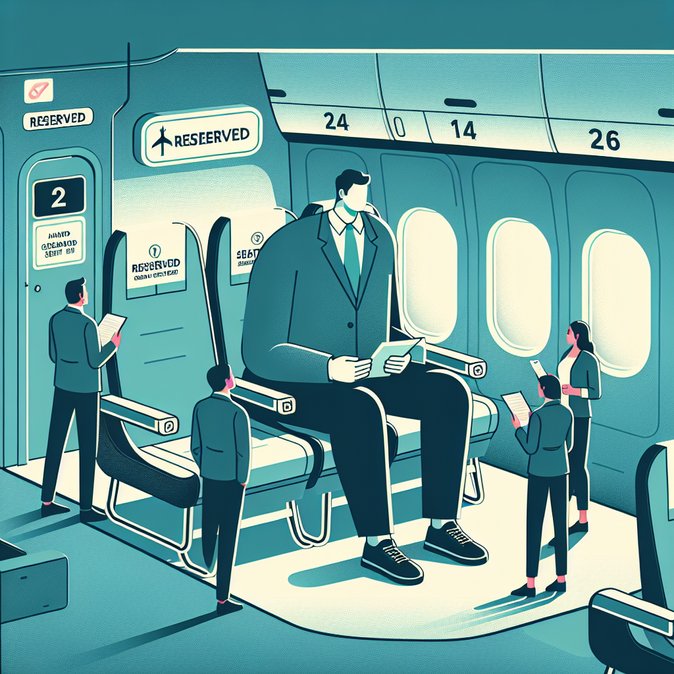
Southwest Airlines, the carrier of choice for many U.S. domestic business travellers, confirmed on 2 January that it will require passengers who “encroach on any part of the neighbouring seat” to **purchase a second seat in advance** for travel on or after 27 January 2026. The policy ends the long-standing practice of allowing plus-size customers to request a complimentary adjacent seat at the gate and seek a refund post-flight. Refunds will now be granted only if both seats were bought in the same fare class and the flight departs with at least one empty seat, and the request must be made within 90 days.
The change arrives alongside Southwest’s shift from open seating to assigned seating (Groups 1-8) on the same date, a structural overhaul designed to shorten boarding times and improve on-time performance. Corporate travel buyers say the new rule complicates cost forecasting for group itineraries, incentives and meetings where employee body-size information is private or unknown. Travel-management companies (TMCs) are updating booking tools to flag potential two-seat purchases so that expense approvals reflect true costs before ticketing.
![Southwest Airlines’ New ‘Customer-of-Size’ Rule May Raise Costs for Domestic Business Travel]()
For travel managers coordinating international trips that may include a domestic Southwest segment, VisaHQ can help streamline the visa and passport process. Its self-service platform (https://www.visahq.com/united-states/) centralises application requirements, tracks status updates in real time, and integrates with many corporate booking tools, giving companies clearer insight into total trip costs and compliance obligations while freeing staff from paperwork.
Advocacy groups for plus-size travellers have criticised the policy as discriminatory, arguing that it shifts the burden to disabled and larger passengers and may trigger ADA challenges. From a mobility perspective, companies should (1) update travel policies to clarify reimbursement for mandatory second-seat purchases, (2) brief travelling staff on refund rules, and (3) monitor other U.S. carriers, which may follow Southwest’s lead as they roll out assigned-seating products.
Southwest told investors the rule could yield up to US$80 million in incremental revenue annually and help offset the cost of retrofitting cabins with wider bins and power at every seat. Whether that calculus holds if corporate demand softens remains to be seen, but for now travellers with existing bookings after 27 January should review seating and, if necessary, contact Southwest to add the second seat while inventory lasts.
The change arrives alongside Southwest’s shift from open seating to assigned seating (Groups 1-8) on the same date, a structural overhaul designed to shorten boarding times and improve on-time performance. Corporate travel buyers say the new rule complicates cost forecasting for group itineraries, incentives and meetings where employee body-size information is private or unknown. Travel-management companies (TMCs) are updating booking tools to flag potential two-seat purchases so that expense approvals reflect true costs before ticketing.

For travel managers coordinating international trips that may include a domestic Southwest segment, VisaHQ can help streamline the visa and passport process. Its self-service platform (https://www.visahq.com/united-states/) centralises application requirements, tracks status updates in real time, and integrates with many corporate booking tools, giving companies clearer insight into total trip costs and compliance obligations while freeing staff from paperwork.
Advocacy groups for plus-size travellers have criticised the policy as discriminatory, arguing that it shifts the burden to disabled and larger passengers and may trigger ADA challenges. From a mobility perspective, companies should (1) update travel policies to clarify reimbursement for mandatory second-seat purchases, (2) brief travelling staff on refund rules, and (3) monitor other U.S. carriers, which may follow Southwest’s lead as they roll out assigned-seating products.
Southwest told investors the rule could yield up to US$80 million in incremental revenue annually and help offset the cost of retrofitting cabins with wider bins and power at every seat. Whether that calculus holds if corporate demand softens remains to be seen, but for now travellers with existing bookings after 27 January should review seating and, if necessary, contact Southwest to add the second seat while inventory lasts.