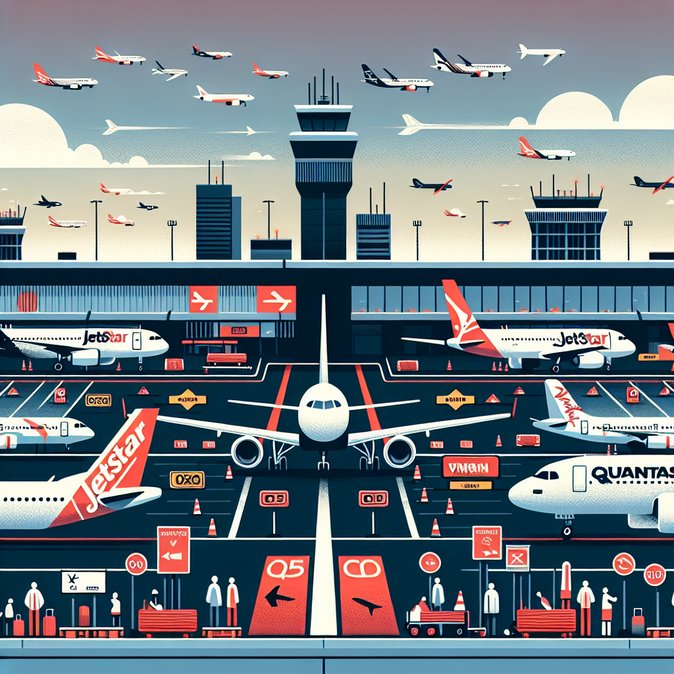
Travellers across Australia endured a rough start to the year on 2 January as a wave of operational issues forced 36 flight cancellations and more than 500 delays at the country’s major hubs. Data compiled by FlightAware and reported by Travel & Tour World show Melbourne-Tullamarine and Sydney Kingsford Smith hardest hit, with 14 and 12 cancellations respectively and hundreds of late departures.
Brisbane, Adelaide, Perth and the Gold Coast also felt the pinch, illustrating a systemic strain on domestic aviation during the peak holiday period. Low-cost carrier Jetstar bore the brunt – accounting for almost half of all disruptions – while Qantas and Virgin Australia struggled to keep schedules intact amid crew-rostering challenges and thunder-storm-related ground holds.
The knock-on effect was immediate for corporate travellers attempting same-day connections. Mobility managers reported missed client meetings and project kick-offs in sectors ranging from mining in Western Australia to financial services in Sydney. Tourism operators warned that thousands of “tourist hours” were lost to terminal queues instead of restaurants and attractions.
![Nation-wide flight chaos: 36 cancellations and 509 delays hit Australian airports]()
For travellers whose disrupted domestic leg risks derailing an onward international itinerary, VisaHQ offers a quick safety net. Through its Australian portal (https://www.visahq.com/australia/) you can verify entry rules, fast-track visa applications and even arrange passport pickup, ensuring that schedule surprises don’t turn into border hassles.
Airlines urged passengers to monitor mobile apps and SMS alerts before leaving for the airport, and reminded travellers to document out-of-pocket costs for potential insurance or compensation claims. Consumer advocates repeated calls for an EU-style compensation regime, noting that Australia still relies largely on voluntary airline charters for delay support.
With school holidays continuing until late January, capacity is expected to stay tight. Corporates may wish to build longer layovers into itineraries and purchase flexible fares that allow re-routing on partner airlines.
Brisbane, Adelaide, Perth and the Gold Coast also felt the pinch, illustrating a systemic strain on domestic aviation during the peak holiday period. Low-cost carrier Jetstar bore the brunt – accounting for almost half of all disruptions – while Qantas and Virgin Australia struggled to keep schedules intact amid crew-rostering challenges and thunder-storm-related ground holds.
The knock-on effect was immediate for corporate travellers attempting same-day connections. Mobility managers reported missed client meetings and project kick-offs in sectors ranging from mining in Western Australia to financial services in Sydney. Tourism operators warned that thousands of “tourist hours” were lost to terminal queues instead of restaurants and attractions.

For travellers whose disrupted domestic leg risks derailing an onward international itinerary, VisaHQ offers a quick safety net. Through its Australian portal (https://www.visahq.com/australia/) you can verify entry rules, fast-track visa applications and even arrange passport pickup, ensuring that schedule surprises don’t turn into border hassles.
Airlines urged passengers to monitor mobile apps and SMS alerts before leaving for the airport, and reminded travellers to document out-of-pocket costs for potential insurance or compensation claims. Consumer advocates repeated calls for an EU-style compensation regime, noting that Australia still relies largely on voluntary airline charters for delay support.
With school holidays continuing until late January, capacity is expected to stay tight. Corporates may wish to build longer layovers into itineraries and purchase flexible fares that allow re-routing on partner airlines.