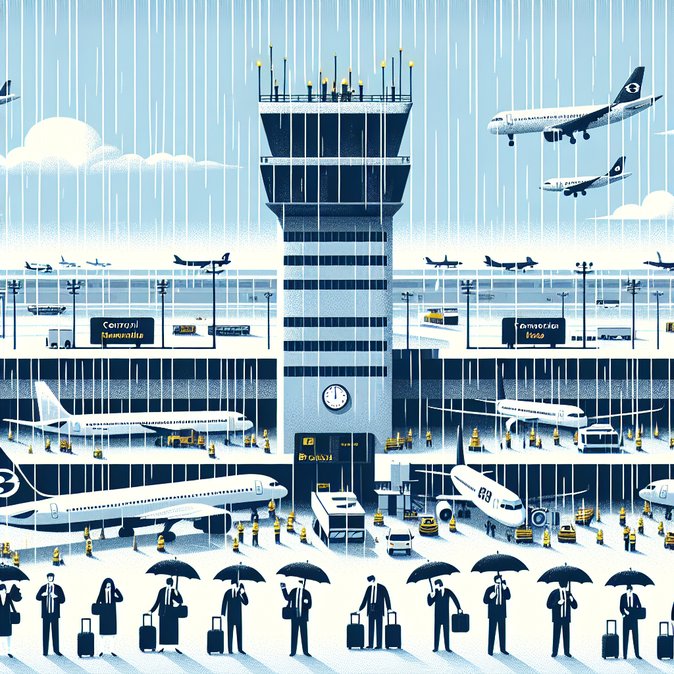
An intense summer downpour in the early hours of 30 December flooded two remote aircraft stands at São Paulo/Guarulhos International Airport (GRU), Brazil’s largest hub. Ground-handling crews were forced to reshuffle gate assignments at the last minute, while carriers hurried to tow parked aircraft away from rising water. At the same time, the air-navigation service provider (DECEA) reported an unexpected shortfall of night-shift controllers, triggering flow-control measures and cascading slot re-sequencing throughout the morning peak. By 10:00 a.m. local time, airport displays showed 90 delayed departures and 11 outright cancellations. Domestic operators LATAM Brasil and Azul bore the brunt of the disruption, but long-haul partners American Airlines, Iberia and TAP Air Portugal also reported knock-on delays after inbound aircraft missed their turnaround windows.
The disruption hit at the height of Brazil’s holiday exodus, with corporate travel managers scrambling to re-protect executives heading to New Year’s meetings in Miami, Madrid and Lisbon. Travel-management companies (TMCs) reported a surge in last-minute hotel bookings around GRU as crews and passengers waited for re-timed flights. Because December and January mark Brazil’s wet season in the Southeast, airlines already operate with thinner slack in their schedules; the staffing shortfall amplified the usual weather-related volatility.
For travelers suddenly rerouting through alternate hubs or extending stays, keeping documentation current is just as critical as rebooking seats. VisaHQ can quickly confirm Brazil entry requirements, expedite e-visa processing and coordinate consular appointments, allowing passengers and travel managers to focus on schedule changes rather than paperwork. More details are available at https://www.visahq.com/brazil/
![Summer storm and staffing crunch snarl year-end travel at São Paulo/Guarulhos – 90 delays, 11 cancellations]()
Airport operator GRU Airport said it had mobilised extra buses and portable stairs to keep passengers moving between terminals and remotely parked aircraft. Nevertheless, congestion at security checkpoints and immigration counters lengthened processing times to more than 90 minutes during the morning rush. Multinational firms with bases in São Paulo instructed mobile-workforce staff to monitor airline apps and allow for at least four hours between connecting flights.
From a risk-management perspective, the episode underscores the fragility of peak-season operations in a region prone to severe thunderstorms. Companies with frequent travel to Brazil may wish to include weather-triggered disruption clauses in supplier contracts, pre-approve flexible rerouting via Rio de Janeiro (GIG) or Campinas (VCP), and maintain a roster of on-call local ground transport providers. Airlines, meanwhile, face renewed pressure to address staffing levels at DECEA and contracted handling agents before Carnival traffic peaks in early February.
Looking ahead, GRU Airport said it will accelerate planned drainage upgrades around remote stands and push carriers to share real-time staffing dashboards with the airport’s integrated operations centre. Corporate mobility teams should watch for further advisories and consider adding buffer days around critical January travel.
The disruption hit at the height of Brazil’s holiday exodus, with corporate travel managers scrambling to re-protect executives heading to New Year’s meetings in Miami, Madrid and Lisbon. Travel-management companies (TMCs) reported a surge in last-minute hotel bookings around GRU as crews and passengers waited for re-timed flights. Because December and January mark Brazil’s wet season in the Southeast, airlines already operate with thinner slack in their schedules; the staffing shortfall amplified the usual weather-related volatility.
For travelers suddenly rerouting through alternate hubs or extending stays, keeping documentation current is just as critical as rebooking seats. VisaHQ can quickly confirm Brazil entry requirements, expedite e-visa processing and coordinate consular appointments, allowing passengers and travel managers to focus on schedule changes rather than paperwork. More details are available at https://www.visahq.com/brazil/

Airport operator GRU Airport said it had mobilised extra buses and portable stairs to keep passengers moving between terminals and remotely parked aircraft. Nevertheless, congestion at security checkpoints and immigration counters lengthened processing times to more than 90 minutes during the morning rush. Multinational firms with bases in São Paulo instructed mobile-workforce staff to monitor airline apps and allow for at least four hours between connecting flights.
From a risk-management perspective, the episode underscores the fragility of peak-season operations in a region prone to severe thunderstorms. Companies with frequent travel to Brazil may wish to include weather-triggered disruption clauses in supplier contracts, pre-approve flexible rerouting via Rio de Janeiro (GIG) or Campinas (VCP), and maintain a roster of on-call local ground transport providers. Airlines, meanwhile, face renewed pressure to address staffing levels at DECEA and contracted handling agents before Carnival traffic peaks in early February.
Looking ahead, GRU Airport said it will accelerate planned drainage upgrades around remote stands and push carriers to share real-time staffing dashboards with the airport’s integrated operations centre. Corporate mobility teams should watch for further advisories and consider adding buffer days around critical January travel.