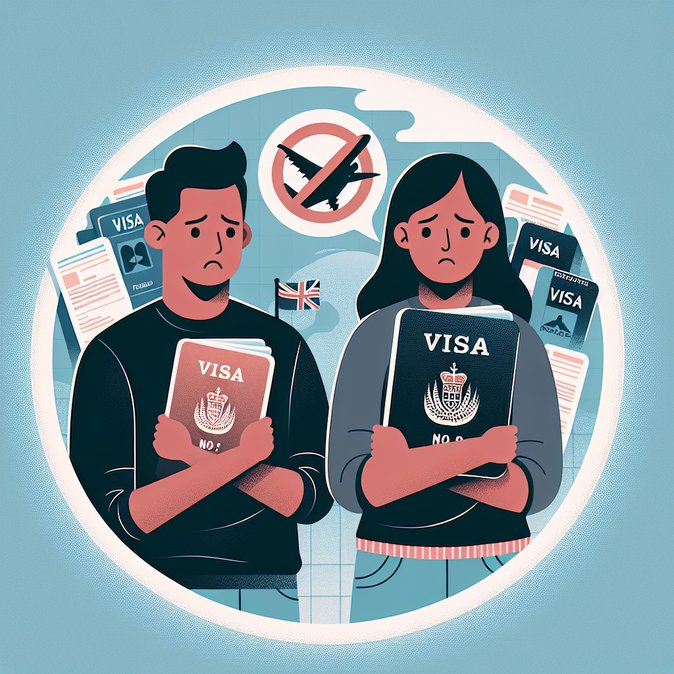
An Indian traveller has gone viral after revealing she and her husband lost almost ₹1 lakh (about AU$18,000) when his Australian transit-visa application was rejected twice, scuttling a long-planned New Zealand holiday. Although both had identical itineraries and documentation, only her visa was approved; his was refused without detailed explanation.
Because their airline tickets—routed via Sydney with a lay-over exceeding eight hours—were non-refundable, the couple forfeited the entire amount. In a widely shared Instagram video, the woman urged travellers to treat the subclass 771 transit visa “as seriously as a full visitor visa” and to avoid Australian stopovers unless absolutely necessary.
The clip triggered hundreds of similar stories: some users advised re-routing through Singapore or Abu Dhabi, while others claimed success by emailing the visa office with additional evidence rather than re-applying. Immigration agents note that subclass 771 refusal rates have risen since May, when Home Affairs tightened risk-profiling to curb visa overstays.
![Transit-visa denial costs Indian couple ₹1 lakh, exposes layover risks for Australia-bound travellers]()
Travellers who want extra reassurance can enlist VisaHQ, whose step-by-step platform (https://www.visahq.com/australia/) reviews Australian transit-visa applications, flags missing paperwork and tracks approvals in real time—minimising the chance of expensive, last-minute refusals.
For airlines and corporate travel planners, the incident is a timely warning: itineraries exceeding eight hours in Australia automatically require a transit visa for most nationalities, and approvals can take up to 20 days. Companies should build buffer time into booking windows or select alternative hubs.
Home Affairs declined to comment on individual cases but said all decisions are made “against legislative criteria and security assessments”. Industry bodies are calling for clearer guidance to reduce last-minute disruptions.
Because their airline tickets—routed via Sydney with a lay-over exceeding eight hours—were non-refundable, the couple forfeited the entire amount. In a widely shared Instagram video, the woman urged travellers to treat the subclass 771 transit visa “as seriously as a full visitor visa” and to avoid Australian stopovers unless absolutely necessary.
The clip triggered hundreds of similar stories: some users advised re-routing through Singapore or Abu Dhabi, while others claimed success by emailing the visa office with additional evidence rather than re-applying. Immigration agents note that subclass 771 refusal rates have risen since May, when Home Affairs tightened risk-profiling to curb visa overstays.

Travellers who want extra reassurance can enlist VisaHQ, whose step-by-step platform (https://www.visahq.com/australia/) reviews Australian transit-visa applications, flags missing paperwork and tracks approvals in real time—minimising the chance of expensive, last-minute refusals.
For airlines and corporate travel planners, the incident is a timely warning: itineraries exceeding eight hours in Australia automatically require a transit visa for most nationalities, and approvals can take up to 20 days. Companies should build buffer time into booking windows or select alternative hubs.
Home Affairs declined to comment on individual cases but said all decisions are made “against legislative criteria and security assessments”. Industry bodies are calling for clearer guidance to reduce last-minute disruptions.