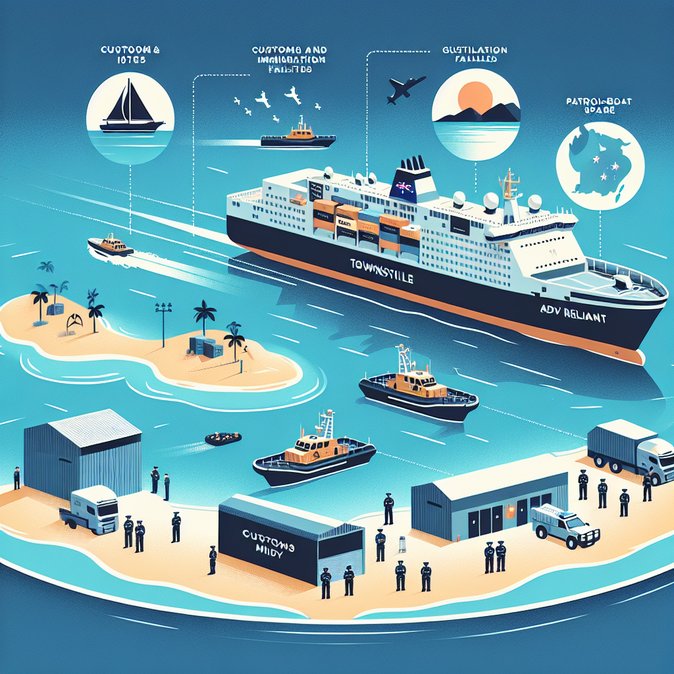
The Australian Defence Vessel (ADV) Reliant has sailed from Townsville on its first 2026 deployment, a three-month mission to Kiribati, Nauru, Tonga, Fiji and the Solomon Islands. The Pacific Support Vessel will deliver customs facilities, immigration booths, bio-security gear and search-and-rescue equipment requested by island governments ahead of cyclone season.
Chief of Joint Operations Vice-Admiral Justin Jones said Reliant spent 270 days at sea in 2025, underscoring Australia’s “regionally-led approach” to maritime security. Previous missions included supplying Guardian-class patrol-boat spares and rescuing distressed sailors near Fiji. The vessel now runs on renewable diesel, cutting emissions on routes where climate change is already slamming coastal infrastructure.
For Pacific nations, the deployment shores up fragile border-management systems that struggle with irregular migration, illegal fishing and disaster-response logistics. Australian Border Force officers will conduct joint training on passenger-processing and visa-issuance software, while the Royal Solomon Islands Police Force will receive a mobile immigration checkpoint for the 2026 Pacific Games.
![Australian Defence Vessel Reliant departs Townsville to strengthen Pacific border security]()
Travellers and corporate mobility teams navigating new entry rules for these destinations can streamline paperwork through VisaHQ’s Australia portal (https://www.visahq.com/australia/). The service offers end-to-end online visa processing, real-time application tracking and courier passport collection for Kiribati, Nauru, Tonga, Fiji and the Solomon Islands—especially useful while local immigration systems are being upgraded.
Businesses sending staff to the region should expect faster clearance at upgraded wharves but may face ad-hoc port closures during installation works. Mobility managers are advised to monitor advisories from the Pacific Immigration Development Community (PIDC).
Canberra views Reliant as a tangible demonstration of its “Pacific family” narrative, helping blunt strategic competition while providing practical mobility infrastructure that benefits both commerce and humanitarian response.
Chief of Joint Operations Vice-Admiral Justin Jones said Reliant spent 270 days at sea in 2025, underscoring Australia’s “regionally-led approach” to maritime security. Previous missions included supplying Guardian-class patrol-boat spares and rescuing distressed sailors near Fiji. The vessel now runs on renewable diesel, cutting emissions on routes where climate change is already slamming coastal infrastructure.
For Pacific nations, the deployment shores up fragile border-management systems that struggle with irregular migration, illegal fishing and disaster-response logistics. Australian Border Force officers will conduct joint training on passenger-processing and visa-issuance software, while the Royal Solomon Islands Police Force will receive a mobile immigration checkpoint for the 2026 Pacific Games.

Travellers and corporate mobility teams navigating new entry rules for these destinations can streamline paperwork through VisaHQ’s Australia portal (https://www.visahq.com/australia/). The service offers end-to-end online visa processing, real-time application tracking and courier passport collection for Kiribati, Nauru, Tonga, Fiji and the Solomon Islands—especially useful while local immigration systems are being upgraded.
Businesses sending staff to the region should expect faster clearance at upgraded wharves but may face ad-hoc port closures during installation works. Mobility managers are advised to monitor advisories from the Pacific Immigration Development Community (PIDC).
Canberra views Reliant as a tangible demonstration of its “Pacific family” narrative, helping blunt strategic competition while providing practical mobility infrastructure that benefits both commerce and humanitarian response.