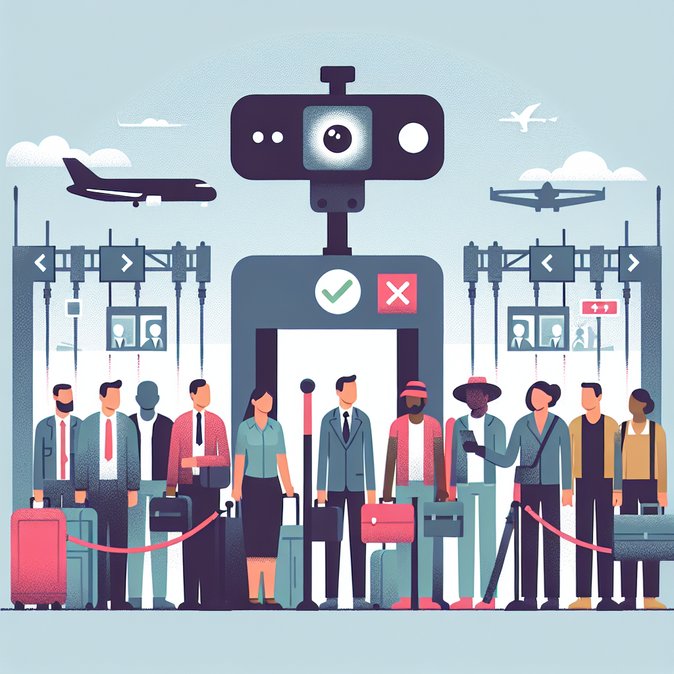
In the most sweeping technology shift at U.S. borders since the introduction of e-passports, U.S. Customs and Border Protection (CBP) has confirmed that every non-U.S. citizen—even Canadian visitors and lawful permanent residents—will be subject to biometric facial recognition both when they enter and when they leave the United States. The requirement entered into force on December 26, but CBP formally announced the rollout on December 29, giving airlines, cruise operators and land-border agencies just days to adapt.
CBP says the regulation, published as “Collection of Biometric Data from Aliens Upon Entry to and Departure from the United States,” will close long-criticised tracking gaps that allowed visa overstays and identity fraud to go undetected. Facial images will be matched against existing Department of Homeland Security (DHS) databases in real time, and the information will be stored for up to 75 years. The agency argues that the system will speed legitimate travel while enhancing national-security vetting.
If you’re unsure whether your travel documents meet the new biometric compliance standards, a specialized service such as VisaHQ can walk you through the requirements, check application forms for errors, and even arrange expedited visa renewals; more information is available at https://www.visahq.com/united-states/
![US Makes Biometric Facial Scans Mandatory for All Foreign Arrivals and Departures]()
Business-travel lobbies and privacy groups are less convinced. The U.S. Travel Association welcomed “technology that shortens queues,” but warned that insufficient staffing at secondary inspection and technical glitches could turn holiday peaks into “airport gridlock.” The American Civil Liberties Union renewed calls for congressional limits on facial-recognition use, citing higher error rates for darker-skinned travellers. Customs brokers on the northern and southern borders, meanwhile, fear that land-crossing delays will snarl just-in-time supply chains for manufacturing clients.
Multinational employers should brief foreign staff—especially Canadians who were previously exempt—on the new requirement and on potential wait-time increases. Companies that rotate expatriates through the United States may also wish to review their data-privacy notices; CBP’s expanded retention periods mean that facial images captured this week could be available to U.S. law-enforcement partners well into the 22nd century. Firms that rely on high-frequency cross-border commuters should factor the new process into scheduling through at least Q1 2026 as airports refine staffing and signage.
The rule is already in place at major hubs including JFK, LAX and ATL, and CBP says deployment to the remaining 210 U.S. international gateways will be complete by March 2026. Trusted-traveller members (Global Entry, NEXUS, SENTRI) still receive dedicated kiosks, but facial capture is now embedded in those lanes as well. Companies that have not yet enrolled frequent travellers in Global Entry should consider doing so to minimise disruption during the transition phase.
CBP says the regulation, published as “Collection of Biometric Data from Aliens Upon Entry to and Departure from the United States,” will close long-criticised tracking gaps that allowed visa overstays and identity fraud to go undetected. Facial images will be matched against existing Department of Homeland Security (DHS) databases in real time, and the information will be stored for up to 75 years. The agency argues that the system will speed legitimate travel while enhancing national-security vetting.
If you’re unsure whether your travel documents meet the new biometric compliance standards, a specialized service such as VisaHQ can walk you through the requirements, check application forms for errors, and even arrange expedited visa renewals; more information is available at https://www.visahq.com/united-states/

Business-travel lobbies and privacy groups are less convinced. The U.S. Travel Association welcomed “technology that shortens queues,” but warned that insufficient staffing at secondary inspection and technical glitches could turn holiday peaks into “airport gridlock.” The American Civil Liberties Union renewed calls for congressional limits on facial-recognition use, citing higher error rates for darker-skinned travellers. Customs brokers on the northern and southern borders, meanwhile, fear that land-crossing delays will snarl just-in-time supply chains for manufacturing clients.
Multinational employers should brief foreign staff—especially Canadians who were previously exempt—on the new requirement and on potential wait-time increases. Companies that rotate expatriates through the United States may also wish to review their data-privacy notices; CBP’s expanded retention periods mean that facial images captured this week could be available to U.S. law-enforcement partners well into the 22nd century. Firms that rely on high-frequency cross-border commuters should factor the new process into scheduling through at least Q1 2026 as airports refine staffing and signage.
The rule is already in place at major hubs including JFK, LAX and ATL, and CBP says deployment to the remaining 210 U.S. international gateways will be complete by March 2026. Trusted-traveller members (Global Entry, NEXUS, SENTRI) still receive dedicated kiosks, but facial capture is now embedded in those lanes as well. Companies that have not yet enrolled frequent travellers in Global Entry should consider doing so to minimise disruption during the transition phase.