The Gulf Cooperation Council’s much-touted unified tourist visa—once promised for mid-2025—will not launch until 2026, Saudi Arabia’s tourism minister confirmed in a statement picked up by regional media yesterday.
The ‘GCC Grand Tours’ document was expected to function like Europe’s Schengen visa, letting travellers move freely among Bahrain, Kuwait, Oman, Qatar, Saudi Arabia and the UAE on a single permit. Indian leisure and MICE (meetings, incentives, conferences and exhibitions) traffic to the Gulf has grown 24 % year-on-year, and tour operators had begun bundling multi-country itineraries on the assumption the permit would be operational for the 2025-26 peak season.
Officials blame the postponement on the complexity of integrating six immigration, security-screening and biometric systems. Airlines such as IndiGo, Air India Express and Vistara—which collectively operate more than 660 weekly flights to the bloc—must now retain separate visa-education modules for each destination, increasing call-centre volumes and customer confusion.
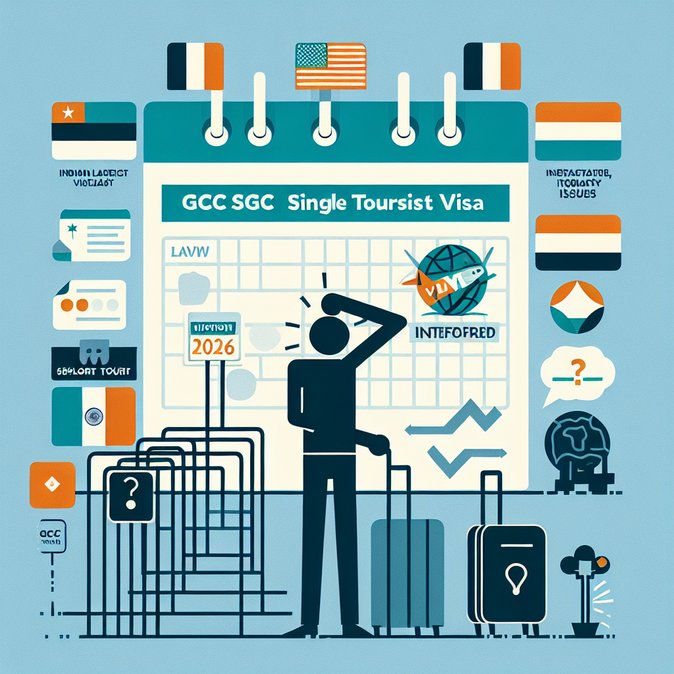
![GCC’s Schengen-style visa pushed to 2026, upsetting Indian outbound plans]()
Amid this uncertainty, VisaHQ’s India platform (https://www.visahq.com/india/) offers travellers and corporates a one-stop interface to compare requirements, complete applications and arrange courier pick-ups for every GCC country individually—helping customers secure the right permit quickly until the single-visa regime finally arrives.
Indian corporates with regional offices in Dubai, Doha and Riyadh will continue to juggle country-specific visit- and multiple-entry visas, each with distinct medical-insurance and sponsor-letter rules. Mobility advisers recommend applying at least three weeks in advance for Saudi and Qatari business visas, and highlight that UAE’s 60-day multiple-entry option remains the quickest to obtain.
Looking ahead, GCC ministers insist the one-visa plan is “delayed, not derailed”. Stakeholders expect pilot e-visa trials by late 2025, but the commercial roll-out is now pencilled in for the first quarter of 2026—news that Indian travellers and airlines must factor into budgeting and scheduling for the coming year.
The ‘GCC Grand Tours’ document was expected to function like Europe’s Schengen visa, letting travellers move freely among Bahrain, Kuwait, Oman, Qatar, Saudi Arabia and the UAE on a single permit. Indian leisure and MICE (meetings, incentives, conferences and exhibitions) traffic to the Gulf has grown 24 % year-on-year, and tour operators had begun bundling multi-country itineraries on the assumption the permit would be operational for the 2025-26 peak season.
Officials blame the postponement on the complexity of integrating six immigration, security-screening and biometric systems. Airlines such as IndiGo, Air India Express and Vistara—which collectively operate more than 660 weekly flights to the bloc—must now retain separate visa-education modules for each destination, increasing call-centre volumes and customer confusion.

Amid this uncertainty, VisaHQ’s India platform (https://www.visahq.com/india/) offers travellers and corporates a one-stop interface to compare requirements, complete applications and arrange courier pick-ups for every GCC country individually—helping customers secure the right permit quickly until the single-visa regime finally arrives.
Indian corporates with regional offices in Dubai, Doha and Riyadh will continue to juggle country-specific visit- and multiple-entry visas, each with distinct medical-insurance and sponsor-letter rules. Mobility advisers recommend applying at least three weeks in advance for Saudi and Qatari business visas, and highlight that UAE’s 60-day multiple-entry option remains the quickest to obtain.
Looking ahead, GCC ministers insist the one-visa plan is “delayed, not derailed”. Stakeholders expect pilot e-visa trials by late 2025, but the commercial roll-out is now pencilled in for the first quarter of 2026—news that Indian travellers and airlines must factor into budgeting and scheduling for the coming year.