A fast-moving Atlantic low-pressure system swept across central and western Europe overnight, bringing gale-force winds, freezing rain and intermittent snow to many major hubs. By 13:00 CET on 30 December, independent flight-tracking platform FlightAware had logged 4,145 delays and 40 cancellations at airports in 14 countries. Switzerland’s two international gateways—Zurich (ZRH) and Geneva (GVA)—reported 153 and 91 delayed movements respectively and one cancellation each. Although those figures are modest compared with Paris-CDG’s 467 delays, they are significant for Switzerland because both airports normally post on-time-performance (OTP) above 80 percent during winter.
Most Swiss delays were in the 30- to 70-minute range and concentrated in the morning bank, when de-icing queues and temporarily reduced runway occupancy rates forced air-traffic control (ATC) to apply spacing. Swiss International Air Lines was the most affected carrier, with ripple effects on Lufthansa Group partners and codeshare flights. Long-haul departures to New York, Singapore and Johannesburg left up to two hours late, causing missed onward rail connections for premium passengers—a costly service-recovery headache at the height of the holiday season.
Travellers unexpectedly rerouted or forced into extended layovers may also find themselves suddenly needing transit or short-stay visas for countries not on the original itinerary. VisaHQ’s Switzerland page (https://www.visahq.com/switzerland/) provides quick online checks, application support and courier services that can secure the required documents in as little as 24 hours, helping mitigate one more stress factor when winter weather plays havoc with schedules.
![Winter storm triggers over 4,100 flight delays across Europe—Zurich and Geneva among hardest-hit]()
The disruption also exposed the limits of Zurich Airport’s contingency capacity. Since the pandemic, the airport has relied on a tighter stand-allocation model and shorter turnaround times to absorb growth without expanding infrastructure. On days like today, however, a single weather-related capacity reduction can quickly saturate apron space, forcing arriving aircraft to hold or divert to Basel-Mulhouse. Ground-handling companies warned that staff sickness related to the current influenza wave further slowed aircraft servicing.
Business-travel managers are advising travellers to build extra slack into itineraries for the rest of the week. With another cold front forecast for New Year’s Eve, corporates may want to invoke split-team policies to ensure critical personnel are not all booked on the same departure. Travellers should also track EU261 compensation triggers: for flights that arrive more than three hours late and where the disruption is deemed within the airline’s control, cash compensation of up to €600 may apply—even on itineraries that start or end in Switzerland.
From a policy perspective, today’s events underline why Swiss industry bodies are lobbying Bern for faster progress on the European Digital Sky and Single European Sky ATM reform packages. A harmonised ‘dynamic slot’ mechanism could, in theory, allow airlines to swap slots across borders in near real-time and reduce knock-on delays during weather events.
Most Swiss delays were in the 30- to 70-minute range and concentrated in the morning bank, when de-icing queues and temporarily reduced runway occupancy rates forced air-traffic control (ATC) to apply spacing. Swiss International Air Lines was the most affected carrier, with ripple effects on Lufthansa Group partners and codeshare flights. Long-haul departures to New York, Singapore and Johannesburg left up to two hours late, causing missed onward rail connections for premium passengers—a costly service-recovery headache at the height of the holiday season.
Travellers unexpectedly rerouted or forced into extended layovers may also find themselves suddenly needing transit or short-stay visas for countries not on the original itinerary. VisaHQ’s Switzerland page (https://www.visahq.com/switzerland/) provides quick online checks, application support and courier services that can secure the required documents in as little as 24 hours, helping mitigate one more stress factor when winter weather plays havoc with schedules.
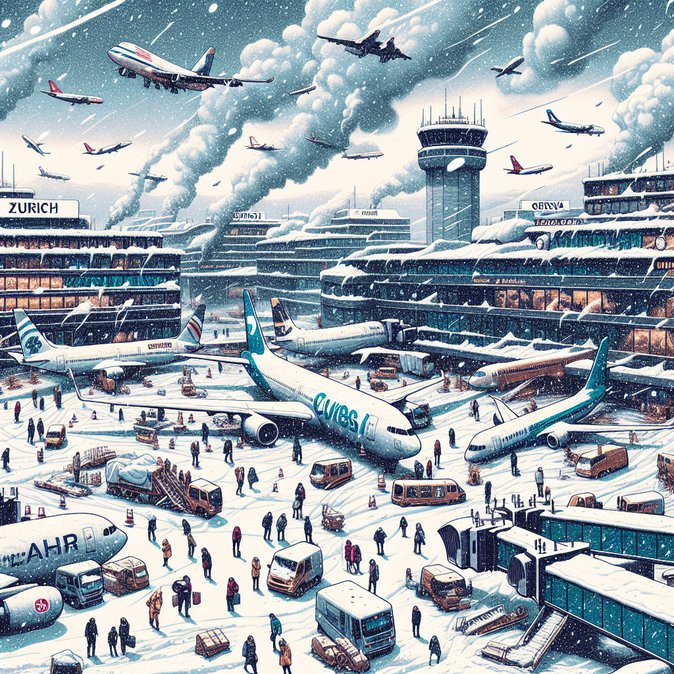
The disruption also exposed the limits of Zurich Airport’s contingency capacity. Since the pandemic, the airport has relied on a tighter stand-allocation model and shorter turnaround times to absorb growth without expanding infrastructure. On days like today, however, a single weather-related capacity reduction can quickly saturate apron space, forcing arriving aircraft to hold or divert to Basel-Mulhouse. Ground-handling companies warned that staff sickness related to the current influenza wave further slowed aircraft servicing.
Business-travel managers are advising travellers to build extra slack into itineraries for the rest of the week. With another cold front forecast for New Year’s Eve, corporates may want to invoke split-team policies to ensure critical personnel are not all booked on the same departure. Travellers should also track EU261 compensation triggers: for flights that arrive more than three hours late and where the disruption is deemed within the airline’s control, cash compensation of up to €600 may apply—even on itineraries that start or end in Switzerland.
From a policy perspective, today’s events underline why Swiss industry bodies are lobbying Bern for faster progress on the European Digital Sky and Single European Sky ATM reform packages. A harmonised ‘dynamic slot’ mechanism could, in theory, allow airlines to swap slots across borders in near real-time and reduce knock-on delays during weather events.