Brazil has moved a decisive step closer to paper-free borders. In an interview released late on 29 December, senior officials from the Ministry of Tourism confirmed that the electronic visitor visa (e-Visa) relaunched in April for US, Canadian and Australian citizens will now form the backbone of a wider, biometric ecosystem covering several South-American neighbours.
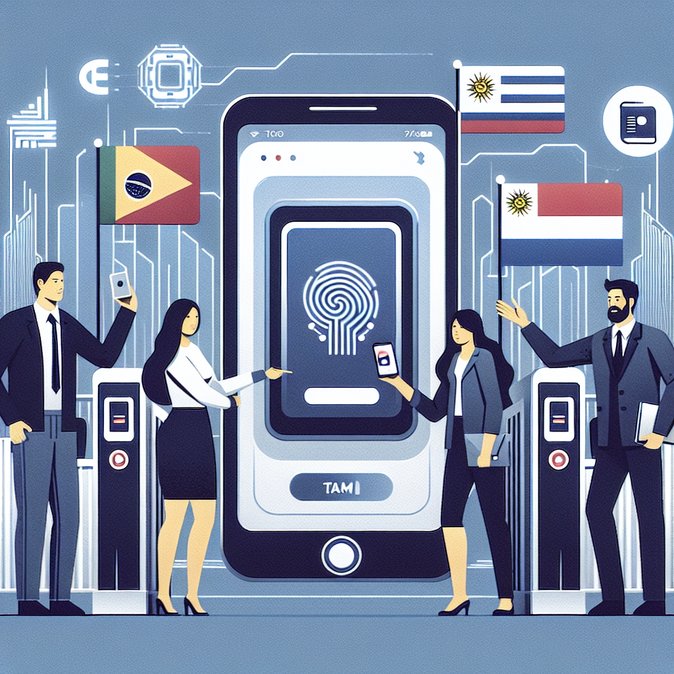
Under the plan, Brazil, Peru, Colombia and Uruguay have created a joint working group to define an application-programming-interface (API) standard that will let the four countries issue e-Visas, collect selfie biometrics and exchange advance passenger information in real time. The first proof-of-concept—dubbed the “Cross-Border Wallet”—will store a QR-coded Brazil e-Visa together with a liveness-verified facial image that can be read at newly installed e-gates in São Paulo/Guarulhos and Rio/Galeão airports. A closed beta with selected corporate travellers and airline crew is slated for Q2 2026.
To make navigating the shift to Brazil’s e-Visa even easier, travellers and HR departments can turn to VisaHQ, which offers a fully online application platform, real-time status alerts and expert support; the service for Brazil is live at https://www.visahq.com/brazil/
![Brazil launches regional e-Visa & biometric “Cross-Border Wallet” pilot with Peru, Colombia and Uruguay]()
Officials argue the project will cut queues and give border forces earlier intelligence on high-risk passengers. For multinationals the upside is clear: faster assignment lead times, lower document-handling costs and real-time travel tracking across four jurisdictions. HR managers, however, are being urged to review privacy notices because biometric templates will be shared between governments.
Airlines operating in Brazil have begun installing compatible e-gate readers, and the Ministry of Justice is drafting a portaria that will require all international airports to accept the digital credential by December 2026. Use of the wallet will remain optional—paper passports will still be accepted—but the government’s clear direction is towards fully digital borders.
Immigration advisers recommend that companies update mobility policies, add references to the e-Visa QR code in invitation letters and ensure travellers carry the physical passport associated with the credential until full passport-less travel is authorised. They also warn that border agents may take time to adjust to mixed document flows during the transition period.
In the longer term, Brasília hopes the scheme will evolve into a Latin-American counterpart to Europe’s Digital Travel Credential, giving the region a competitive edge in attracting high-spending tourists and short-term technical specialists.
Under the plan, Brazil, Peru, Colombia and Uruguay have created a joint working group to define an application-programming-interface (API) standard that will let the four countries issue e-Visas, collect selfie biometrics and exchange advance passenger information in real time. The first proof-of-concept—dubbed the “Cross-Border Wallet”—will store a QR-coded Brazil e-Visa together with a liveness-verified facial image that can be read at newly installed e-gates in São Paulo/Guarulhos and Rio/Galeão airports. A closed beta with selected corporate travellers and airline crew is slated for Q2 2026.
To make navigating the shift to Brazil’s e-Visa even easier, travellers and HR departments can turn to VisaHQ, which offers a fully online application platform, real-time status alerts and expert support; the service for Brazil is live at https://www.visahq.com/brazil/

Officials argue the project will cut queues and give border forces earlier intelligence on high-risk passengers. For multinationals the upside is clear: faster assignment lead times, lower document-handling costs and real-time travel tracking across four jurisdictions. HR managers, however, are being urged to review privacy notices because biometric templates will be shared between governments.
Airlines operating in Brazil have begun installing compatible e-gate readers, and the Ministry of Justice is drafting a portaria that will require all international airports to accept the digital credential by December 2026. Use of the wallet will remain optional—paper passports will still be accepted—but the government’s clear direction is towards fully digital borders.
Immigration advisers recommend that companies update mobility policies, add references to the e-Visa QR code in invitation letters and ensure travellers carry the physical passport associated with the credential until full passport-less travel is authorised. They also warn that border agents may take time to adjust to mixed document flows during the transition period.
In the longer term, Brasília hopes the scheme will evolve into a Latin-American counterpart to Europe’s Digital Travel Credential, giving the region a competitive edge in attracting high-spending tourists and short-term technical specialists.