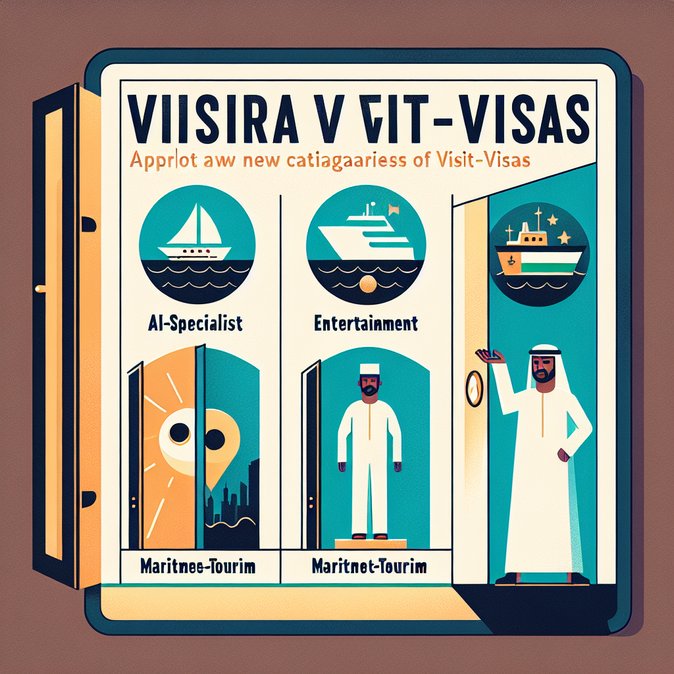
In an unexpected year-end move, the UAE Cabinet has adopted Executive Resolution No. 89 of 2025, creating four brand-new visit-visa categories aimed squarely at the needs of high-growth sectors. Effective immediately, companies and individuals can sponsor: (1) an AI-Specialist Visa for artificial-intelligence researchers, data engineers and other frontier-tech experts; (2) an Entertainment Visa for performers, crew and production staff working on concerts, film shoots and mega events; (3) an Events Visa for organisers and suppliers to conferences, exhibitions and global sporting fixtures; and (4) a Maritime-Tourism Visa for super-yacht crew, cruise-line staff and charter-boat operators.
The visas sit alongside, rather than replace, the existing 30- and 60-day tourist/visit options. Holders may enter on short notice, work on project-based assignments for up to 90 days (extendable once), and switch to residence status if offered a longer-term contract. Fees range from AED 400 to AED 650, with processing times promised within 48 hours through the Federal Authority for Identity, Citizenship, Customs & Port Security (ICP) smart platform.
For applicants who prefer a streamlined, guided approach, VisaHQ can handle the entire submission process. Their UAE portal (https://www.visahq.com/united-arab-emirates/) offers real-time fee calculators, document checklists tailored to each new category, and concierge services that liaise directly with ICP, helping both employers and individual specialists get approvals quickly and error-free.
![UAE Cabinet introduces four purpose-built visit visas in biggest immigration shake-up since 2019]()
Policy-makers say the reform plugs gaps exposed by the post-pandemic surge in project work. HR teams had struggled to shoe-horn tech consultants, festival crews and yacht staff into generic visit visas that prohibited on-site work. By giving each cohort a clear legal pathway, the UAE hopes to cement its position as the Gulf’s go-to hub for AI labs, mega-events and marine tourism.
For multinational employers the implications are immediate. Talent acquisition managers can fast-track specialist contractors without resorting to costly, time-consuming work-permit conversions. Event organisers benefit from a single immigration playbook across Dubai, Abu Dhabi and the northern emirates, reducing compliance risk when moving staff between venues. Maritime operators, meanwhile, can rotate crew in Jebel Ali or Mina Rashid without triggering seafarer-to-tourist visa swaps.
Immigration advisers warn that documentation standards will be high: AI applicants must show accredited degrees or five-plus years of niche experience; entertainers need union or producer letters; and maritime applicants must present STCW certificates and crew manifests. Still, the consensus is that the new categories will give companies the regulatory clarity they have lobbied for since the 2019 visa overhaul.
The visas sit alongside, rather than replace, the existing 30- and 60-day tourist/visit options. Holders may enter on short notice, work on project-based assignments for up to 90 days (extendable once), and switch to residence status if offered a longer-term contract. Fees range from AED 400 to AED 650, with processing times promised within 48 hours through the Federal Authority for Identity, Citizenship, Customs & Port Security (ICP) smart platform.
For applicants who prefer a streamlined, guided approach, VisaHQ can handle the entire submission process. Their UAE portal (https://www.visahq.com/united-arab-emirates/) offers real-time fee calculators, document checklists tailored to each new category, and concierge services that liaise directly with ICP, helping both employers and individual specialists get approvals quickly and error-free.

Policy-makers say the reform plugs gaps exposed by the post-pandemic surge in project work. HR teams had struggled to shoe-horn tech consultants, festival crews and yacht staff into generic visit visas that prohibited on-site work. By giving each cohort a clear legal pathway, the UAE hopes to cement its position as the Gulf’s go-to hub for AI labs, mega-events and marine tourism.
For multinational employers the implications are immediate. Talent acquisition managers can fast-track specialist contractors without resorting to costly, time-consuming work-permit conversions. Event organisers benefit from a single immigration playbook across Dubai, Abu Dhabi and the northern emirates, reducing compliance risk when moving staff between venues. Maritime operators, meanwhile, can rotate crew in Jebel Ali or Mina Rashid without triggering seafarer-to-tourist visa swaps.
Immigration advisers warn that documentation standards will be high: AI applicants must show accredited degrees or five-plus years of niche experience; entertainers need union or producer letters; and maritime applicants must present STCW certificates and crew manifests. Still, the consensus is that the new categories will give companies the regulatory clarity they have lobbied for since the 2019 visa overhaul.