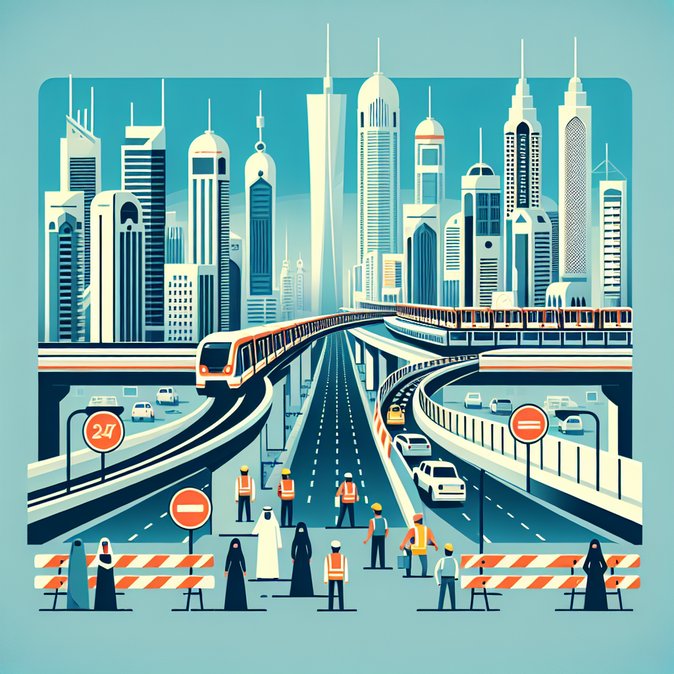
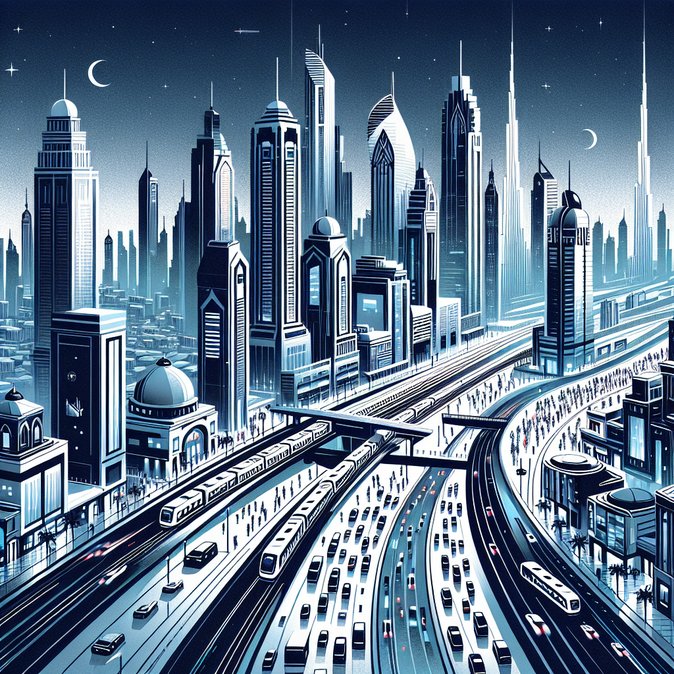
Dubai’s Roads and Transport Authority (RTA) has unveiled its most extensive New Year’s Eve mobility plan to date, geared toward an expected influx of more than a million revelers and inbound tourists. From 5 a.m. on 31 December until 11:59 p.m. on 1 January, both Metro lines will operate around the clock—43 hours of continuous service—while the Tram runs from 6 a.m. on 31 December until 1 a.m. on 2 January.
To manage pedestrian surges around the Burj Khalifa fireworks, the RTA will stage road closures in phases: Al Asayel Street, Sheikh Mohammed bin Rashid Boulevard, Lower Financial Centre Road and Burj Khalifa Street shut at 4 p.m.; Al Sukook Street at 8 p.m.; and Upper Financial Centre Road at 9 p.m. Additional smart-sign boards and AI-driven traffic-prediction tools will divert vehicles to 20,000 parking bays on the periphery.
International visitors planning to join the New Year’s Eve festivities should also double-check their entry requirements early. VisaHQ’s user-friendly portal (https://www.visahq.com/united-arab-emirates/) helps travelers secure UAE visas quickly, tracks applications in real time and provides customer support, ensuring the paperwork is sorted well before the fireworks begin.
![Dubai to run Metro non-stop for 43 hours and close key roads as 1 million visitors descend for New Year’s Eve]()
Dubai Police and the Events Security Committee are deploying 10,000 officers, 14,000 taxis and 18,000 limousines, with live crowd-density feeds shared across command centres. Metro station capacities will be dynamically throttled—Burj Khalifa/Dubai Mall station may close at 5 p.m. if footfall hits safety thresholds. Travelers transiting DXB are advised to allow extra time to reach Downtown hotels and to pre-book airport transfers.
For business travellers, the plan offers both certainty and caution. Meetings in DIFC or Business Bay on 31 December should wrap by mid-afternoon to avoid gridlock, while companies hosting VIPs are urged to secure hotel car-parks before noon. Airlines have already adjusted crew shuttles to use Al Khail Road rather than Sheikh Zayed Road after 4 p.m.
The RTA said last year’s NYE transport plan moved a record 2.5 million passengers—up 9 percent year-on-year—and expects the extended Metro hours to push the figure past 3 million. The operation doubles as a stress-test for the city’s AI-enabled iTraffic platform ahead of COP29 logistics next November.
To manage pedestrian surges around the Burj Khalifa fireworks, the RTA will stage road closures in phases: Al Asayel Street, Sheikh Mohammed bin Rashid Boulevard, Lower Financial Centre Road and Burj Khalifa Street shut at 4 p.m.; Al Sukook Street at 8 p.m.; and Upper Financial Centre Road at 9 p.m. Additional smart-sign boards and AI-driven traffic-prediction tools will divert vehicles to 20,000 parking bays on the periphery.
International visitors planning to join the New Year’s Eve festivities should also double-check their entry requirements early. VisaHQ’s user-friendly portal (https://www.visahq.com/united-arab-emirates/) helps travelers secure UAE visas quickly, tracks applications in real time and provides customer support, ensuring the paperwork is sorted well before the fireworks begin.
Dubai Police and the Events Security Committee are deploying 10,000 officers, 14,000 taxis and 18,000 limousines, with live crowd-density feeds shared across command centres. Metro station capacities will be dynamically throttled—Burj Khalifa/Dubai Mall station may close at 5 p.m. if footfall hits safety thresholds. Travelers transiting DXB are advised to allow extra time to reach Downtown hotels and to pre-book airport transfers.
For business travellers, the plan offers both certainty and caution. Meetings in DIFC or Business Bay on 31 December should wrap by mid-afternoon to avoid gridlock, while companies hosting VIPs are urged to secure hotel car-parks before noon. Airlines have already adjusted crew shuttles to use Al Khail Road rather than Sheikh Zayed Road after 4 p.m.
The RTA said last year’s NYE transport plan moved a record 2.5 million passengers—up 9 percent year-on-year—and expects the extended Metro hours to push the figure past 3 million. The operation doubles as a stress-test for the city’s AI-enabled iTraffic platform ahead of COP29 logistics next November.