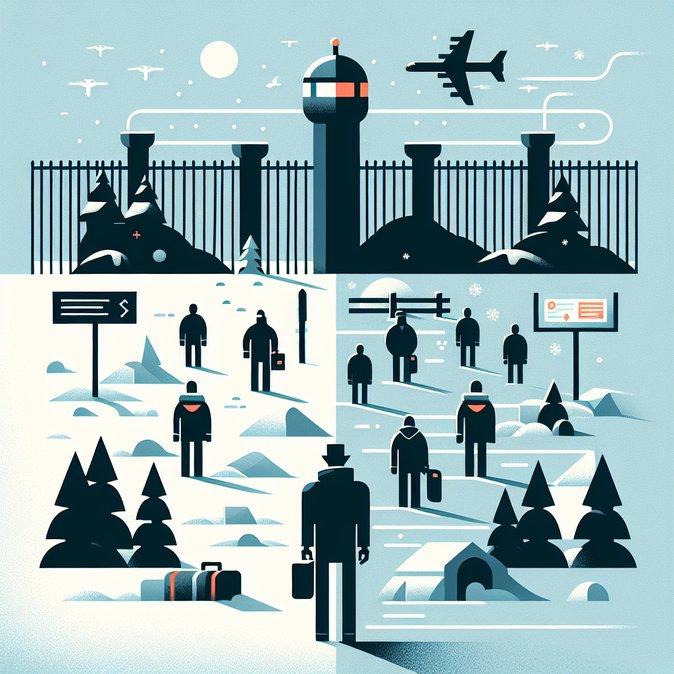
The Polish Border Guard (Straż Graniczna) reported on 29 December that, between 24 and 28 December, officers intercepted 10 migrants who had slipped across the normally open Polish-Lithuanian border, as well as a Russian courier transporting six Afghani and Pakistani nationals deeper into EU territory. The incidents occurred near Sejny and Rutki-Tartak, where temporary checks have been in place since July under Poland’s Schengen-area derogation.
Most of the apprehended migrants carried documents from Latvian reception centres, indicating secondary movement within the Baltic corridor. Under the EU readmission procedure, they were returned to Lithuanian authorities, while the Russian driver faces up to eight years in prison for facilitating illegal entry. Officers also seized a forged Ukrainian driving licence during routine vehicle screening at a pop-up checkpoint.
![Border Guard Logs Fresh Illegal Crossings on Polish-Lithuanian Frontier Over Christmas]()
For those navigating Poland’s tightening entry regime, VisaHQ offers a convenient way to stay compliant: its dedicated portal (https://www.visahq.com/poland/) aggregates the latest visa requirements, schedules consular appointments, and provides end-to-end application tracking—an efficient safeguard against delays when border spot-checks are stepped up.
The update comes as Warsaw prepares to extend its land-border controls with Germany and Lithuania into 2026, arguing that Belarus-linked ‘instrumentalised migration’ continues to pose a hybrid threat. For employers routing transferees through the Suwałki Gap road network or shipping goods via the Via Baltica, ad-hoc checks can add hours to transit times, especially for foreign-plated vehicles.
Mobility teams are advised to brief drivers on carrying original IDs and employment documents, build longer lay-overs for assignees using coach services between Vilnius and Warsaw, and monitor Border Guard communiqués, which are now issued daily during the holiday period.
Most of the apprehended migrants carried documents from Latvian reception centres, indicating secondary movement within the Baltic corridor. Under the EU readmission procedure, they were returned to Lithuanian authorities, while the Russian driver faces up to eight years in prison for facilitating illegal entry. Officers also seized a forged Ukrainian driving licence during routine vehicle screening at a pop-up checkpoint.

For those navigating Poland’s tightening entry regime, VisaHQ offers a convenient way to stay compliant: its dedicated portal (https://www.visahq.com/poland/) aggregates the latest visa requirements, schedules consular appointments, and provides end-to-end application tracking—an efficient safeguard against delays when border spot-checks are stepped up.
The update comes as Warsaw prepares to extend its land-border controls with Germany and Lithuania into 2026, arguing that Belarus-linked ‘instrumentalised migration’ continues to pose a hybrid threat. For employers routing transferees through the Suwałki Gap road network or shipping goods via the Via Baltica, ad-hoc checks can add hours to transit times, especially for foreign-plated vehicles.
Mobility teams are advised to brief drivers on carrying original IDs and employment documents, build longer lay-overs for assignees using coach services between Vilnius and Warsaw, and monitor Border Guard communiqués, which are now issued daily during the holiday period.