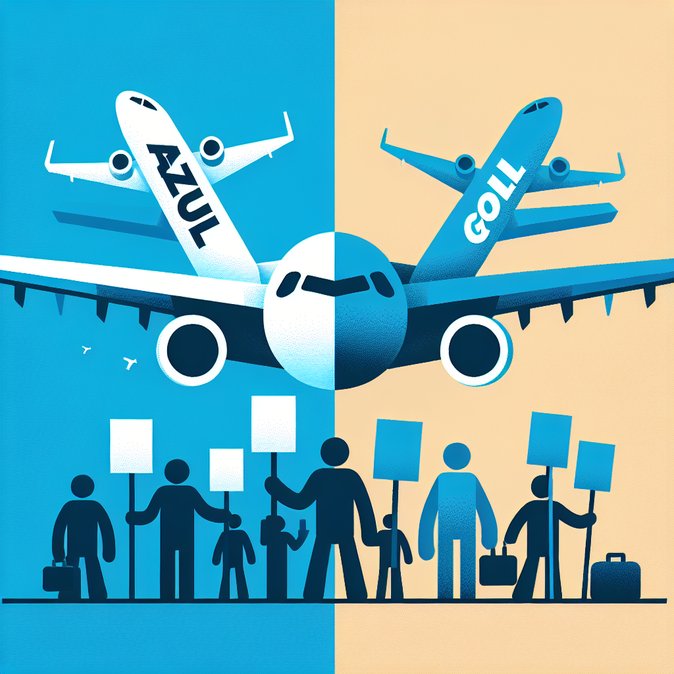
Brazil’s National Union of Aeronauts (SNA) has moved into an official ‘estado de greve’—a strike-alert footing—and has called an extraordinary assembly for 09:00 on 29 December in São Paulo. The single item on the agenda: whether to authorise a nationwide strike that could ground parts of the domestic networks of Azul Linhas Aéreas and GOL Linhas Aéreas in the first week of January.
The catalyst is a collapse in wage negotiations with the National Airline Employers’ Association (SNEA). Union leaders accuse carriers of back-tracking on promises of above-inflation pay rises and roster improvements despite record load factors and a rebound in profitability. Azul and GOL together control roughly 60 percent of Brazil’s domestic capacity; even limited ‘work-to-rule’ actions could ripple across connecting itineraries that feed long-haul flights on partner airlines.
For travelers who might need to adjust itineraries on short notice—especially those juggling multiple visas for onward connections—services such as VisaHQ can help cut through the red tape. Their Brazil portal (https://www.visahq.com/brazil/) provides step-by-step online applications, live chat, and expedited processing options that let business passengers focus on contingency plans rather than paperwork.
![Pilots’ Union Sets 29 December Assembly, Raising Strike Risk at Azul & GOL]()
For business-travel managers the key risk is timing. Any work stoppage would hit during Brazil’s peak summer travel window and ahead of the 8 January restart of large corporate meetings. Unlike Europe, Brazilian labour law requires only 72 hours’ notice for an aviation strike and mandates a bare-bones ‘essential service’ of 80 percent during peak periods—leaving plenty of room for selective cancellations and rolling delays.
Experts recommend activating contingency planning today: map critical itineraries onto alternative carriers such as LATAM or regional jets operated by Voepass; brief executives on the likelihood of short-notice schedule changes; and review force-majeure clauses in hotel and event contracts. If the assembly votes to strike, expect airlines to publish first-wave cancellations by 30 December. Companies should be ready to trigger flexible work arrangements or virtual attendance for early-January meetings.
Longer-term, the episode underscores Brazil’s exposure to labour volatility: wage rounds in the civil-aviation sector are staggered across employers, creating almost perpetual negotiation cycles. Mobility teams should maintain a rolling watch-list of union calendars and allocate extra buffer days when booking domestic connectors to key industrial hubs such as Belo Horizonte and Manaus.
The catalyst is a collapse in wage negotiations with the National Airline Employers’ Association (SNEA). Union leaders accuse carriers of back-tracking on promises of above-inflation pay rises and roster improvements despite record load factors and a rebound in profitability. Azul and GOL together control roughly 60 percent of Brazil’s domestic capacity; even limited ‘work-to-rule’ actions could ripple across connecting itineraries that feed long-haul flights on partner airlines.
For travelers who might need to adjust itineraries on short notice—especially those juggling multiple visas for onward connections—services such as VisaHQ can help cut through the red tape. Their Brazil portal (https://www.visahq.com/brazil/) provides step-by-step online applications, live chat, and expedited processing options that let business passengers focus on contingency plans rather than paperwork.

For business-travel managers the key risk is timing. Any work stoppage would hit during Brazil’s peak summer travel window and ahead of the 8 January restart of large corporate meetings. Unlike Europe, Brazilian labour law requires only 72 hours’ notice for an aviation strike and mandates a bare-bones ‘essential service’ of 80 percent during peak periods—leaving plenty of room for selective cancellations and rolling delays.
Experts recommend activating contingency planning today: map critical itineraries onto alternative carriers such as LATAM or regional jets operated by Voepass; brief executives on the likelihood of short-notice schedule changes; and review force-majeure clauses in hotel and event contracts. If the assembly votes to strike, expect airlines to publish first-wave cancellations by 30 December. Companies should be ready to trigger flexible work arrangements or virtual attendance for early-January meetings.
Longer-term, the episode underscores Brazil’s exposure to labour volatility: wage rounds in the civil-aviation sector are staggered across employers, creating almost perpetual negotiation cycles. Mobility teams should maintain a rolling watch-list of union calendars and allocate extra buffer days when booking domestic connectors to key industrial hubs such as Belo Horizonte and Manaus.