In an end-of-year surprise that immediately alters talent-mobility playbooks, the UAE Cabinet has approved Executive Resolution No. 89 of 2025, adding four purpose-built visit-visa categories that companies can begin using straight away. Published in the Official Gazette on 27 December and effective from the date of publication, the measure creates:
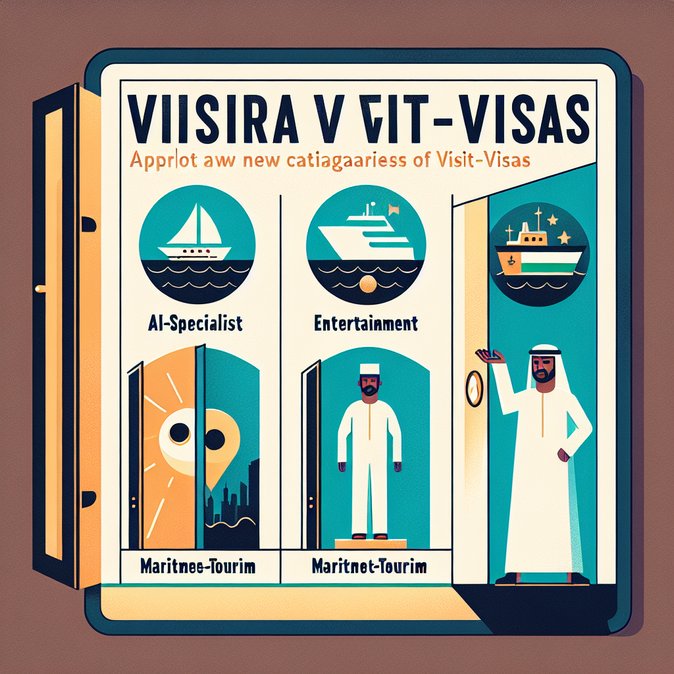
• the AI-Specialist Visa for artificial-intelligence scientists, data engineers and other frontier-tech experts;
• the Entertainment Visa for performers, crew and technical staff working on cultural or tourism events;
• the Events Visa for conference, exhibition and sporting-event organisers; and
• the Maritime-Tourism Visa for super-yacht crew, cruise-line staff and charter-boat operators.
The permits are classified as **visit visas**, not residence visas, but they can be issued for single or multiple entry and extended on-shore in 90-day blocks. Sponsorship is restricted to locally licensed companies in each sector, yet the cost profile is a fraction of a one-year employment residence visa because applicants are exempt from the AED 3,000 immigration deposit and do not require Emirates-ID registration. Dubai free-zone consultancies estimate savings of almost AED 10,000 per assignee.
For mobility managers and HR teams the immediate action item is policy hygiene. Assignment letters, payroll withholding matrices and health-insurance schedules must be updated because holders of the new visas sit outside the UAE’s social-security net and, critically, outside the scope of the 2026 federal income-tax regime. Dependants may accompany the principal traveller only on standard tourist visas, so assignees with families need careful briefing.
![UAE Cabinet launches four new visit-visa categories in largest immigration rewrite since 2019]()
For companies looking to navigate these changes with minimal friction, VisaHQ offers an end-to-end platform that automates application submission and status tracking. Through its UAE portal (https://www.visahq.com/united-arab-emirates/), the service pre-checks documentation, liaises with ICP, and handles extensions, allowing HR teams to manage AI-Specialist, Entertainment, Events and Maritime-Tourism visas alongside traditional permits from a single dashboard.
Processing is fully digital via the ICP portal and early adopters report two-day turnaround for the AI-Specialist Visa—dramatically quicker than the two-week lead time typical for mission visas. Immigration advisers expect Dubai’s creative and technology clusters to pivot immediately, using the new categories to ‘test-drive’ scarce global talent before committing to long-term sponsorship.
Strategically, the move signals that sector-specific entry permits are back on the agenda as the Emirates compete for niche skills. Analysts predict FinTech and gaming visas could follow in 2026, mirroring the country’s economic-cluster road maps and tightening its grip on Gulf labour flows.
• the AI-Specialist Visa for artificial-intelligence scientists, data engineers and other frontier-tech experts;
• the Entertainment Visa for performers, crew and technical staff working on cultural or tourism events;
• the Events Visa for conference, exhibition and sporting-event organisers; and
• the Maritime-Tourism Visa for super-yacht crew, cruise-line staff and charter-boat operators.
The permits are classified as **visit visas**, not residence visas, but they can be issued for single or multiple entry and extended on-shore in 90-day blocks. Sponsorship is restricted to locally licensed companies in each sector, yet the cost profile is a fraction of a one-year employment residence visa because applicants are exempt from the AED 3,000 immigration deposit and do not require Emirates-ID registration. Dubai free-zone consultancies estimate savings of almost AED 10,000 per assignee.
For mobility managers and HR teams the immediate action item is policy hygiene. Assignment letters, payroll withholding matrices and health-insurance schedules must be updated because holders of the new visas sit outside the UAE’s social-security net and, critically, outside the scope of the 2026 federal income-tax regime. Dependants may accompany the principal traveller only on standard tourist visas, so assignees with families need careful briefing.

For companies looking to navigate these changes with minimal friction, VisaHQ offers an end-to-end platform that automates application submission and status tracking. Through its UAE portal (https://www.visahq.com/united-arab-emirates/), the service pre-checks documentation, liaises with ICP, and handles extensions, allowing HR teams to manage AI-Specialist, Entertainment, Events and Maritime-Tourism visas alongside traditional permits from a single dashboard.
Processing is fully digital via the ICP portal and early adopters report two-day turnaround for the AI-Specialist Visa—dramatically quicker than the two-week lead time typical for mission visas. Immigration advisers expect Dubai’s creative and technology clusters to pivot immediately, using the new categories to ‘test-drive’ scarce global talent before committing to long-term sponsorship.
Strategically, the move signals that sector-specific entry permits are back on the agenda as the Emirates compete for niche skills. Analysts predict FinTech and gaming visas could follow in 2026, mirroring the country’s economic-cluster road maps and tightening its grip on Gulf labour flows.