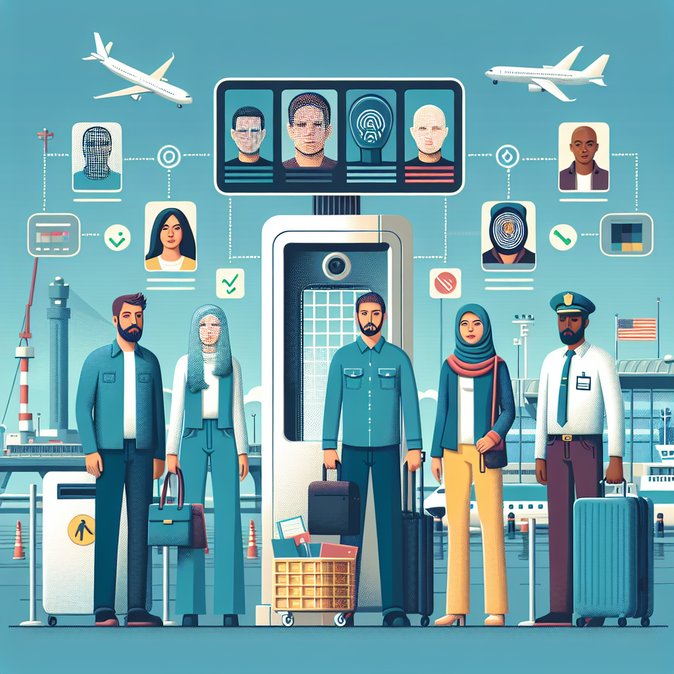
U.S. Customs and Border Protection (CBP) flipped the switch on its long-planned, nationwide biometric entry/exit system at 12:01 a.m. EST on December 26. Under the final rule, every non-U.S. citizen—regardless of age, nationality or class of admission—must now be photographed (and, when requested, fingerprinted) each time they enter or depart the United States by air, land or sea. The rule eliminates previous exemptions that covered children under 14, adults over 79, most Canadian visitors, diplomats and airline crew, and it authorizes CBP to expand biometric collection to new travel modes such as private aircraft, cruise ships and vehicle and pedestrian crossings.
CBP says the system will close longstanding security gaps and make it harder for visa overstayers and impostors to slip through exit controls. The agency estimates that full deployment will capture data on roughly 120 million annual departures, compared with about 40 million today. Airports have spent the past year installing biometric e-gates and retro-fitting boarding areas; land-border ports are adding drive-through camera portals that snap a driver’s photo without forcing vehicles to stop.
For travelers and mobility managers looking for guidance on whether additional visas or travel authorizations are needed—and for help keeping passport data current so the facial-recognition system functions smoothly—VisaHQ offers streamlined online services and live expert support. Their U.S. portal (https://www.visahq.com/united-states/) provides up-to-date visa information, document checklists and renewal options that can simplify preparations before your next trip through a biometric e-gate.
![U.S. begins mandatory facial-biometric screening for all foreign travelers]()
From a business-mobility perspective, the biggest change is that facial matching now occurs at both departure and arrival for every international trip. Employers moving staff across borders will need to brief assignees about the extra step and the fact that images will be retained in DHS databases for up to 75 years. Failure to comply can trigger fines of up to $5,000 and, in extreme cases, denial of boarding or future admission.
Immigration lawyers warn that the rule also removes the “trusted traveler” carve-out; Global Entry members will still enjoy expedited lanes but will be photographed on exit just like everyone else. Travelers whose passports were renewed recently should double-check that their airline profiles and ESTA/EVUS records are updated so the facial-matching algorithm can locate the correct reference photo.
CBP officials insist the program will not slow boarding. Early adopters such as Atlanta and Dallas–Fort Worth airports report that biometric e-gates clear passengers in about two seconds—faster than manual document checks. However, peak-holiday lines at some East Coast hubs on December 26–27 stretched longer than normal as agents and passengers adjusted to the new process.
CBP says the system will close longstanding security gaps and make it harder for visa overstayers and impostors to slip through exit controls. The agency estimates that full deployment will capture data on roughly 120 million annual departures, compared with about 40 million today. Airports have spent the past year installing biometric e-gates and retro-fitting boarding areas; land-border ports are adding drive-through camera portals that snap a driver’s photo without forcing vehicles to stop.
For travelers and mobility managers looking for guidance on whether additional visas or travel authorizations are needed—and for help keeping passport data current so the facial-recognition system functions smoothly—VisaHQ offers streamlined online services and live expert support. Their U.S. portal (https://www.visahq.com/united-states/) provides up-to-date visa information, document checklists and renewal options that can simplify preparations before your next trip through a biometric e-gate.

From a business-mobility perspective, the biggest change is that facial matching now occurs at both departure and arrival for every international trip. Employers moving staff across borders will need to brief assignees about the extra step and the fact that images will be retained in DHS databases for up to 75 years. Failure to comply can trigger fines of up to $5,000 and, in extreme cases, denial of boarding or future admission.
Immigration lawyers warn that the rule also removes the “trusted traveler” carve-out; Global Entry members will still enjoy expedited lanes but will be photographed on exit just like everyone else. Travelers whose passports were renewed recently should double-check that their airline profiles and ESTA/EVUS records are updated so the facial-matching algorithm can locate the correct reference photo.
CBP officials insist the program will not slow boarding. Early adopters such as Atlanta and Dallas–Fort Worth airports report that biometric e-gates clear passengers in about two seconds—faster than manual document checks. However, peak-holiday lines at some East Coast hubs on December 26–27 stretched longer than normal as agents and passengers adjusted to the new process.