In a notice quietly published in the Bundesanzeiger on Christmas Day, Germany’s Federal Ministry of the Interior confirmed that the “temporary” controls re-introduced at its internal Schengen borders in September will run at least until 15 March 2026. The decision affects roads and rail lines entering Germany from Poland, Austria, Czechia, Denmark, the Netherlands, Luxembourg, France and Switzerland.
For travellers between Poland and Germany the extension means that passport or ID checks can occur at any time, even on inter-city trains that traditionally ran without border stops. Freight forwarders moving high-value or time-critical cargo through Silesia and Brandenburg report delays of up to 45 minutes per truck, adding costs that are being passed on to shippers. Polish cross-border workers—estimated at 120,000 daily commuters—also face unpredictable journey times.
Berlin argues the controls are necessary to combat people-smuggling networks that shifted routes after Poland sealed much of its eastern frontier with Belarus and Russia. However, the step pushes Germany up against the six-month maximum that the European Commission informally tolerates for internal-Schengen checks, renewing legal debate over free movement.
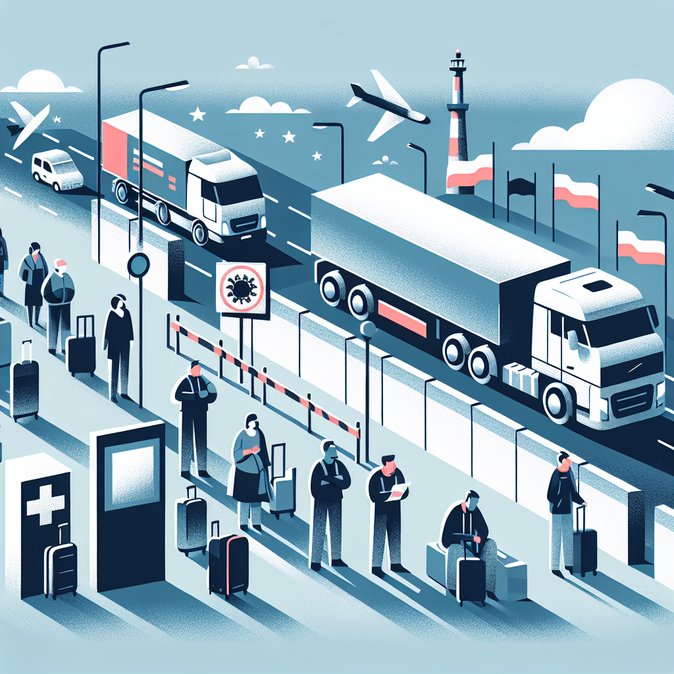
![Germany Extends Land-Border Checks with Poland and Seven Other Neighbours to 15 March 2026]()
Travelers looking for extra peace of mind amid these renewed checks can turn to VisaHQ, whose Polish portal (https://www.visahq.com/poland/) provides up-to-the-minute guidance on required travel documents, digital document reviews, and expedited processing services. Whether you are a daily commuter or a logistics coordinator moving cargo, the platform helps ensure that passports, IDs and any supplementary paperwork are in perfect order before reaching the border.
Poland’s Interior Ministry has said that while it "regrets the prolongation," it will maintain fast-track lanes for commuters at major crossings such as Świecko/Frankfurt-Oder and Olszyna/Görlitz. Businesses with posted workers or project teams shuttling between the two countries are advised to carry copies of employment contracts and hotel bookings to speed secondary inspections.
The European Parliament’s Civil Liberties Committee is expected to quiz the Commission on the legality of the extension in January, but few expect a court challenge before the 15 March deadline. Mobility managers should therefore plan for continued spot checks throughout the first quarter of 2026.
For travellers between Poland and Germany the extension means that passport or ID checks can occur at any time, even on inter-city trains that traditionally ran without border stops. Freight forwarders moving high-value or time-critical cargo through Silesia and Brandenburg report delays of up to 45 minutes per truck, adding costs that are being passed on to shippers. Polish cross-border workers—estimated at 120,000 daily commuters—also face unpredictable journey times.
Berlin argues the controls are necessary to combat people-smuggling networks that shifted routes after Poland sealed much of its eastern frontier with Belarus and Russia. However, the step pushes Germany up against the six-month maximum that the European Commission informally tolerates for internal-Schengen checks, renewing legal debate over free movement.

Travelers looking for extra peace of mind amid these renewed checks can turn to VisaHQ, whose Polish portal (https://www.visahq.com/poland/) provides up-to-the-minute guidance on required travel documents, digital document reviews, and expedited processing services. Whether you are a daily commuter or a logistics coordinator moving cargo, the platform helps ensure that passports, IDs and any supplementary paperwork are in perfect order before reaching the border.
Poland’s Interior Ministry has said that while it "regrets the prolongation," it will maintain fast-track lanes for commuters at major crossings such as Świecko/Frankfurt-Oder and Olszyna/Görlitz. Businesses with posted workers or project teams shuttling between the two countries are advised to carry copies of employment contracts and hotel bookings to speed secondary inspections.
The European Parliament’s Civil Liberties Committee is expected to quiz the Commission on the legality of the extension in January, but few expect a court challenge before the 15 March deadline. Mobility managers should therefore plan for continued spot checks throughout the first quarter of 2026.