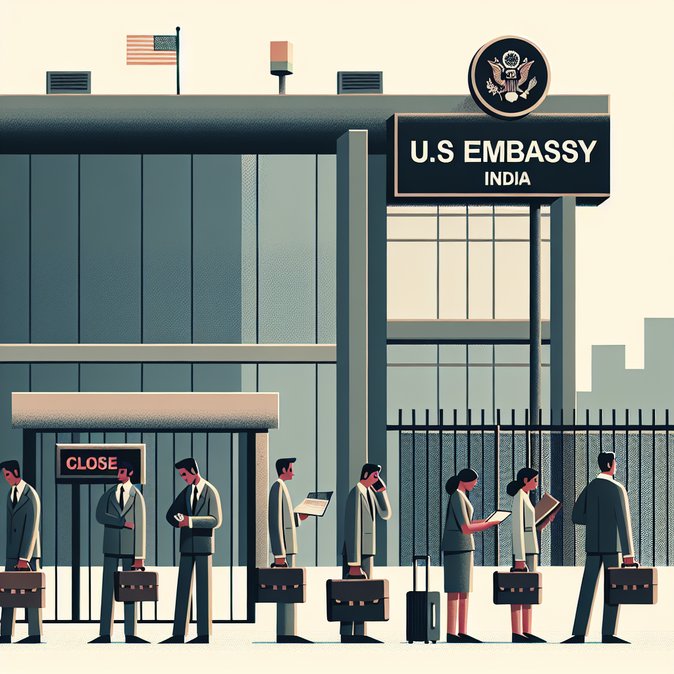
The U.S. Mission in India confirmed that its embassy in New Delhi and all five consulates have closed from 24 to 26 December in line with a presidential executive order granting federal employees extra leave around Christmas. The three-day shutdown, followed immediately by a weekend, creates a five-day gap in routine visa processing, passport renewals and notarial services.
Applicants with cancelled appointments have been told to monitor their CGI Federal profiles for automatic rescheduling, but immigration attorneys warn that new interview slots may slip to March or April because India is already running some of the world’s longest wait times for B-1/B-2 and H-1B visas.
For travelers looking to keep their mobility plans on track during this slowdown, VisaHQ’s India portal (https://www.visahq.com/india/) can help by tracking appointment openings in real time, assembling compliant application packets, and arranging secure courier delivery—often identifying earlier interview dates at alternate U.S. posts or third-country consulates. Their concierge-style support offers a practical safety net while embassy calendars reset.
![U.S. Embassy and Consulates Shut 24–26 December, Freezing Visa Services]()
The closure particularly hurts H-1B and L-1 professionals who traditionally visit India in December to renew visas ahead of the April cap season; many now face delayed U.S. re-entry and potential project slippage.
Corporate mobility teams are advising affected assignees to request remote-work extensions and to secure bridging status such as Automatic Visa Revalidation if they hold valid I-94s. Employers filing FY 2027 H-1B registrations in March should also budget for possible downstream delays in embassy appointments, compounding the impact of the new wage-based selection rule.
Emergency U.S. citizen services remain available, but the embassy has urged travellers to limit consular inquiries to life-or-death situations until normal operations resume on 29 December.
Applicants with cancelled appointments have been told to monitor their CGI Federal profiles for automatic rescheduling, but immigration attorneys warn that new interview slots may slip to March or April because India is already running some of the world’s longest wait times for B-1/B-2 and H-1B visas.
For travelers looking to keep their mobility plans on track during this slowdown, VisaHQ’s India portal (https://www.visahq.com/india/) can help by tracking appointment openings in real time, assembling compliant application packets, and arranging secure courier delivery—often identifying earlier interview dates at alternate U.S. posts or third-country consulates. Their concierge-style support offers a practical safety net while embassy calendars reset.

The closure particularly hurts H-1B and L-1 professionals who traditionally visit India in December to renew visas ahead of the April cap season; many now face delayed U.S. re-entry and potential project slippage.
Corporate mobility teams are advising affected assignees to request remote-work extensions and to secure bridging status such as Automatic Visa Revalidation if they hold valid I-94s. Employers filing FY 2027 H-1B registrations in March should also budget for possible downstream delays in embassy appointments, compounding the impact of the new wage-based selection rule.
Emergency U.S. citizen services remain available, but the embassy has urged travellers to limit consular inquiries to life-or-death situations until normal operations resume on 29 December.