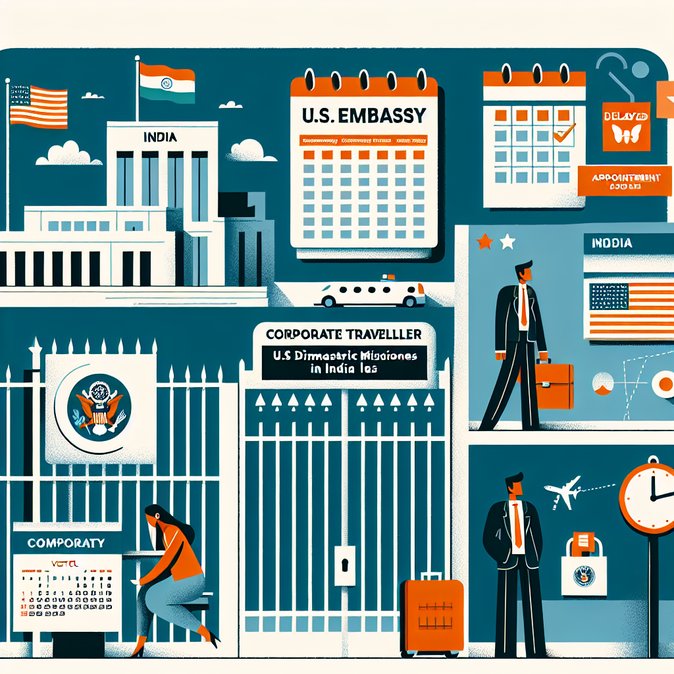
Travellers to the United States face an unexpected hurdle as the U.S. Embassy in New Delhi and all five American consulates across India shut their doors from 24 to 26 December 2025. The closure complies with a Presidential Executive Order granting federal employees additional leave around Christmas. Routine consular work—including non-immigrant visa interviews, passport renewals and document notarisation—will resume on Monday, 29 December, creating a five-day service gap because the weekend follows the three-day shutdown.
The embassy has advised applicants with appointments during the affected window to check their CGI Federal accounts for automatic rescheduling. Emergency services for U.S. citizens will remain available via the after-hours duty officer system, but no walk-ins will be entertained. Applicants whose interview-waiver documents were to be submitted this week may see their processing dates move into January, potentially pushing travel plans into the New Year peak season.
The timing compounds existing pressure on U.S. visa operations in India, where demand for H-1B, B-1/B-2 and F-1 visas has surged 40 % this year, fuelled by record outbound business and leisure travel. Despite aggressive staffing, the non-immigrant visa wait time in Mumbai still hovers near 90 days. A three-day halt could add roughly 12,000 appointments to the backlog, according to industry estimates, and ripple through corporate assignment schedules.
![Holiday Closure Of U.S. Embassy And Consulates In India Freezes Visa Processing Until 29 December]()
Travellers who find themselves affected by the pause can turn to professional facilitation services such as VisaHQ, which tracks real-time openings at multiple U.S. consulates and helps clients reschedule into earlier slots as soon as they appear. The company’s India portal (https://www.visahq.com/india/) also provides step-by-step document checklists, courier options and personalised alerts, streamlining the paperwork so customers are ready to move the moment appointments become available.
Global-mobility managers are scrambling to adjust start dates, especially for L-1 intracompany transferees, who must appear in person for blanket petitions. Experts recommend using the downtime to complete DS-160 forms and obtain police-clearance certificates in advance, so that applicants can slot into any earlier openings created by cancellations.
The episode underscores the importance of buffer periods in assignment planning. Companies with hard project deadlines in Q1 2026 are urged to secure alternative travel authorisations—such as ESTA for passport holders with dual citizenship—or consider short-term remote work from third-country hubs until visas are stamped.
The embassy has advised applicants with appointments during the affected window to check their CGI Federal accounts for automatic rescheduling. Emergency services for U.S. citizens will remain available via the after-hours duty officer system, but no walk-ins will be entertained. Applicants whose interview-waiver documents were to be submitted this week may see their processing dates move into January, potentially pushing travel plans into the New Year peak season.
The timing compounds existing pressure on U.S. visa operations in India, where demand for H-1B, B-1/B-2 and F-1 visas has surged 40 % this year, fuelled by record outbound business and leisure travel. Despite aggressive staffing, the non-immigrant visa wait time in Mumbai still hovers near 90 days. A three-day halt could add roughly 12,000 appointments to the backlog, according to industry estimates, and ripple through corporate assignment schedules.

Travellers who find themselves affected by the pause can turn to professional facilitation services such as VisaHQ, which tracks real-time openings at multiple U.S. consulates and helps clients reschedule into earlier slots as soon as they appear. The company’s India portal (https://www.visahq.com/india/) also provides step-by-step document checklists, courier options and personalised alerts, streamlining the paperwork so customers are ready to move the moment appointments become available.
Global-mobility managers are scrambling to adjust start dates, especially for L-1 intracompany transferees, who must appear in person for blanket petitions. Experts recommend using the downtime to complete DS-160 forms and obtain police-clearance certificates in advance, so that applicants can slot into any earlier openings created by cancellations.
The episode underscores the importance of buffer periods in assignment planning. Companies with hard project deadlines in Q1 2026 are urged to secure alternative travel authorisations—such as ESTA for passport holders with dual citizenship—or consider short-term remote work from third-country hubs until visas are stamped.