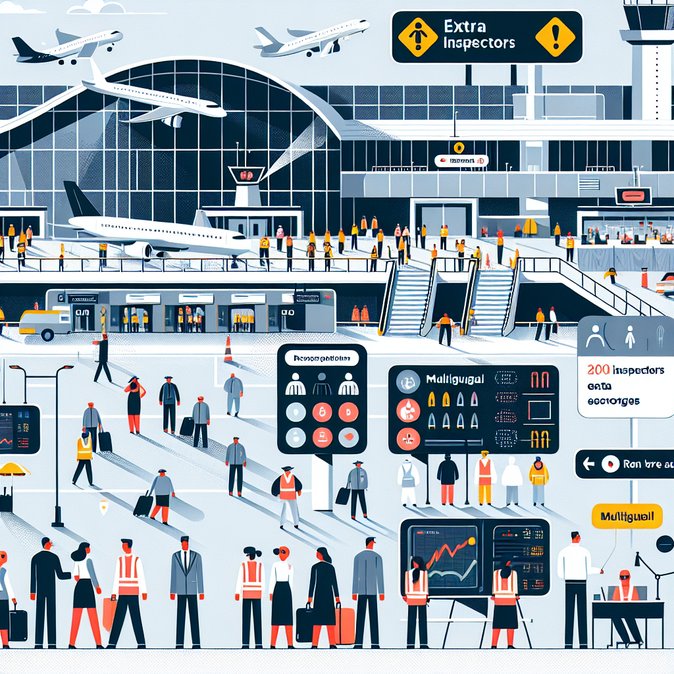
With Christmas and New Year travel reaching its annual crescendo, Brazil’s Ministry of Ports and Airports has activated a nationwide task-force dubbed “Operação Fim de Ano.” A total of 200 additional inspectors from the National Civil Aviation Agency (ANAC) were dispatched on 19 December to the country’s 15 busiest airports and will remain on duty until 5 January.
The temporary surge follows ANAC projections of a 15 percent jump in passenger volumes compared with last year’s holidays. Inspectors are working around the clock in terminal “war-rooms” that track check-in queues, security wait times, baggage-belt performance and on-time-departure data in real time. Where bottlenecks are detected, teams can immediately redeploy staff or open pop-up service desks to relieve pressure.
Airlines have also been pulled into the operation. Under Brazil’s Resolution 400—which sets strict compensation rules for delays and cancellations—carriers have positioned spare aircraft and crews on strategic bases. WhatsApp alerts, now available in English and Spanish, notify travelers of gate changes or hold-ups, a first for non-Portuguese-speaking passengers.
![Brazil Deploys 200 Extra Aviation Inspectors to 15 Airports for Year-End Surge]()
For travelers still reviewing visa requirements before departure, VisaHQ can simplify the paperwork. The service’s Brazil portal (https://www.visahq.com/brazil/) lets users check entry rules, submit applications online and track approvals in real time—useful peace of mind when airport operations are already under holiday strain.
For corporate mobility managers, the extra inspectors and proactive data sharing translate into more predictable connection windows and lower risk of missed meetings. However, they are advised to build in extra lead time over the peak period and remind assignees to use the official airport apps, which feed directly off the new dashboard.
Looking ahead, ANAC says the exercise is a test case for a permanent performance-monitoring center slated for 2026. If successful, the model could be rolled out to Brazil’s secondary airports—welcome news for exporters who rely on regional links to move staff and high-value cargo.
The temporary surge follows ANAC projections of a 15 percent jump in passenger volumes compared with last year’s holidays. Inspectors are working around the clock in terminal “war-rooms” that track check-in queues, security wait times, baggage-belt performance and on-time-departure data in real time. Where bottlenecks are detected, teams can immediately redeploy staff or open pop-up service desks to relieve pressure.
Airlines have also been pulled into the operation. Under Brazil’s Resolution 400—which sets strict compensation rules for delays and cancellations—carriers have positioned spare aircraft and crews on strategic bases. WhatsApp alerts, now available in English and Spanish, notify travelers of gate changes or hold-ups, a first for non-Portuguese-speaking passengers.

For travelers still reviewing visa requirements before departure, VisaHQ can simplify the paperwork. The service’s Brazil portal (https://www.visahq.com/brazil/) lets users check entry rules, submit applications online and track approvals in real time—useful peace of mind when airport operations are already under holiday strain.
For corporate mobility managers, the extra inspectors and proactive data sharing translate into more predictable connection windows and lower risk of missed meetings. However, they are advised to build in extra lead time over the peak period and remind assignees to use the official airport apps, which feed directly off the new dashboard.
Looking ahead, ANAC says the exercise is a test case for a permanent performance-monitoring center slated for 2026. If successful, the model could be rolled out to Brazil’s secondary airports—welcome news for exporters who rely on regional links to move staff and high-value cargo.