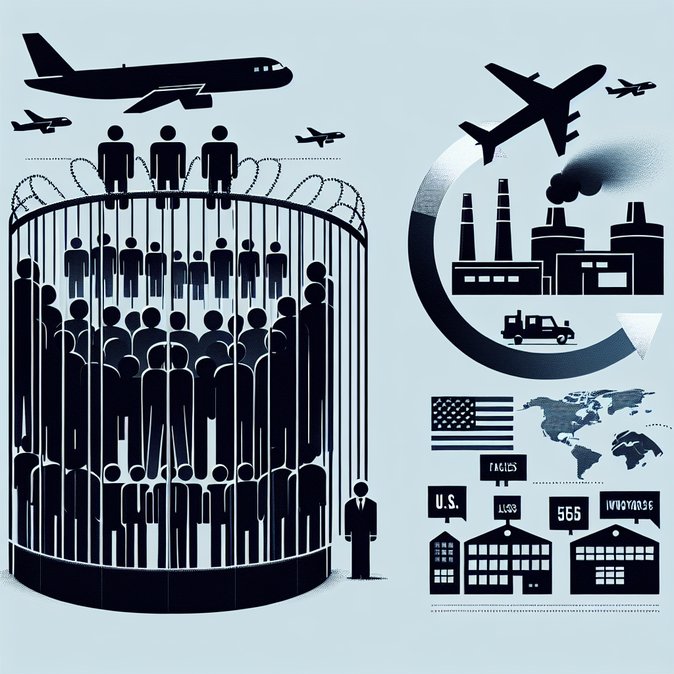
New data released by Immigration and Customs Enforcement show that, as of 14 December, 68,417 people were held in civil immigration detention—an historic peak that eclipses records set earlier this month. The numbers, published every two weeks on ICE’s “detention statistics” dashboard, come after the agency reported 328,000 arrests and nearly 327,000 removals in fiscal 2025, figures President Trump has touted as proof of an “enforcement first” agenda.
Contrary to official messaging that operations target criminals, the data reveal that a majority of detainees lack any criminal record. The shift toward broader sweeps has ramifications for U.S. employers: more workers are being taken off factory floors, construction sites and restaurant kitchens, exacerbating labour shortages during the peak retail season. HR teams scrambling to locate detained staff are finding that detainees are now held in more than 200 facilities, many in remote counties with limited legal services.
![ICE detention population hits all-time high of 68,400 ahead of holidays]()
Amid the uncertainty, employers and foreign nationals trying to keep immigration paperwork current can turn to VisaHQ, an online visa and passport expediting service that guides users through application requirements, documentation gathering and submission for the United States and dozens of other jurisdictions. Their streamlined dashboard and live support can reduce processing delays and prevent lapses in status—learn more at https://www.visahq.com/united-states/
The record head-count also strains the federal budget. Congress authorised funds to detain an average of 60,000 people per day in FY 2026; at current numbers, ICE is operating roughly 13% above that ceiling. Advocacy groups predict the overflow will push the administration to reopen mothballed county jails or sign new private-prison contracts—moves that could trigger further litigation over conditions and oversight.
For mobility managers, the surge underscores the importance of proactive I-9 audits, rapid-response legal retainers and employee-notification protocols. Companies sponsoring H-2B or other temporary visas should ensure workers carry copies of status documents and have access to counsel, particularly when traveling during the holiday season when checkpoint activity spikes.
Contrary to official messaging that operations target criminals, the data reveal that a majority of detainees lack any criminal record. The shift toward broader sweeps has ramifications for U.S. employers: more workers are being taken off factory floors, construction sites and restaurant kitchens, exacerbating labour shortages during the peak retail season. HR teams scrambling to locate detained staff are finding that detainees are now held in more than 200 facilities, many in remote counties with limited legal services.

Amid the uncertainty, employers and foreign nationals trying to keep immigration paperwork current can turn to VisaHQ, an online visa and passport expediting service that guides users through application requirements, documentation gathering and submission for the United States and dozens of other jurisdictions. Their streamlined dashboard and live support can reduce processing delays and prevent lapses in status—learn more at https://www.visahq.com/united-states/
The record head-count also strains the federal budget. Congress authorised funds to detain an average of 60,000 people per day in FY 2026; at current numbers, ICE is operating roughly 13% above that ceiling. Advocacy groups predict the overflow will push the administration to reopen mothballed county jails or sign new private-prison contracts—moves that could trigger further litigation over conditions and oversight.
For mobility managers, the surge underscores the importance of proactive I-9 audits, rapid-response legal retainers and employee-notification protocols. Companies sponsoring H-2B or other temporary visas should ensure workers carry copies of status documents and have access to counsel, particularly when traveling during the holiday season when checkpoint activity spikes.