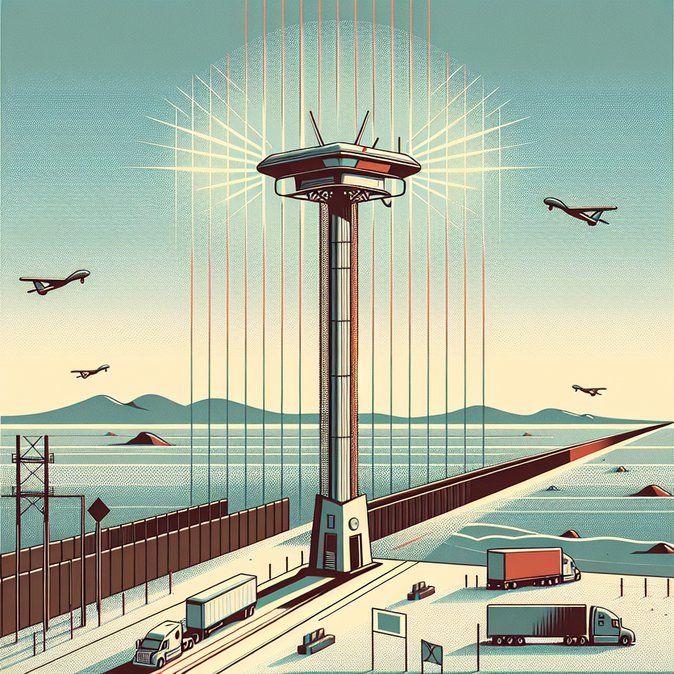
Interior Minister Marcin Kierwiński and Prime Minister Donald Tusk travelled to Ozierany on 23 December to inaugurate Poland’s first dedicated anti-drone tower only 800 m from the Belarusian frontier. The 47-million-zloty system combines radar, electro-optical sensors and a short-range artillery module capable of neutralising small UAVs that have repeatedly harassed border-guard patrols since 2021.
The tower is the spearhead of a five-site network that will stretch along the winding Svisloch and Istoczanka rivers. According to the Ministry of the Interior, the next four emplacements will go live in January, creating an overlapping protective umbrella over the most porous section of the border. More than 6,000 soldiers, police officers and border guards will spend Christmas on duty in the buffer zone, reflecting Warsaw’s determination to prevent a resurgence of the 2021-2022 ‘instrumentalised migration’ crisis.
For multinational companies moving staff or cargo between Poland and the Baltic states, the new hardware could reduce the risk of drone-related border closures that crippled truck movements earlier this year. Nevertheless, humanitarian NGOs warn that enhanced surveillance may push irregular migrants to attempt riskier crossings, with potential reputational implications for logistics providers operating near the fence.
![Poland Installs First Anti-Drone Tower on Belarus Border]()
Amid these shifting border protocols, VisaHQ can support companies and individual travelers by expediting Polish visas, work permits and other travel documentation through its digital platform and local experts; details are available at https://www.visahq.com/poland/
The deployment also has a wider NATO dimension. Lithuania and Latvia have begun similar procurements, and interoperability trials are planned for spring 2026. Employers with expatriates in the tri-border area should expect periodic live-fire exercises and temporary roadblocks as the system is calibrated.
Practically, mobility teams should advise travellers to carry passports—even for domestic trips—because ad-hoc ID checks inside the 15-km ‘border strip’ have increased. Supply-chain managers should monitor convoy routings, as heavy vehicles may be re-directed to crossings with larger inspection bays.
The tower is the spearhead of a five-site network that will stretch along the winding Svisloch and Istoczanka rivers. According to the Ministry of the Interior, the next four emplacements will go live in January, creating an overlapping protective umbrella over the most porous section of the border. More than 6,000 soldiers, police officers and border guards will spend Christmas on duty in the buffer zone, reflecting Warsaw’s determination to prevent a resurgence of the 2021-2022 ‘instrumentalised migration’ crisis.
For multinational companies moving staff or cargo between Poland and the Baltic states, the new hardware could reduce the risk of drone-related border closures that crippled truck movements earlier this year. Nevertheless, humanitarian NGOs warn that enhanced surveillance may push irregular migrants to attempt riskier crossings, with potential reputational implications for logistics providers operating near the fence.

Amid these shifting border protocols, VisaHQ can support companies and individual travelers by expediting Polish visas, work permits and other travel documentation through its digital platform and local experts; details are available at https://www.visahq.com/poland/
The deployment also has a wider NATO dimension. Lithuania and Latvia have begun similar procurements, and interoperability trials are planned for spring 2026. Employers with expatriates in the tri-border area should expect periodic live-fire exercises and temporary roadblocks as the system is calibrated.
Practically, mobility teams should advise travellers to carry passports—even for domestic trips—because ad-hoc ID checks inside the 15-km ‘border strip’ have increased. Supply-chain managers should monitor convoy routings, as heavy vehicles may be re-directed to crossings with larger inspection bays.