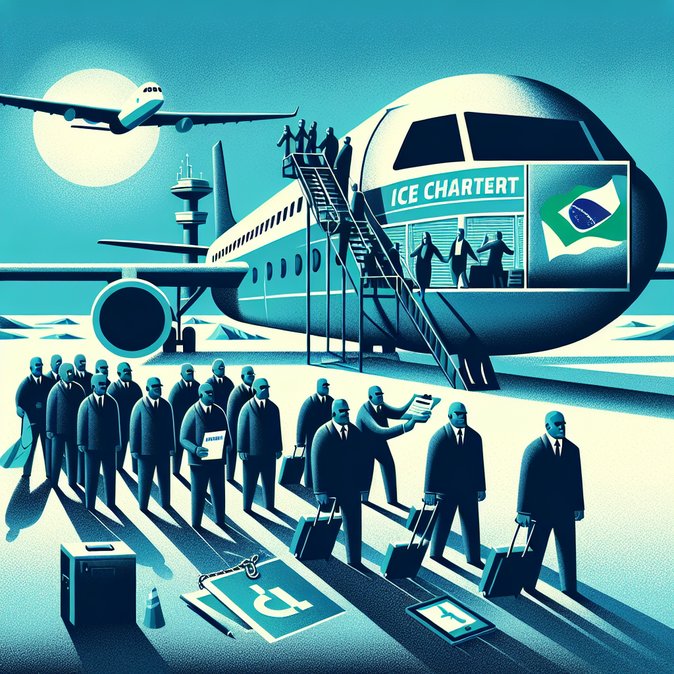
A new report released on 22 December shows that 2,268 Brazilian nationals were deported from the United States in 2025—37 percent more than last year and the highest tally since records began in 2020. The milestone was reached after a charter flight carrying 110 returnees landed in Belo Horizonte/Confins on 1 December.
Federal Police data attribute the spike to an expanded use of “expedited removal” under President Donald Trump’s second administration, which has reduced access to humanitarian-parole programmes and fast-tracked removals for visa overstays and minor infractions. Twenty-four Immigration and Customs Enforcement (ICE) charters have returned Brazilians so far this year, 23 of them after January 2025.
Amid this heightened enforcement landscape, VisaHQ can be an invaluable resource for employers and travellers alike. By visiting https://www.visahq.com/brazil/ Brazilian nationals can verify entry requirements, obtain the correct U.S. visa and receive real-time status updates through a single digital dashboard—helping companies close documentation gaps and reduce the risk of last-minute denials.
![U.S. Deportations of Brazilians Hit Record 2,268 in 2025, Forcing Companies to Re-think Compliance]()
For multinational employers the trend raises red flags. Brazilian assignees travelling on B-1/B-2 or short-term work visas now face heightened scrutiny at U.S. consulates and ports of entry. Mobility managers are advised to double-check invitation letters, client-site itineraries and proof of ties to Brazil before departure; even small discrepancies can lead to visa cancellation or a five-year bar-to-re-entry.
Repatriation support is also thin. Outside sparse government reintegration schemes, most deportees must self-fund onward travel from Confins to their home states. Companies with affected employees should budget for immediate flights, counselling and reputational-risk mitigation.
Looking ahead, immigration lawyers expect enforcement pressure to persist into 2026. Proactive compliance training and meticulous documentation remain the best defence for Brazilian talent on U.S. assignments.
Federal Police data attribute the spike to an expanded use of “expedited removal” under President Donald Trump’s second administration, which has reduced access to humanitarian-parole programmes and fast-tracked removals for visa overstays and minor infractions. Twenty-four Immigration and Customs Enforcement (ICE) charters have returned Brazilians so far this year, 23 of them after January 2025.
Amid this heightened enforcement landscape, VisaHQ can be an invaluable resource for employers and travellers alike. By visiting https://www.visahq.com/brazil/ Brazilian nationals can verify entry requirements, obtain the correct U.S. visa and receive real-time status updates through a single digital dashboard—helping companies close documentation gaps and reduce the risk of last-minute denials.

For multinational employers the trend raises red flags. Brazilian assignees travelling on B-1/B-2 or short-term work visas now face heightened scrutiny at U.S. consulates and ports of entry. Mobility managers are advised to double-check invitation letters, client-site itineraries and proof of ties to Brazil before departure; even small discrepancies can lead to visa cancellation or a five-year bar-to-re-entry.
Repatriation support is also thin. Outside sparse government reintegration schemes, most deportees must self-fund onward travel from Confins to their home states. Companies with affected employees should budget for immediate flights, counselling and reputational-risk mitigation.
Looking ahead, immigration lawyers expect enforcement pressure to persist into 2026. Proactive compliance training and meticulous documentation remain the best defence for Brazilian talent on U.S. assignments.