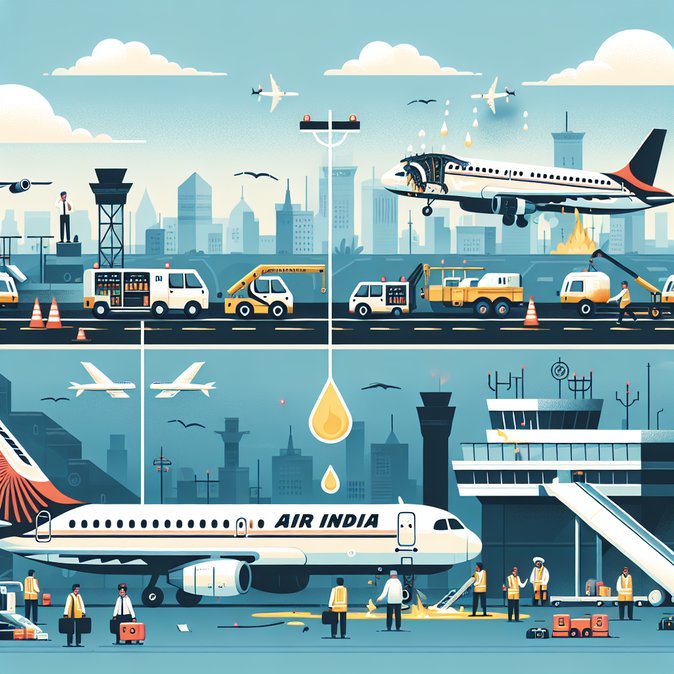
Flight AI 887 from Delhi to Mumbai declared an emergency minutes after take-off at 06:10 a.m. on 22 December when cockpit instruments showed **zero oil pressure** in the No. 2 engine. The crew shut the engine down and landed back at Indira Gandhi International Airport (IGIA) at 06:52 a.m. with 335 passengers and crew on board.
The Directorate General of Civil Aviation (DGCA) and Air India’s Permanent Investigation Board have opened parallel probes to determine whether maintenance lapses or sensor faults triggered the failure. Air India dispatched a replacement 777 at 10:30 a.m., providing refreshments during the four-hour delay.
Although no injuries were reported, the incident highlights the fragile reliability record of Air India’s ageing wide-body fleet—an area Tata Group has pledged to overhaul through its 2024 order for 70 new twin-aisles. For now, corporate travel planners should anticipate reactive schedule tweaks as aircraft rotate for unscheduled inspections.
![Air India Boeing 777 Suffers Engine Failure, Returns Safely to Delhi]()
Travellers reshuffling itineraries because of such operational hiccups often discover last-minute visa or passport hurdles, especially if they are rerouted through alternate hubs. VisaHQ can streamline that paperwork: its online platform (https://www.visahq.com/india/) offers rapid e-visa processing, passport renewals, and real-time status tracking—handy insurance when flight disruptions force sudden route changes.
If the DGCA mandates fleet-wide checks of similar Pratt & Whitney-powered engines, further delays on domestic trunk routes could ripple into international connections. Mobility teams should advise travellers to book morning flights with buffer time for onward links and to enrol in airline alert apps for real-time updates.
Despite the scare, aviation experts note that the successful single-engine landing underscores strong crew training and DGCA emergency-response protocols, offering reassurance to frequent flyers.
The Directorate General of Civil Aviation (DGCA) and Air India’s Permanent Investigation Board have opened parallel probes to determine whether maintenance lapses or sensor faults triggered the failure. Air India dispatched a replacement 777 at 10:30 a.m., providing refreshments during the four-hour delay.
Although no injuries were reported, the incident highlights the fragile reliability record of Air India’s ageing wide-body fleet—an area Tata Group has pledged to overhaul through its 2024 order for 70 new twin-aisles. For now, corporate travel planners should anticipate reactive schedule tweaks as aircraft rotate for unscheduled inspections.

Travellers reshuffling itineraries because of such operational hiccups often discover last-minute visa or passport hurdles, especially if they are rerouted through alternate hubs. VisaHQ can streamline that paperwork: its online platform (https://www.visahq.com/india/) offers rapid e-visa processing, passport renewals, and real-time status tracking—handy insurance when flight disruptions force sudden route changes.
If the DGCA mandates fleet-wide checks of similar Pratt & Whitney-powered engines, further delays on domestic trunk routes could ripple into international connections. Mobility teams should advise travellers to book morning flights with buffer time for onward links and to enrol in airline alert apps for real-time updates.
Despite the scare, aviation experts note that the successful single-engine landing underscores strong crew training and DGCA emergency-response protocols, offering reassurance to frequent flyers.