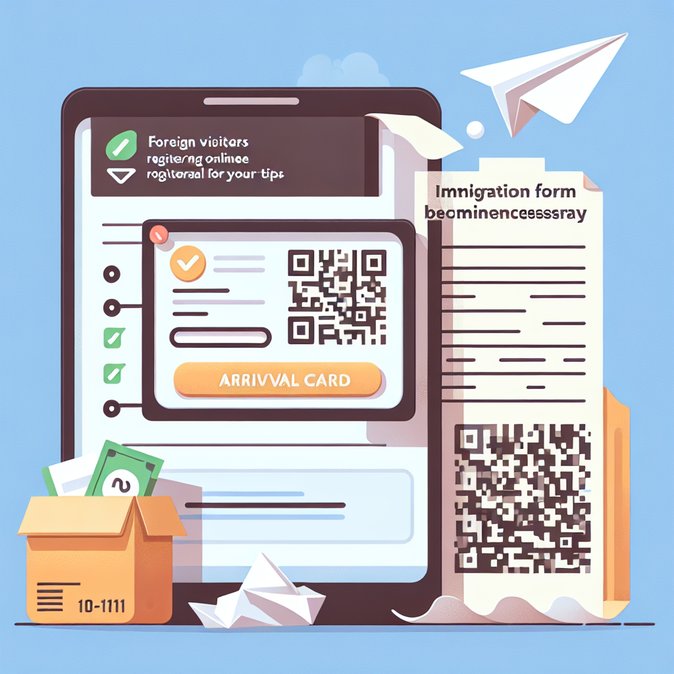
Effective 20 December 2025, China’s National Immigration Administration (NIA) began a nationwide campaign to encourage foreign visitors to complete a new digital Arrival Card before boarding their flight, signalling the beginning of the end for the long-standing paper form handed out on planes. Travel industry site LoyaltyLobby reports that airports have erected large signs and that Chinese embassies are directing travellers to an online portal accessible via the NIA website, the “NIA 12367” mobile app and WeChat/Alipay mini-programs.
What changes: While the paper card remains temporarily available, digital submission allows passengers to scan a QR code on arrival and proceed directly to passport control. Seven traveller categories—including holders of China’s permanent-resident ID and 24-hour transit passengers—are exempt. Users must upload a passport photo, itinerary and contact details; the system then generates a QR code that replaces the paper stub formerly stamped by border officers.
Why it matters for corporates: The e-card should shorten queuing times during upcoming Lunar New Year peaks, especially at mega-hubs like Shanghai Pudong and Guangzhou Baiyun. Multinationals should update pre-trip checklists and advise employees to complete the form online to avoid congestion—particularly useful for short-haul same-day business trips where every minute counts.
![China Phases Out Paper Immigration Forms, Pushes Travellers to Digital Arrival Card]()
For travelers who want additional peace of mind, visa specialists like VisaHQ can walk you through the new arrival-card process at the same time they arrange your China visa or 144-hour transit permit. Their online platform (https://www.visahq.com/china/) consolidates the latest NIA guidance and lets corporate travel managers monitor compliance in one dashboard.
Data-security note: The NIA states that information is stored on servers located in China and purged after the statutory retention period. However, some firms with high-sensitivity IP may opt to have staff fill the paper form until client confidentiality assessments are complete.
Next steps: Authorities have hinted that completion of the digital card could eventually become mandatory and linked to automated “Smart Lane” facial-recognition gates. Frequent-traveller programmes may also integrate the QR code into China’s growing ecosystem of health and immigration apps.
What changes: While the paper card remains temporarily available, digital submission allows passengers to scan a QR code on arrival and proceed directly to passport control. Seven traveller categories—including holders of China’s permanent-resident ID and 24-hour transit passengers—are exempt. Users must upload a passport photo, itinerary and contact details; the system then generates a QR code that replaces the paper stub formerly stamped by border officers.
Why it matters for corporates: The e-card should shorten queuing times during upcoming Lunar New Year peaks, especially at mega-hubs like Shanghai Pudong and Guangzhou Baiyun. Multinationals should update pre-trip checklists and advise employees to complete the form online to avoid congestion—particularly useful for short-haul same-day business trips where every minute counts.

For travelers who want additional peace of mind, visa specialists like VisaHQ can walk you through the new arrival-card process at the same time they arrange your China visa or 144-hour transit permit. Their online platform (https://www.visahq.com/china/) consolidates the latest NIA guidance and lets corporate travel managers monitor compliance in one dashboard.
Data-security note: The NIA states that information is stored on servers located in China and purged after the statutory retention period. However, some firms with high-sensitivity IP may opt to have staff fill the paper form until client confidentiality assessments are complete.
Next steps: Authorities have hinted that completion of the digital card could eventually become mandatory and linked to automated “Smart Lane” facial-recognition gates. Frequent-traveller programmes may also integrate the QR code into China’s growing ecosystem of health and immigration apps.