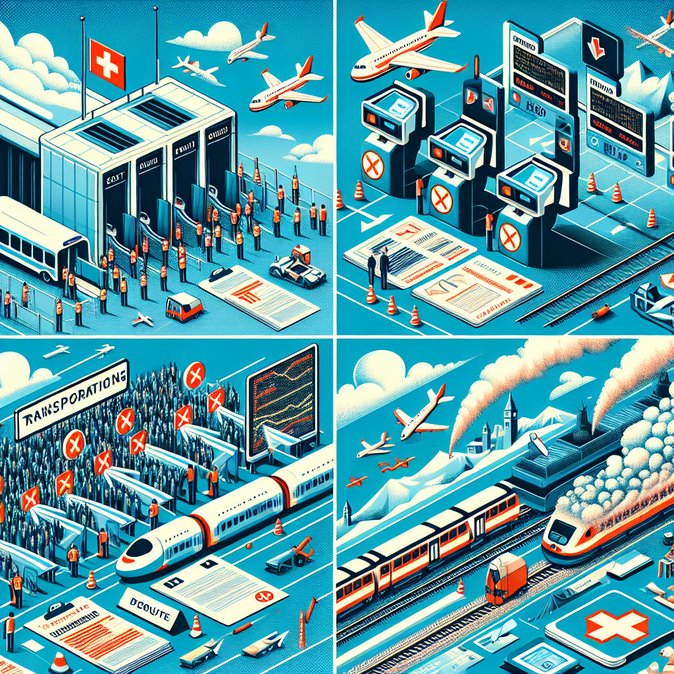
What was already shaping up to be the busiest Christmas travel weekend since 2019 turned into a logistical headache across the continent on 21 December. A wave of airline- and ground-handling strikes in the UK, France, Spain and Italy converged with teething problems in the EU’s new Entry/Exit biometric border system, causing domino-effect delays that reached Switzerland’s airports and rail hubs.
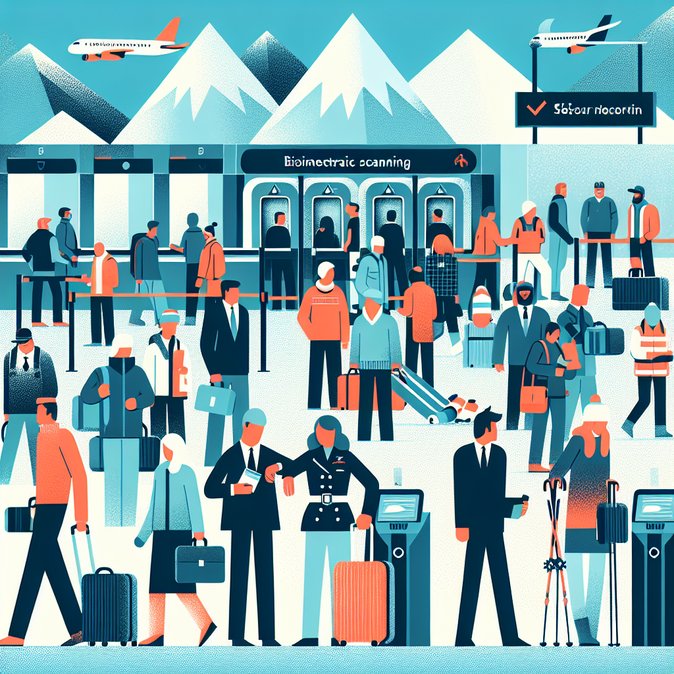
Travel And Tour World reports that Geneva Airport had to ‘switch off’ its EES kiosks several times to clear queues that snaked back into the arrivals hall. Zurich Airport, while not directly affected by strike action, experienced knock-on delays because incoming aircraft from Luton, Heathrow and Paris CDG departed late. Swiss International Air Lines cancelled two rotations to London City and re-timed several Milan flights to avoid crew-duty breaches.
The disruption also seeped onto the rails. EuroCity services from Milan arrived up to 70 minutes late at Basel as Italian station staff walked out. Swiss Federal Railways (SBB) arranged additional bus shuttles between Lugano and Chiasso to keep cross-border commuters moving, a critical step given that more than 68,000 Italian residents work in Ticino each day.
![Europe-Wide Festive Travel Chaos Spills into Switzerland as Strikes and EES Collide]()
For travelers looking to stay ahead of such disruptions, VisaHQ’s Switzerland portal (https://www.visahq.com/switzerland/) offers real-time visa and entry-requirement updates, optional passport pick-up and delivery, and 24/7 documentation tracking—services that can spare business and holiday passengers from last-minute border surprises.
For mobility managers the main pain-point is uncertainty. Many expatriate families returning for year-end break are travelling with pets or excess sports equipment, adding complexity to re-booking. HR teams are advising staff to use company travel desks rather than consumer apps so that re-routing costs can be captured centrally. Firms with time-sensitive assembly lines are staggering shift start-times on 23–24 December to allow late-arriving technicians to catch up.
Swiss tour operators meanwhile fear reputational fallout just as the lucrative ski season begins. Several are lobbying Bern to pressure EU peers for a phased EES deployment or reciprocal fast-track lanes for coach groups heading to the Alps. The Federal Department of Foreign Affairs says it is monitoring the situation but insists the biometric roll-out is an EU decision that Switzerland, as a Schengen associate, must follow.
Travel And Tour World reports that Geneva Airport had to ‘switch off’ its EES kiosks several times to clear queues that snaked back into the arrivals hall. Zurich Airport, while not directly affected by strike action, experienced knock-on delays because incoming aircraft from Luton, Heathrow and Paris CDG departed late. Swiss International Air Lines cancelled two rotations to London City and re-timed several Milan flights to avoid crew-duty breaches.
The disruption also seeped onto the rails. EuroCity services from Milan arrived up to 70 minutes late at Basel as Italian station staff walked out. Swiss Federal Railways (SBB) arranged additional bus shuttles between Lugano and Chiasso to keep cross-border commuters moving, a critical step given that more than 68,000 Italian residents work in Ticino each day.
For travelers looking to stay ahead of such disruptions, VisaHQ’s Switzerland portal (https://www.visahq.com/switzerland/) offers real-time visa and entry-requirement updates, optional passport pick-up and delivery, and 24/7 documentation tracking—services that can spare business and holiday passengers from last-minute border surprises.
For mobility managers the main pain-point is uncertainty. Many expatriate families returning for year-end break are travelling with pets or excess sports equipment, adding complexity to re-booking. HR teams are advising staff to use company travel desks rather than consumer apps so that re-routing costs can be captured centrally. Firms with time-sensitive assembly lines are staggering shift start-times on 23–24 December to allow late-arriving technicians to catch up.
Swiss tour operators meanwhile fear reputational fallout just as the lucrative ski season begins. Several are lobbying Bern to pressure EU peers for a phased EES deployment or reciprocal fast-track lanes for coach groups heading to the Alps. The Federal Department of Foreign Affairs says it is monitoring the situation but insists the biometric roll-out is an EU decision that Switzerland, as a Schengen associate, must follow.